Bringing Innovation into Lifestyle
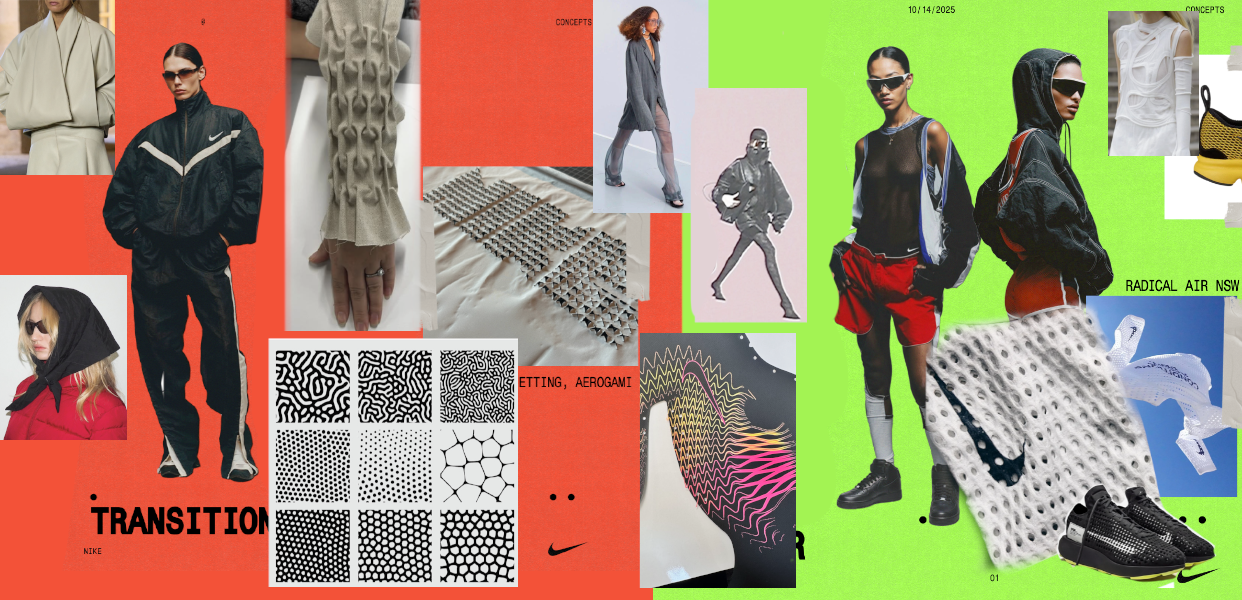
How can technologies developed for one purpose take on a completely new life in lifestyle apparel? For SS28 CCL, I explored that question by reimagining Nike innovations for lifestyle dressing. The goal was to look beyond the technologies’ existing applications and explore how they could bring something new to the Nike Sportswear consumer.
I developed three distinct looks, each built around a different technology and its potential within a lifestyle context. Two looks explored fashion-forward tracksuits, while the third focused on summer layering, creating a lighter, more versatile approach to dressing for the season. With these technologies being explored in this context for the first time, I worked hands-on with Nike’s on-campus resources to prototype the garments, experiment with their applications, and understand how each innovation could translate into a finished silhouette.
What excited me most about this project was the freedom to approach the technologies with fresh eyes. Rather than simply adapting an existing product, I could rethink how the innovations might look, feel, and function when viewed through a lifestyle lens. It was an opportunity to connect technical exploration with my interest in silhouette, styling, and material expression—and to help open up new possibilities for how Nike innovation could show up beyond its original application.
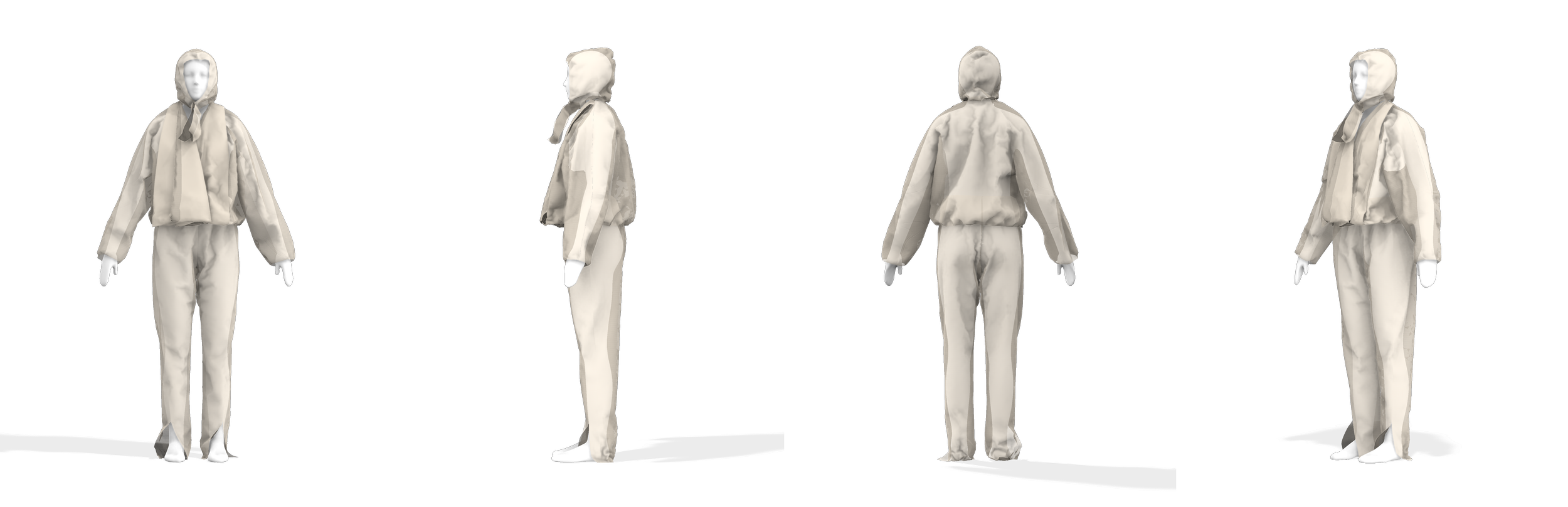
AEROGAMI — Rethinking Rainwear
01 — Starting with the Technology
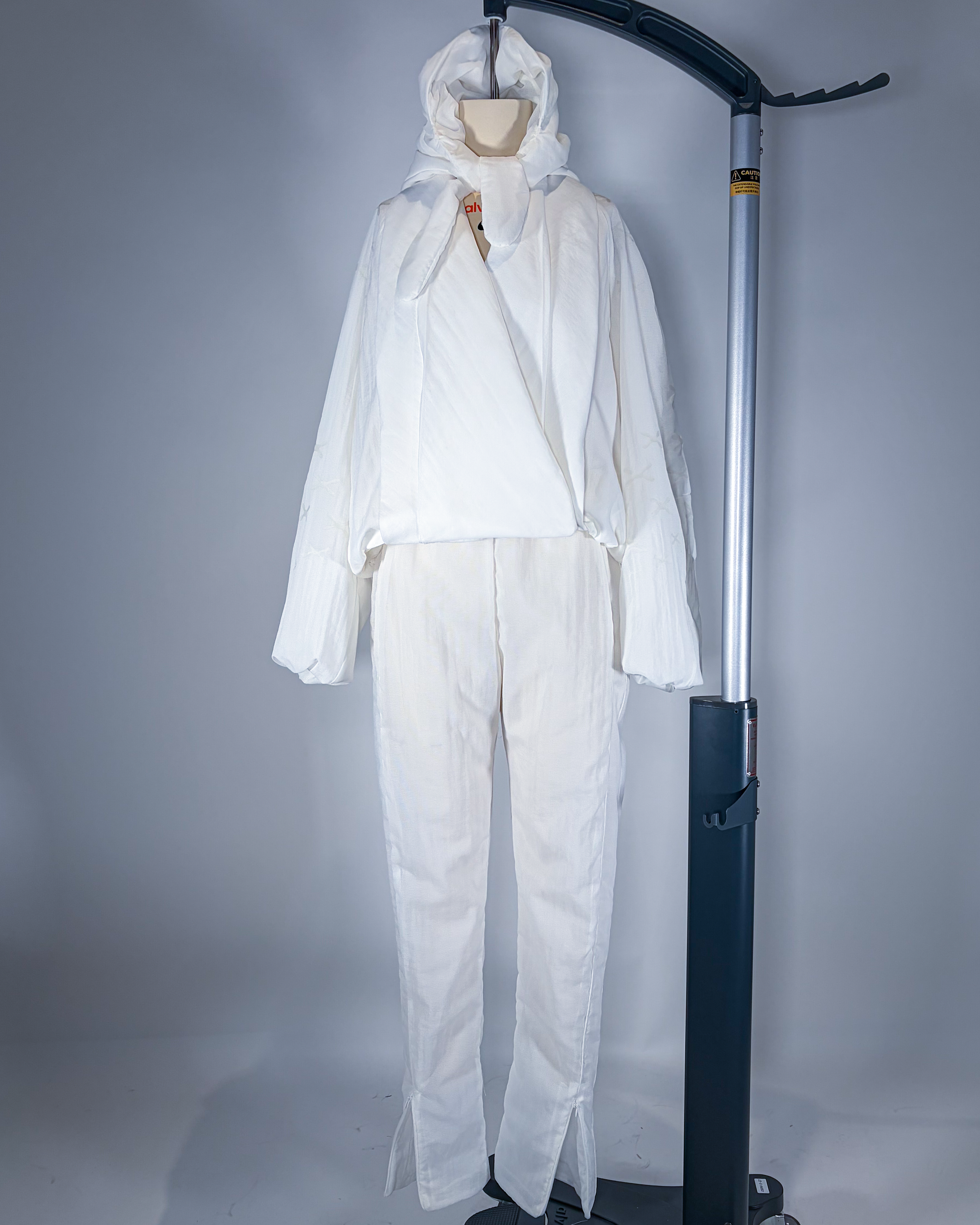
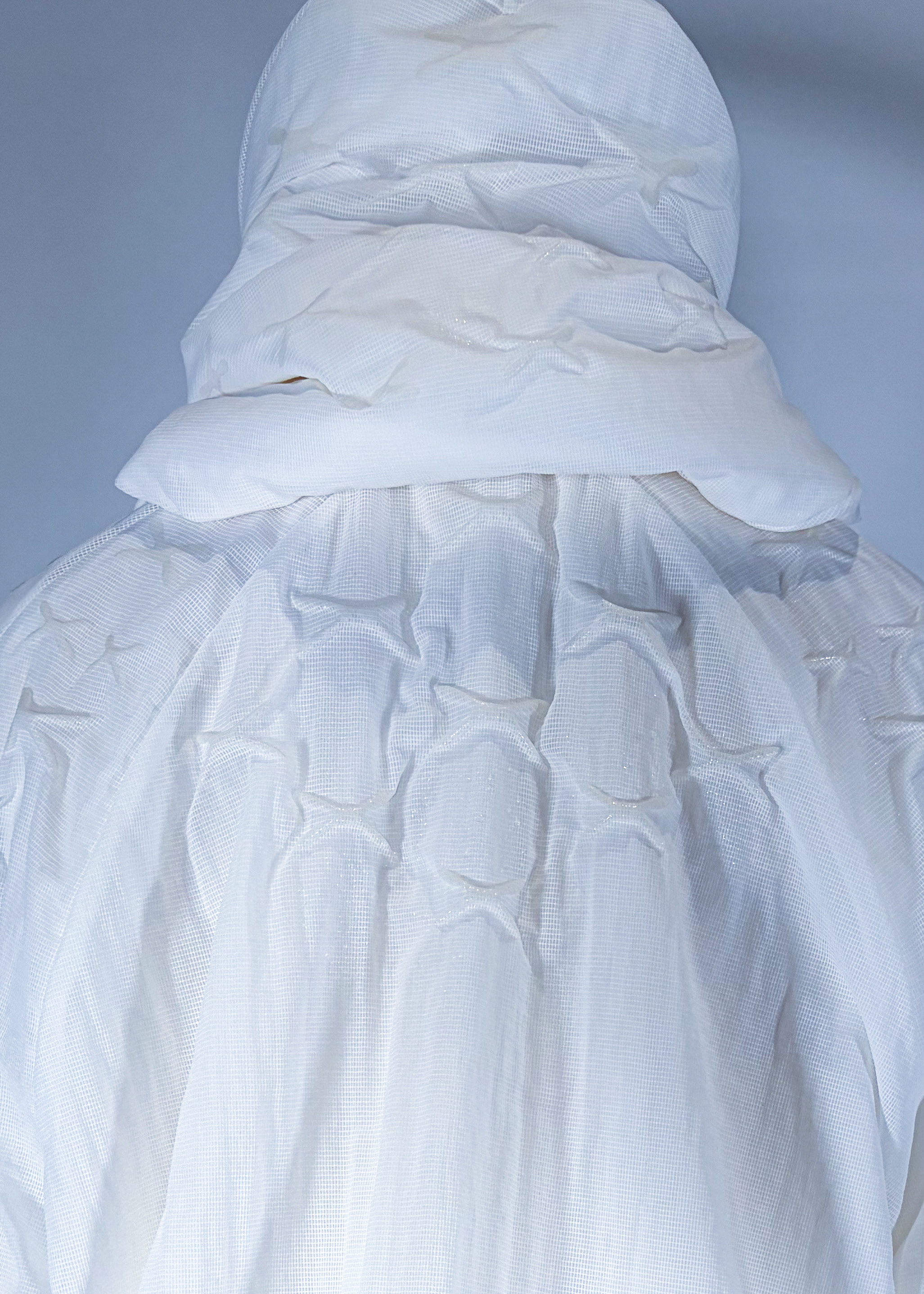
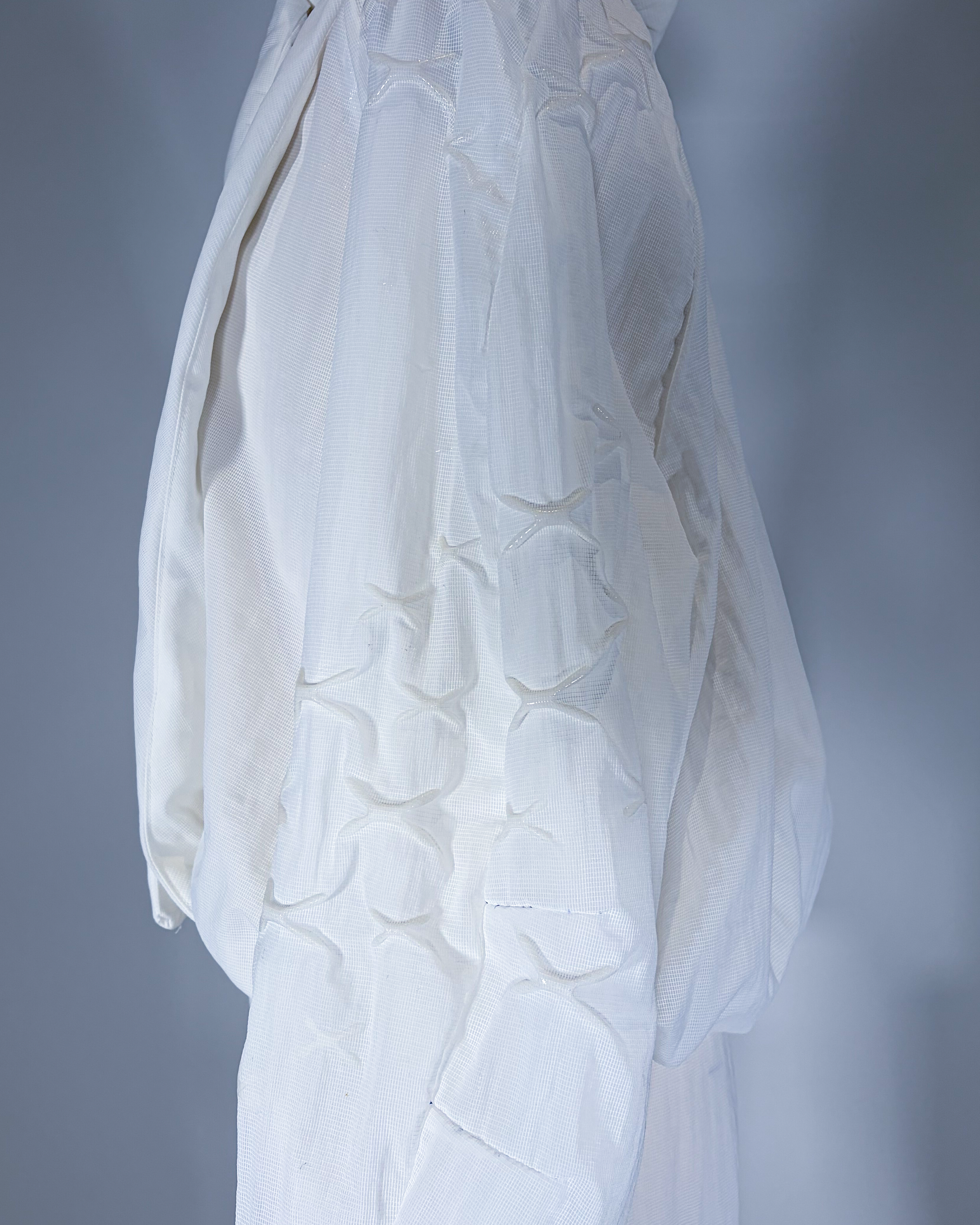
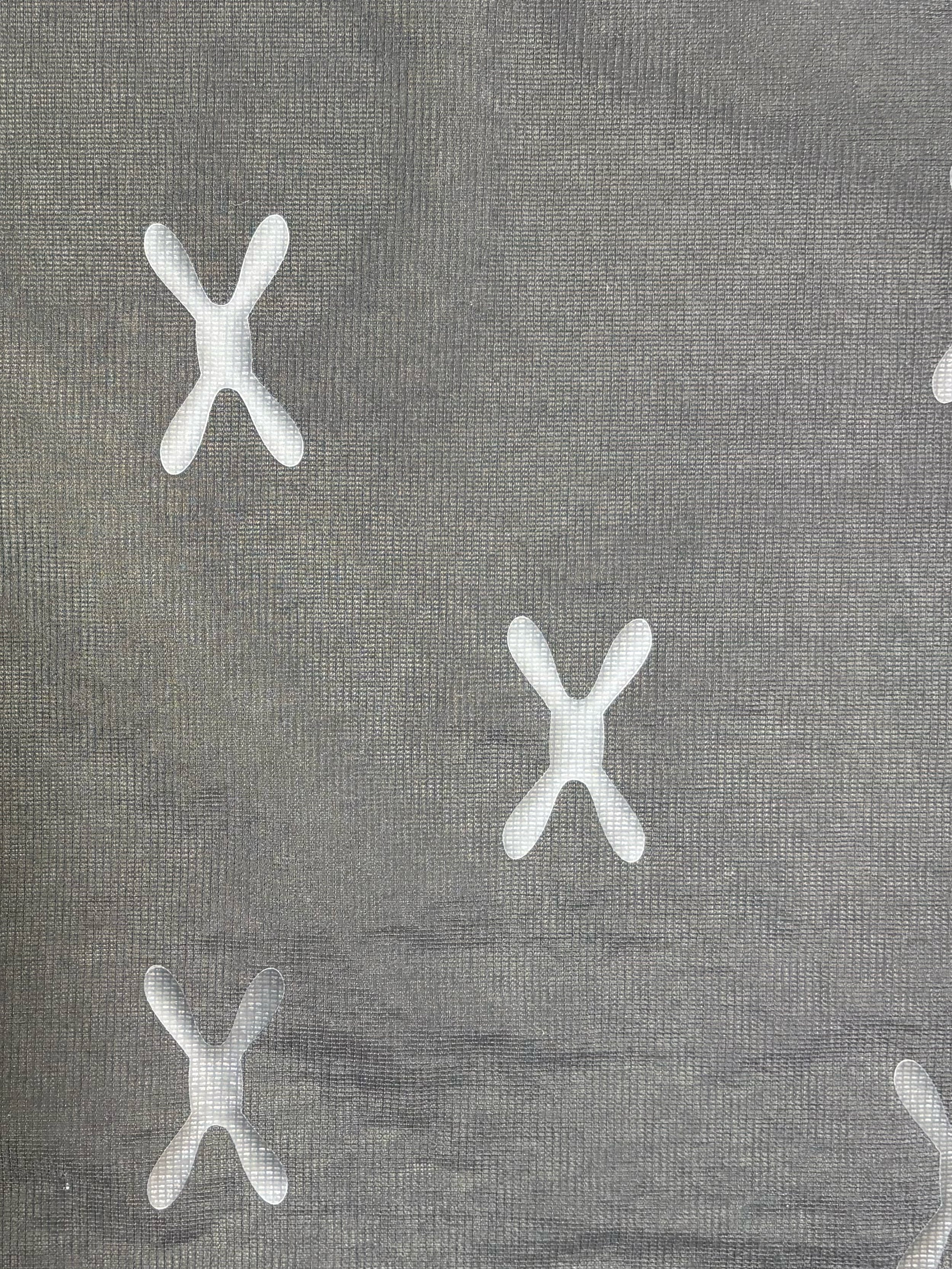
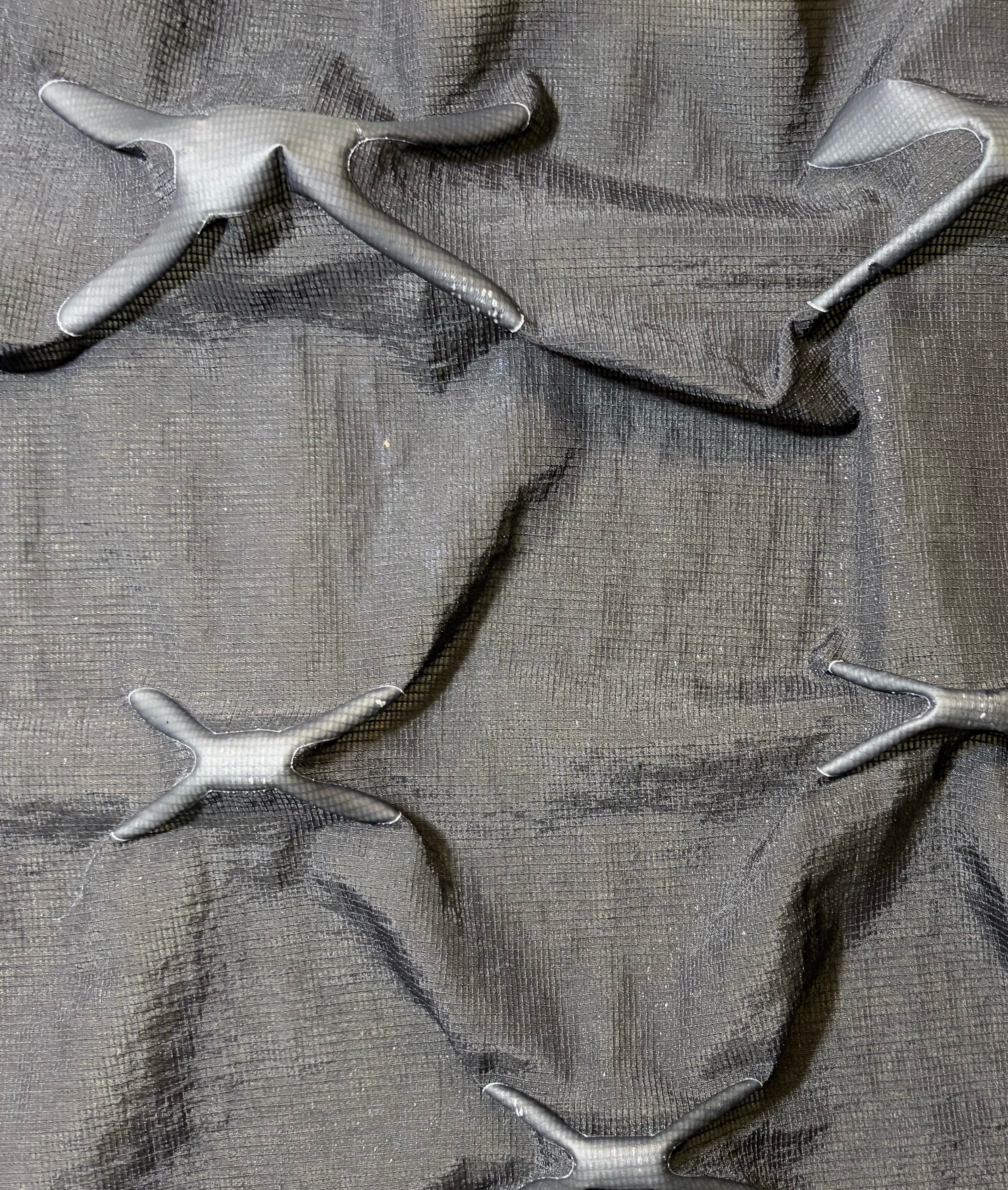
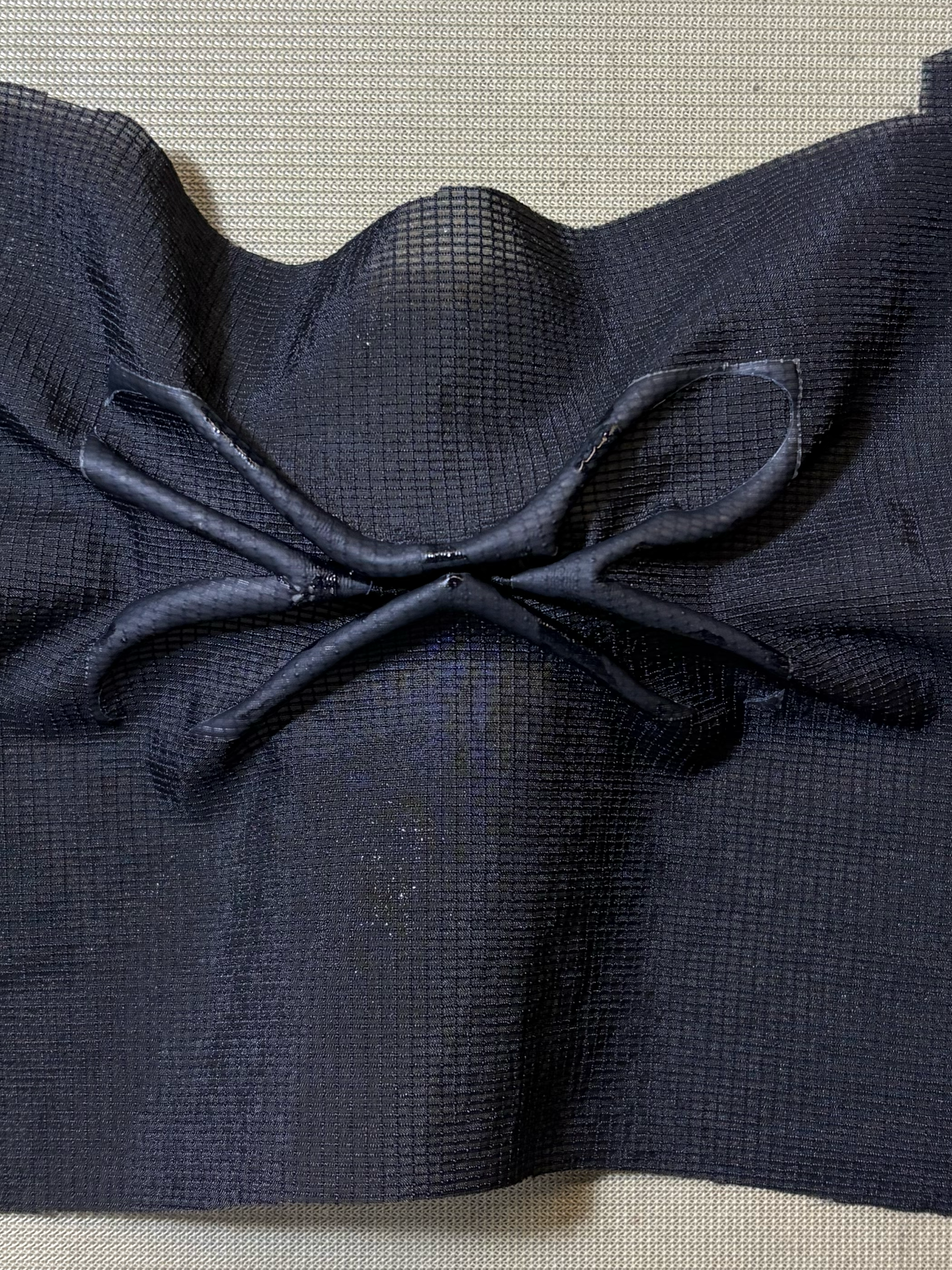
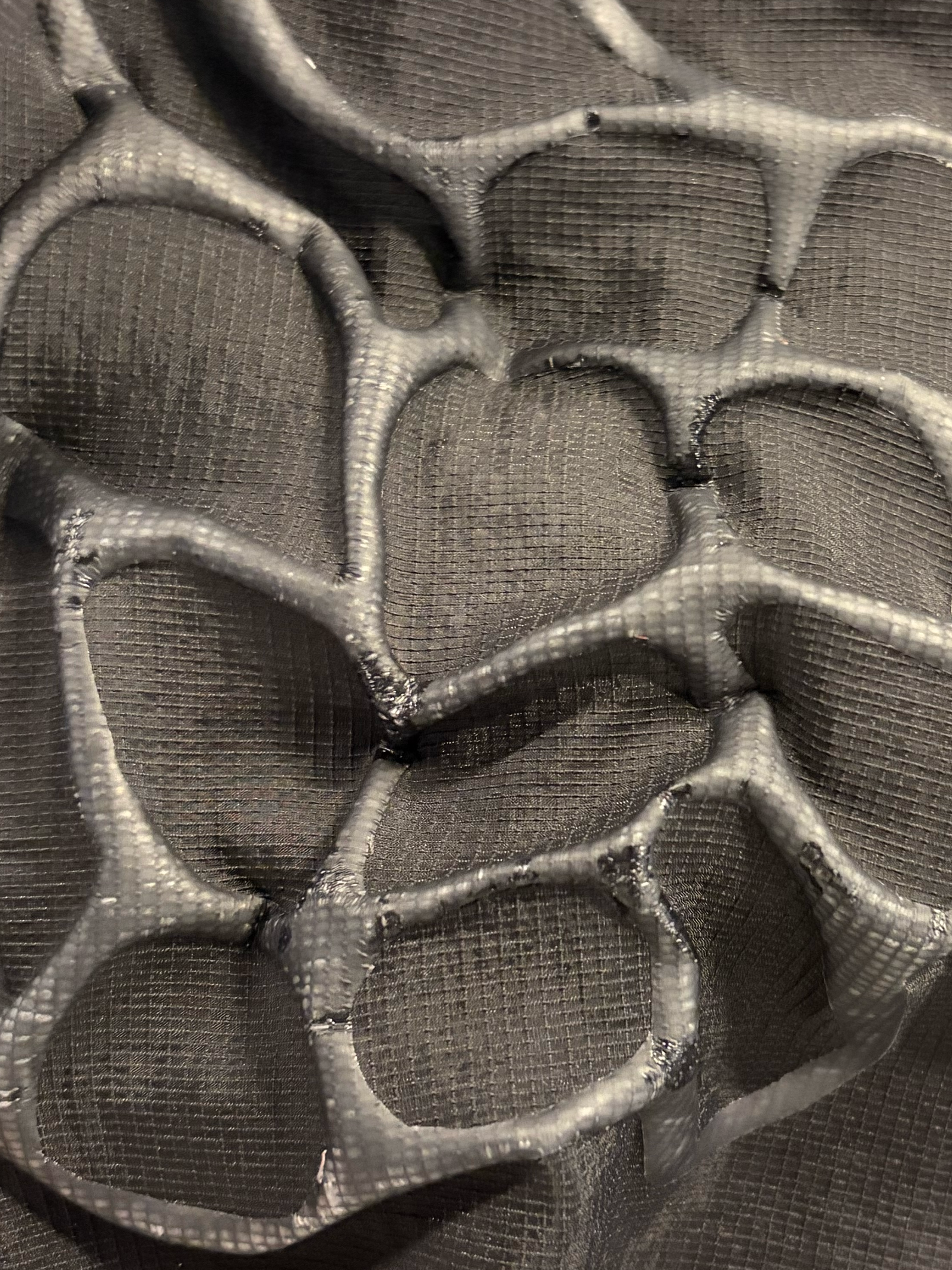
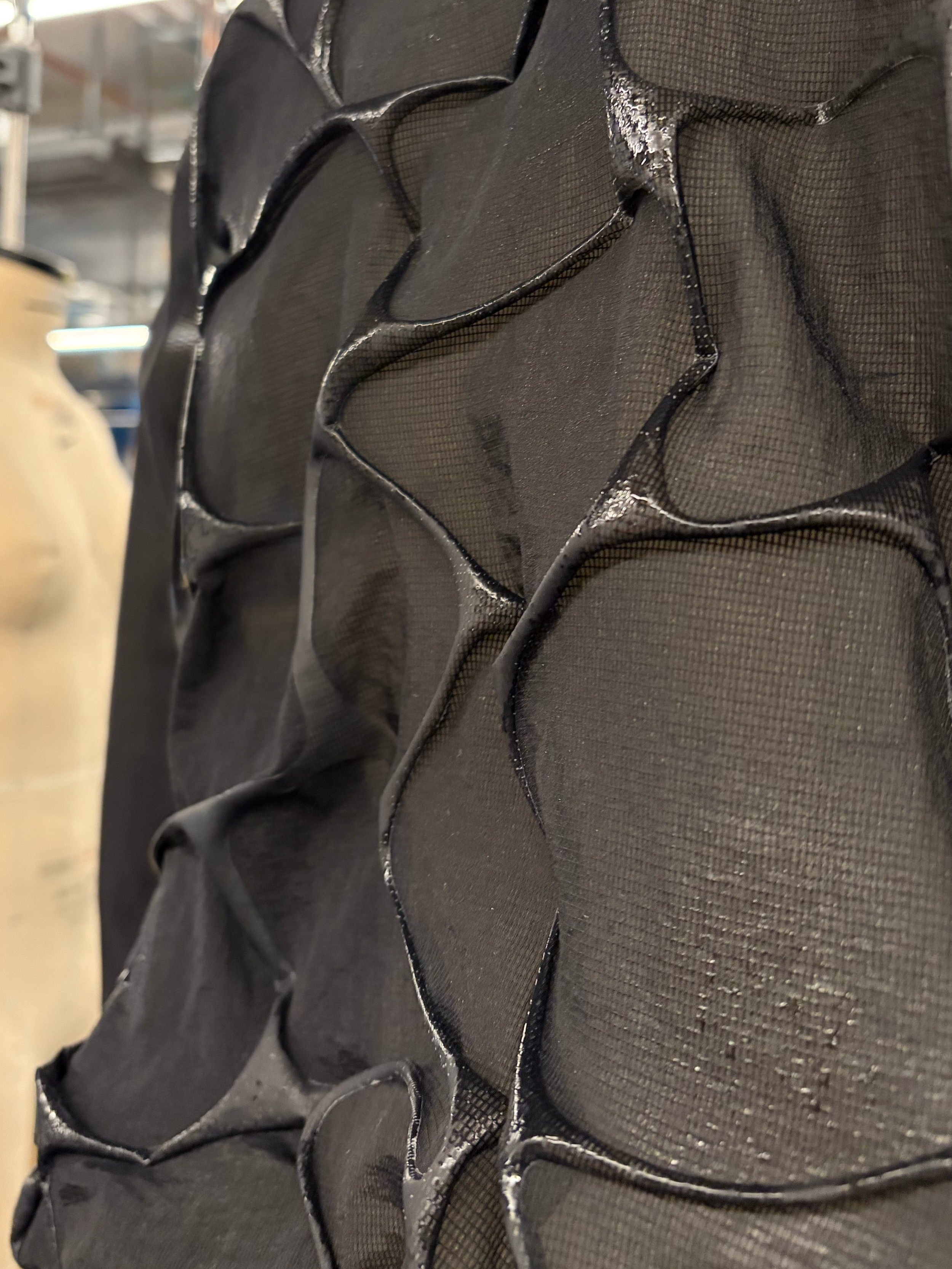
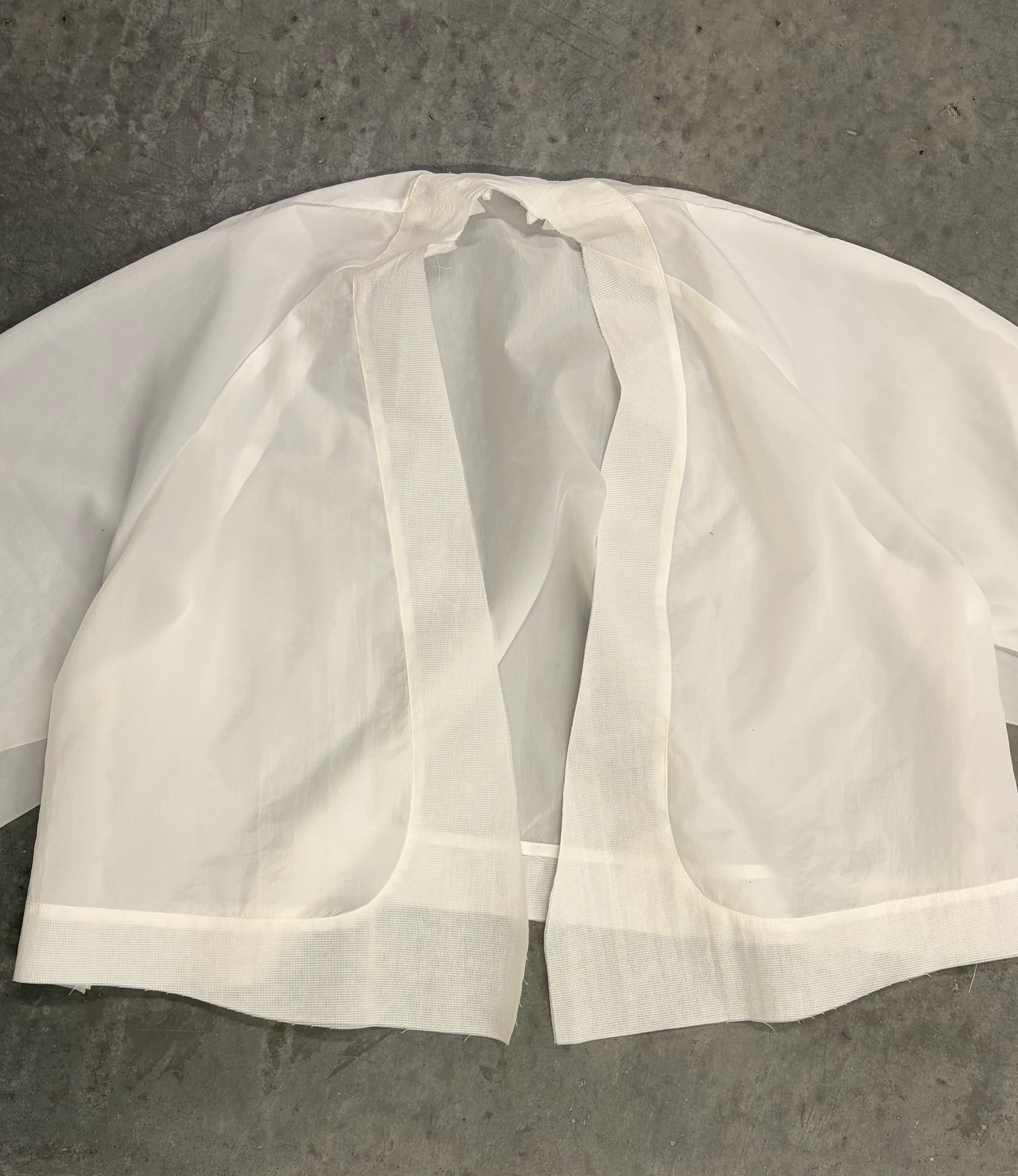
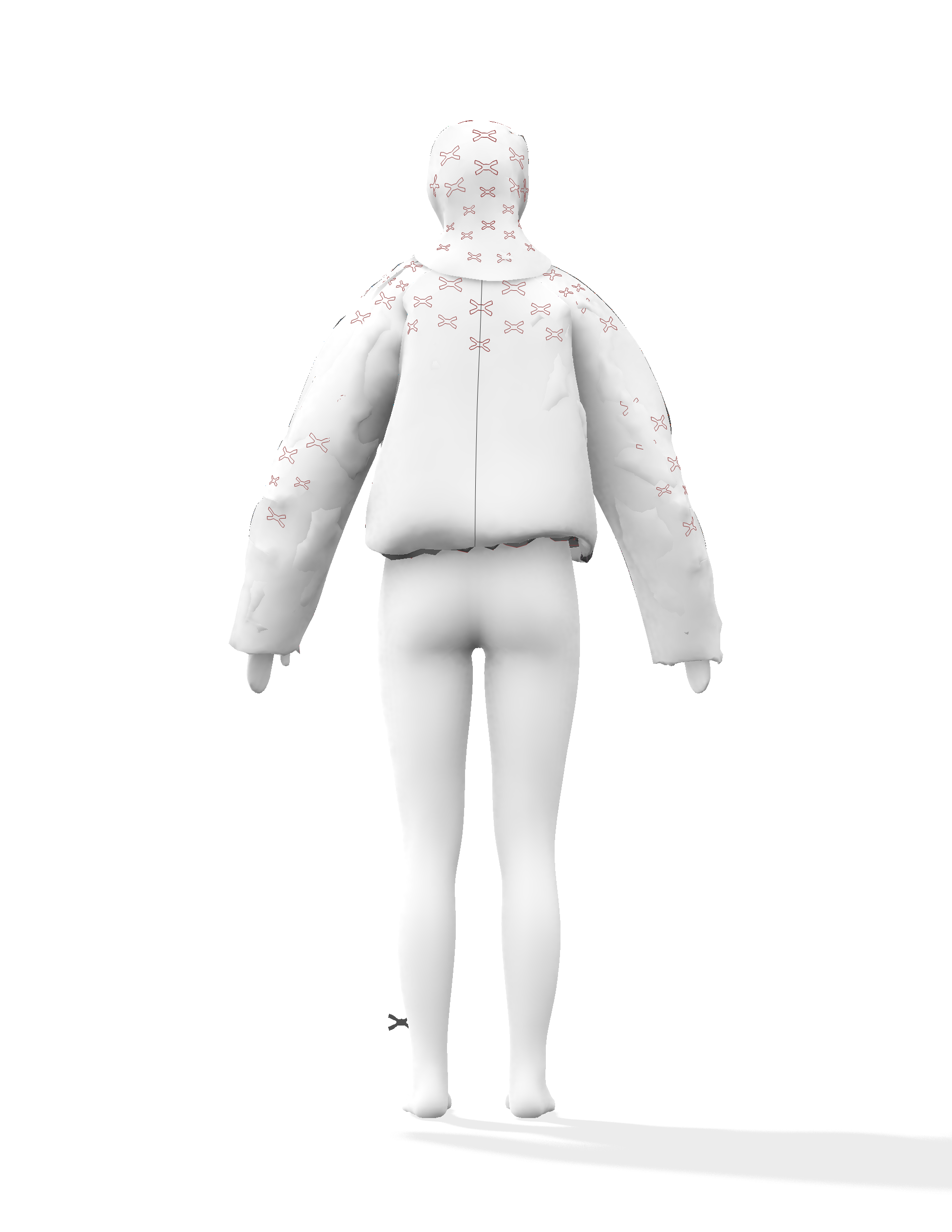
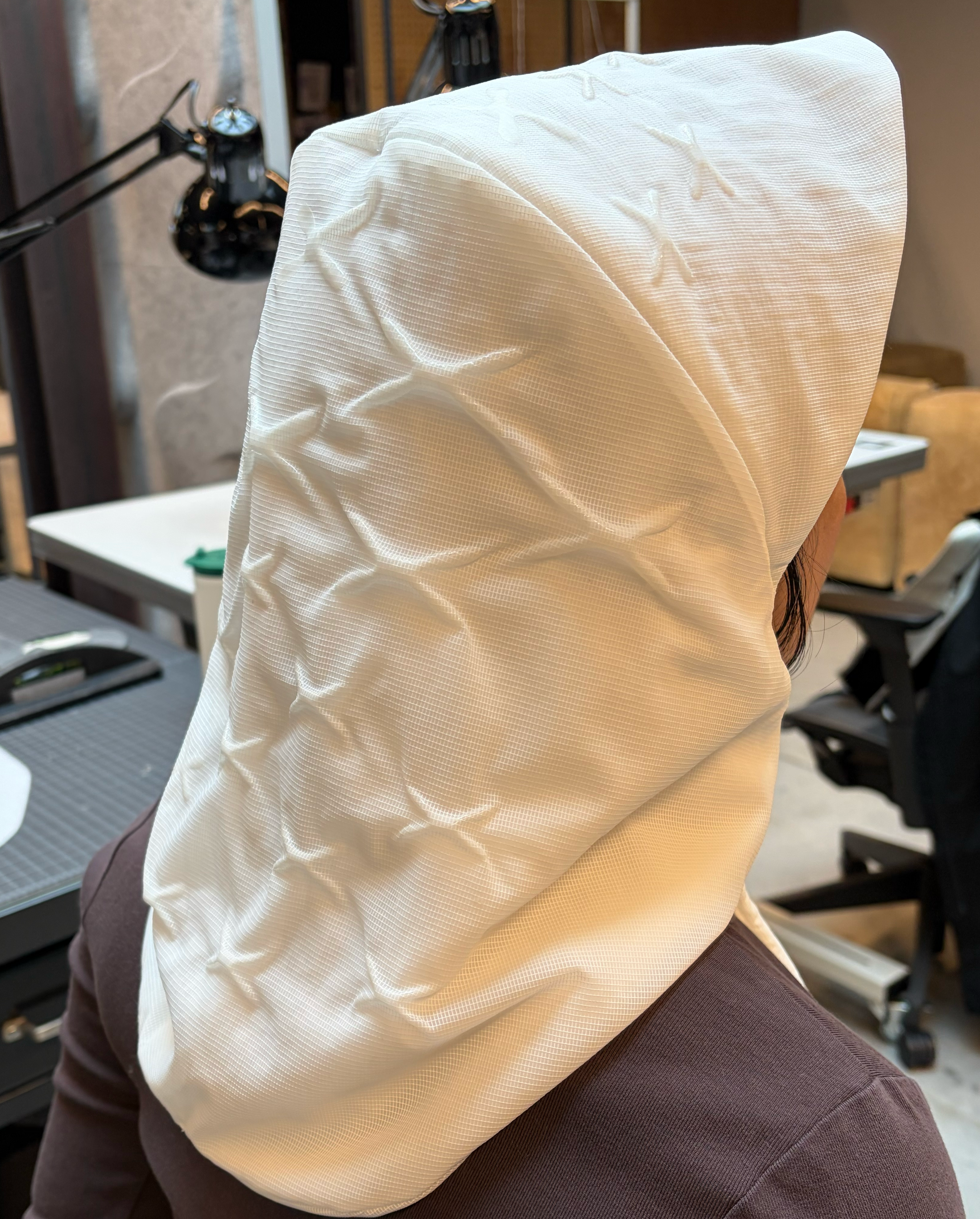
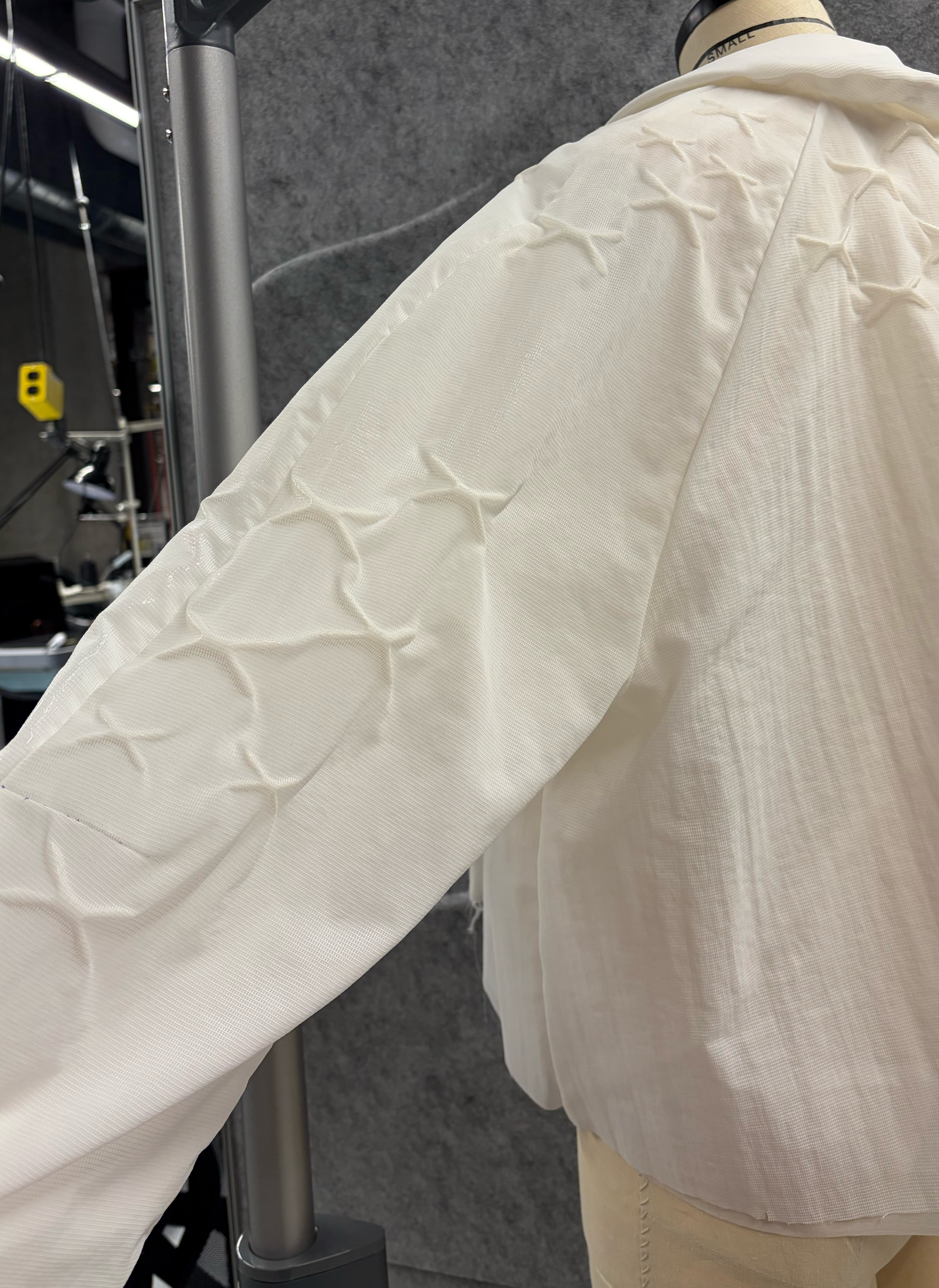
Aerogami is activated by water and moisture, so I wanted to explore what would happen if the technology lived on the exterior of a garment, much like a traditional rain jacket. Rather than hiding it within the construction, I wanted the film to become part of the visual language of the design—something that could transform the surface of the garment while responding to the elements.
02 — Material Exploration & Smocking
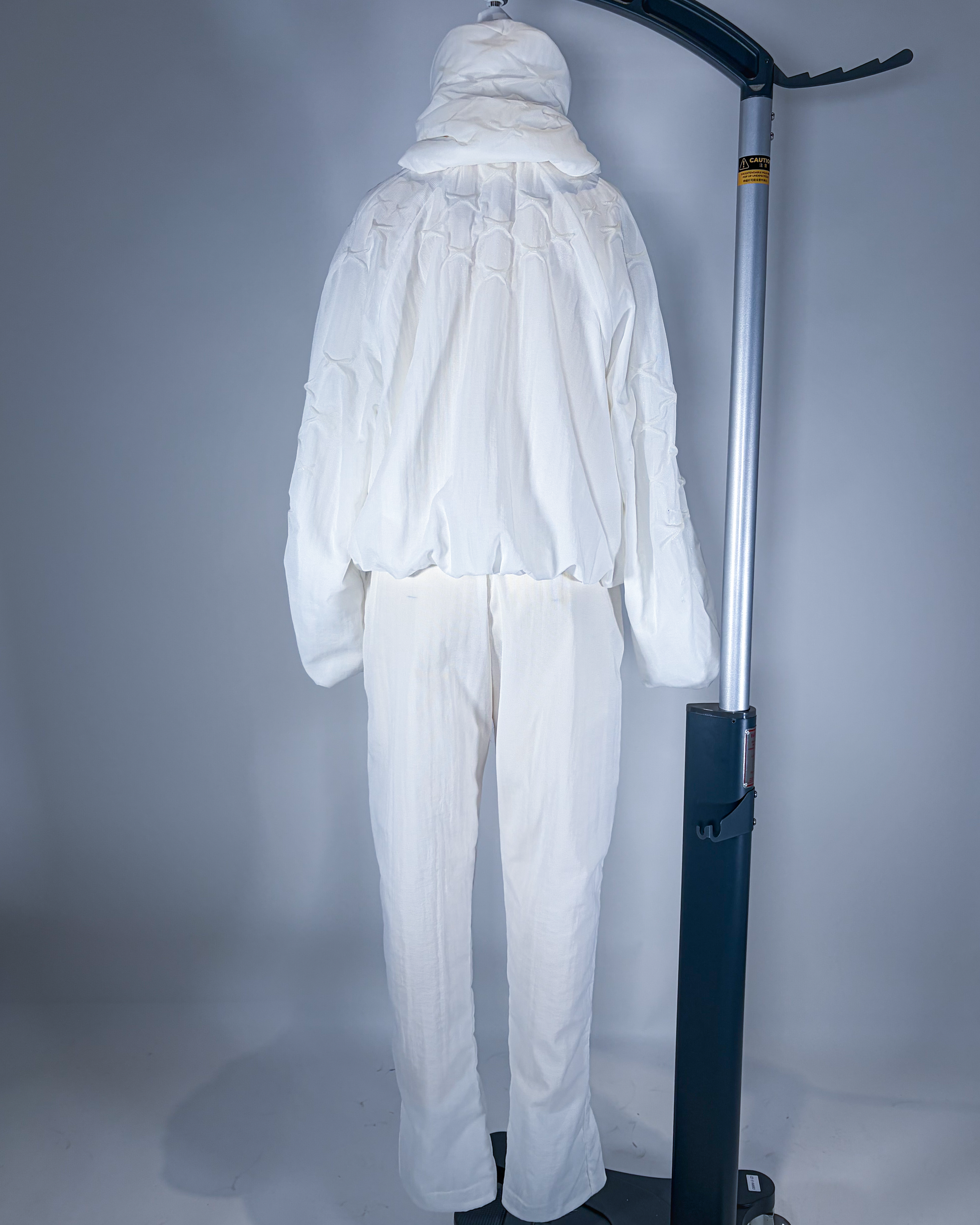
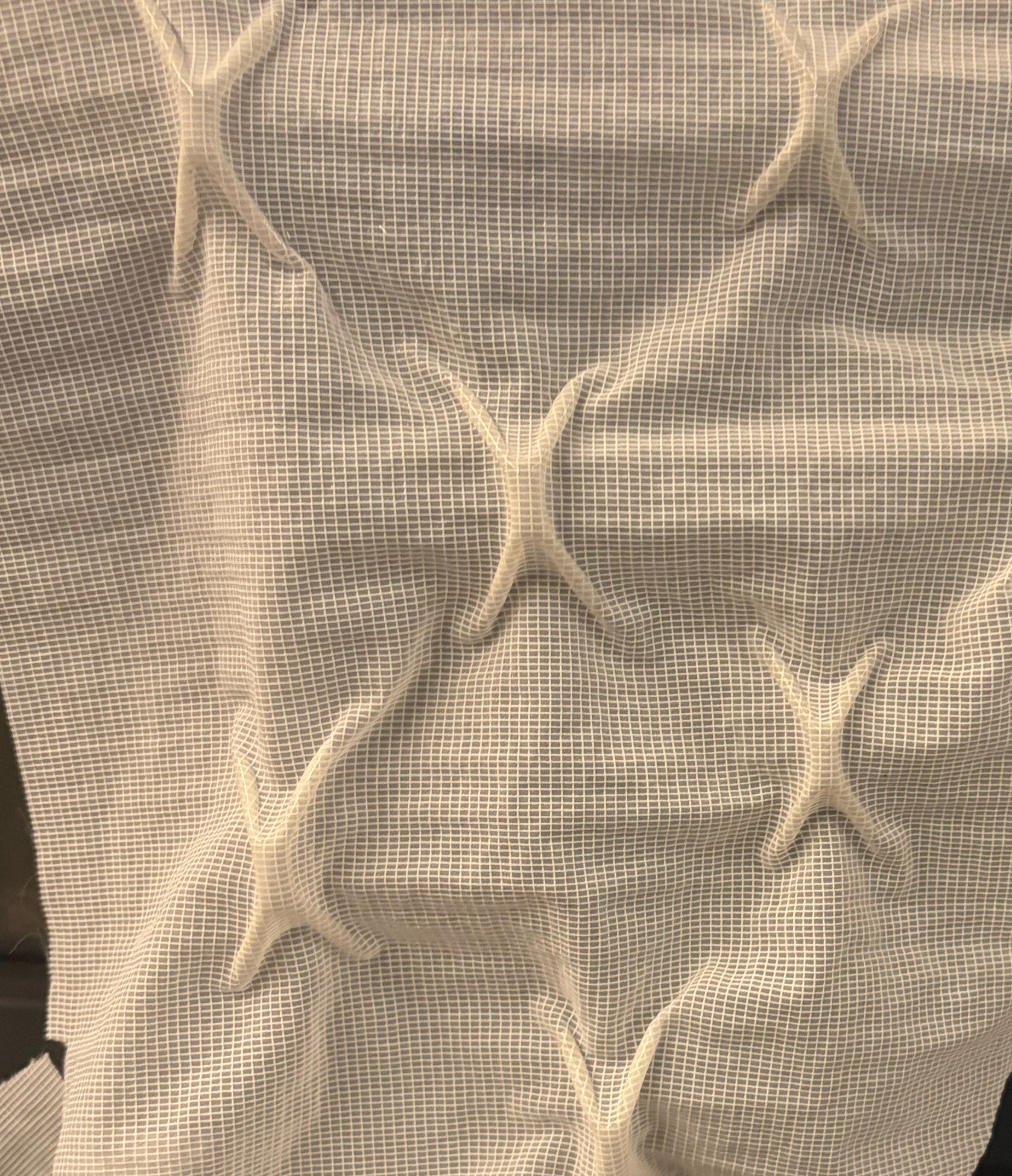
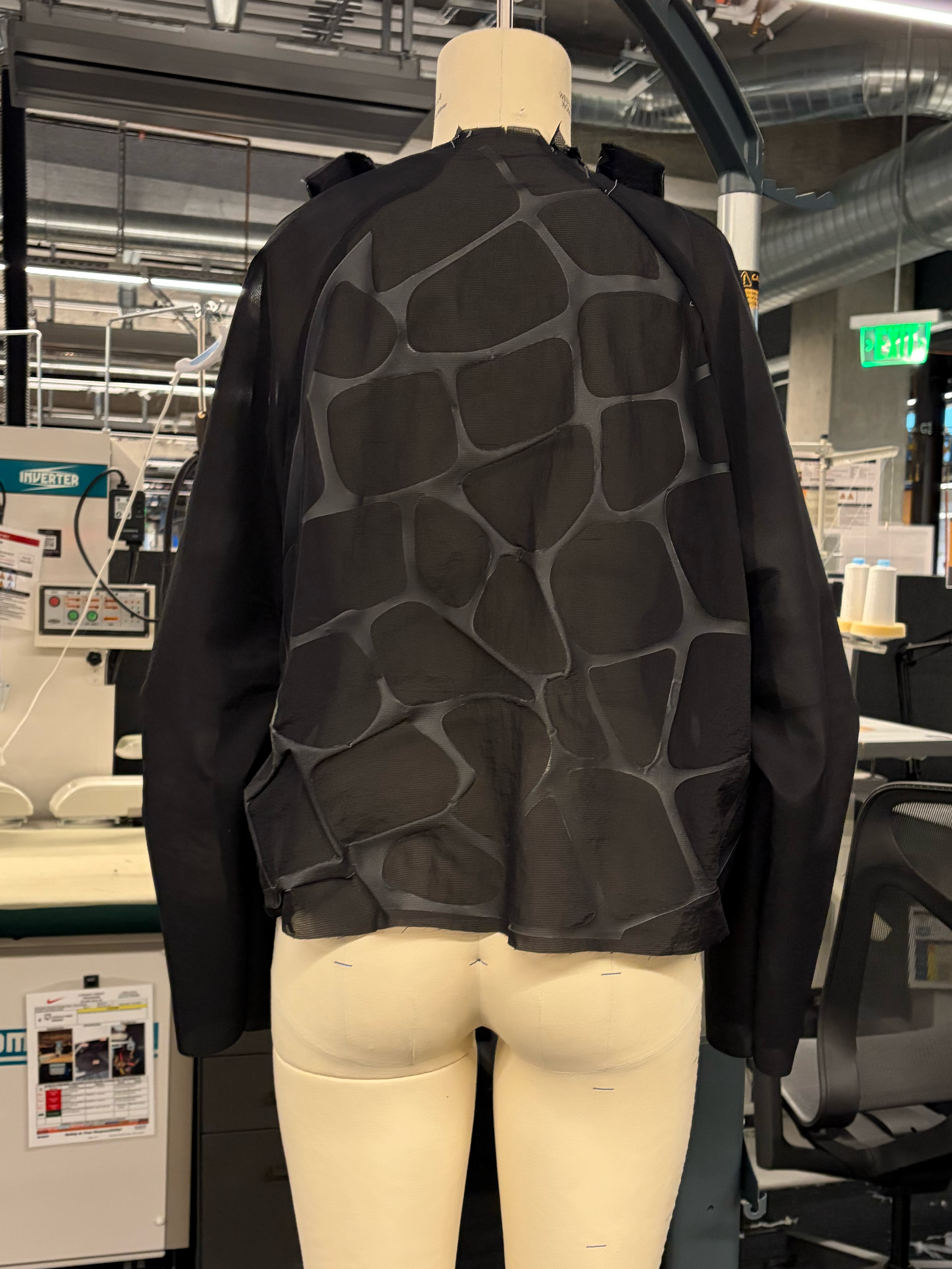
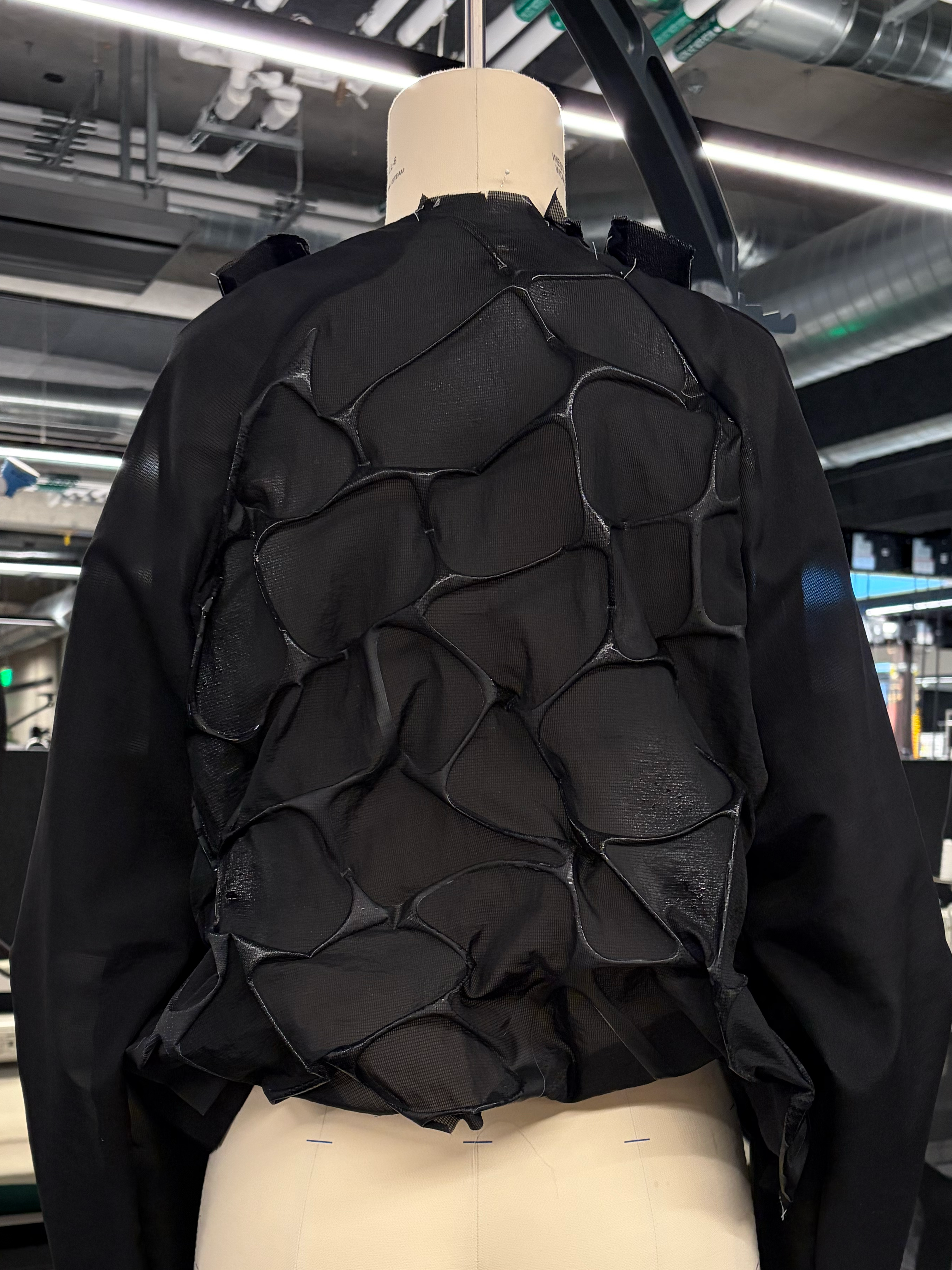
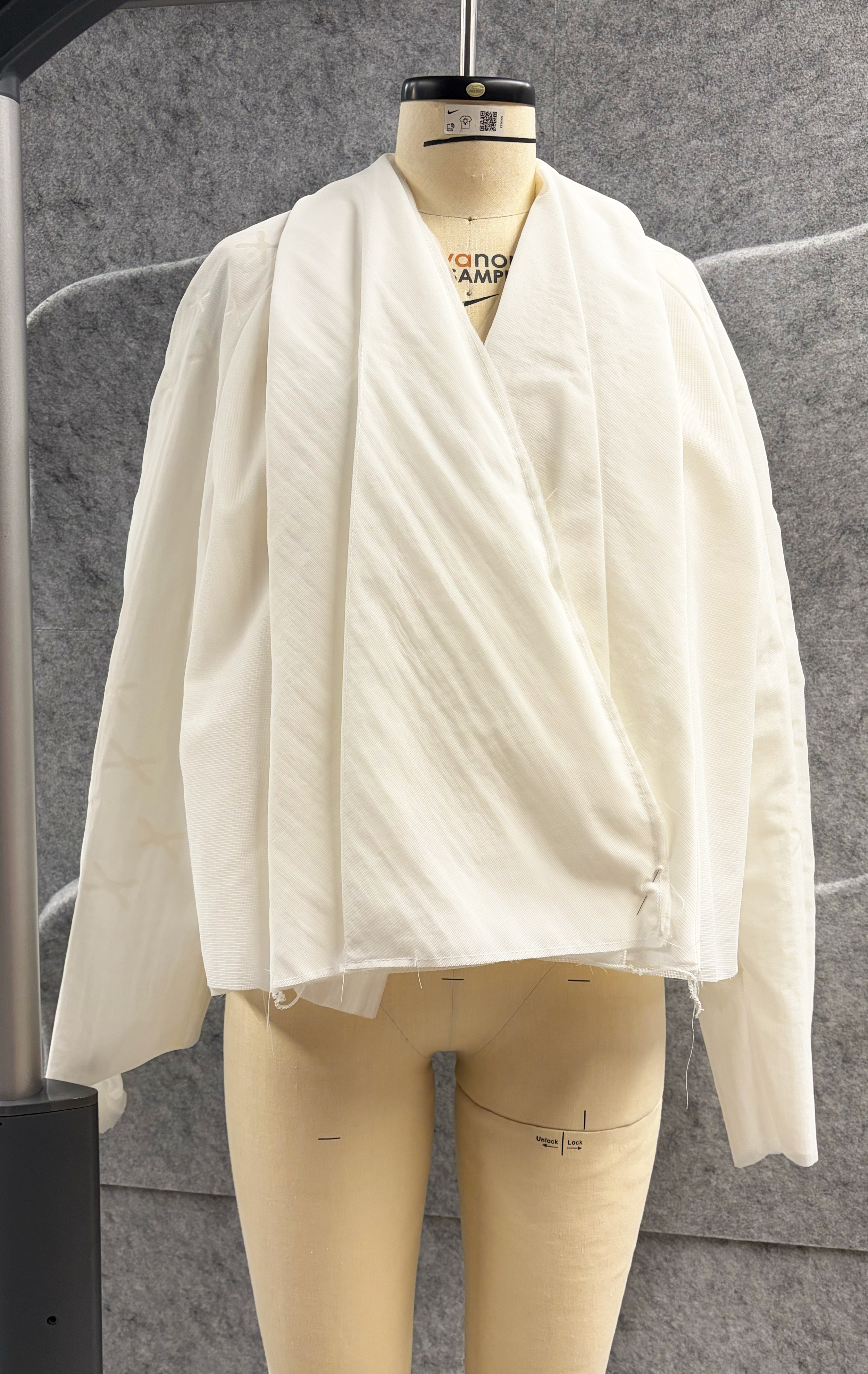
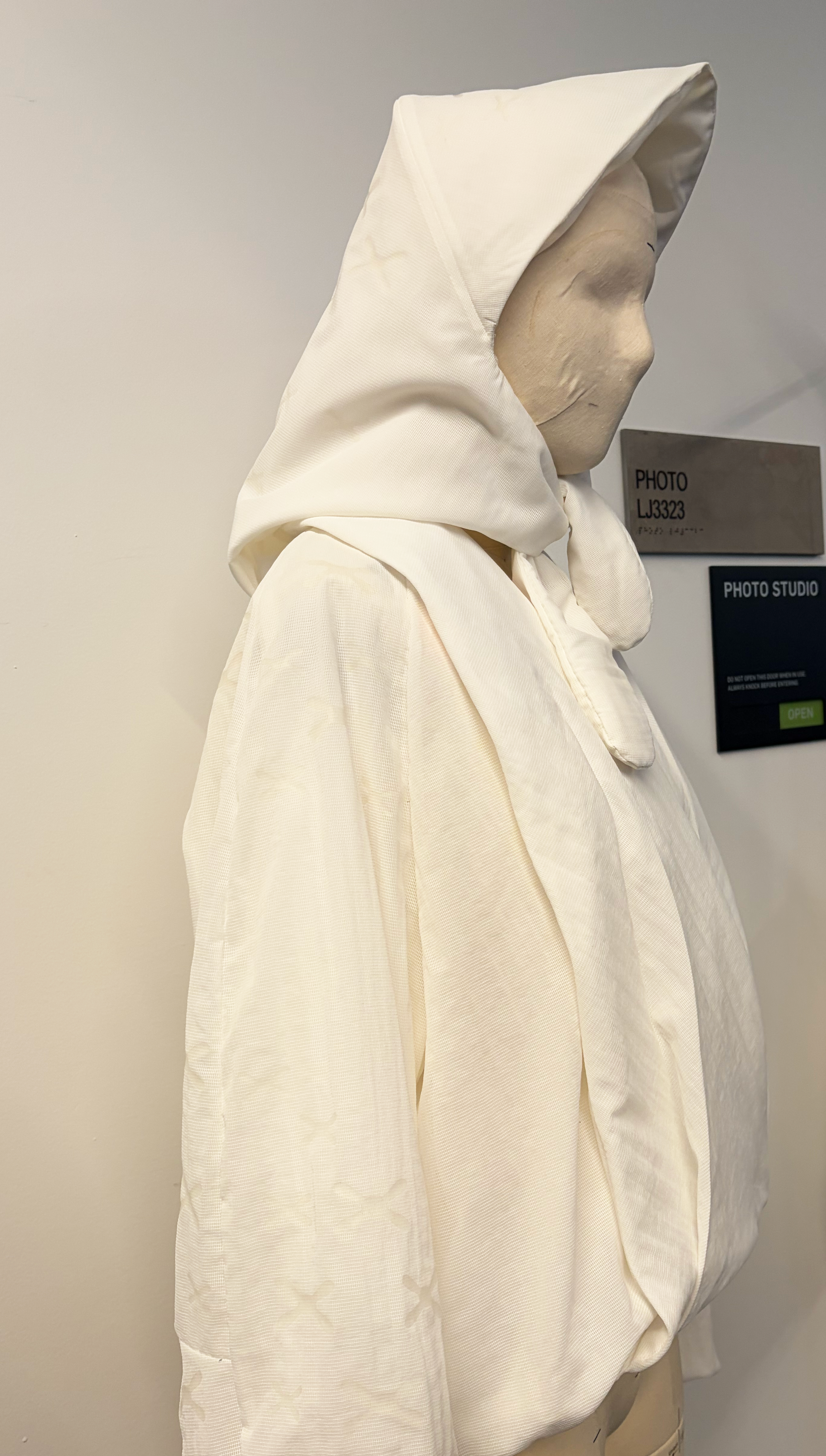
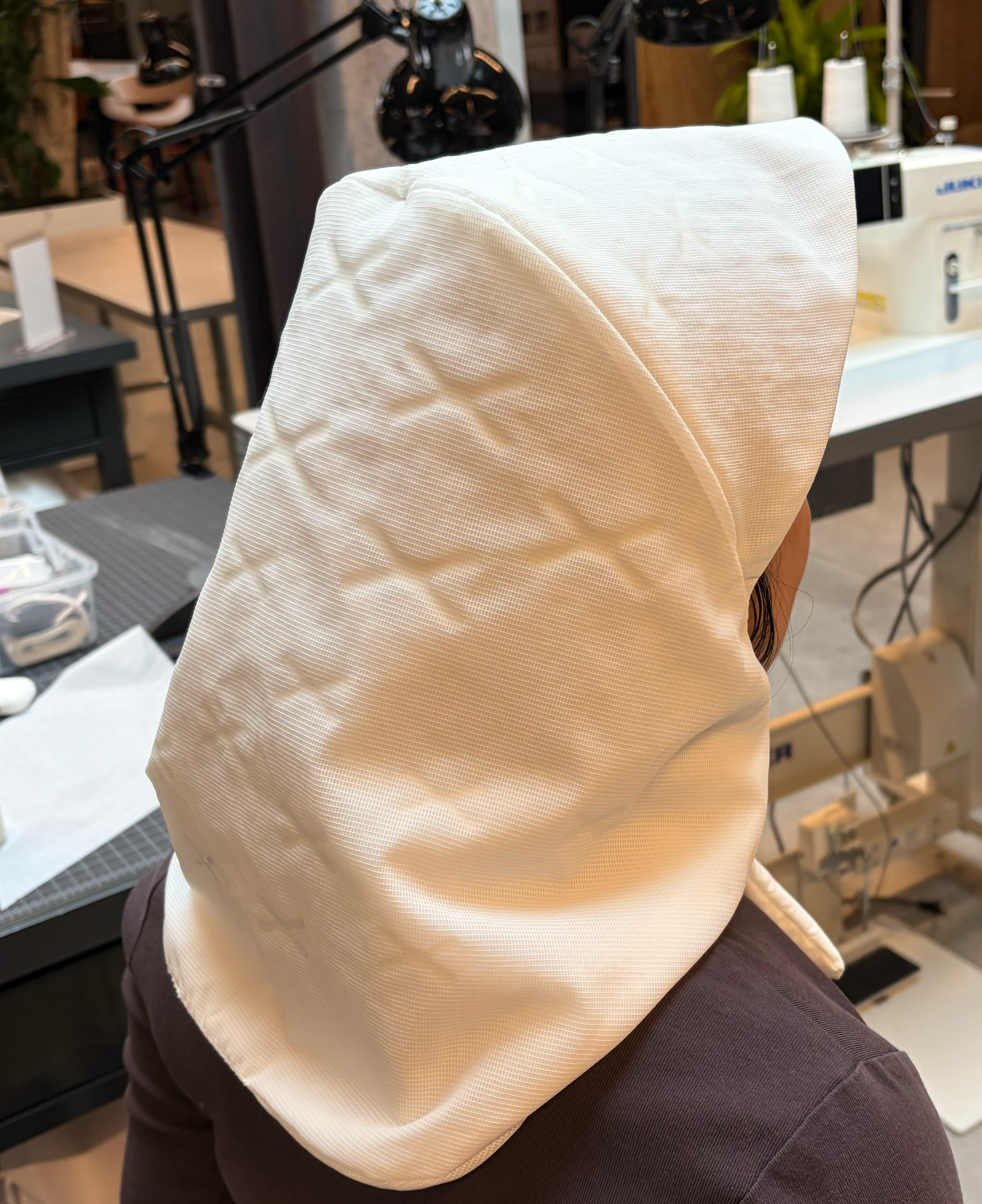
One of the biggest challenges was finding a material that would work with the Aerogami film. Because the film doesn’t adhere to water-resistant coated fabrics, I needed to explore alternatives that were lightweight and flexible enough to accommodate the film as it shrank during activation. I became interested in using that reaction to create a smocking effect, experimenting with different patterns to find a result that felt dimensional, feminine, and future-forward.
03 — Balancing Function & Expression
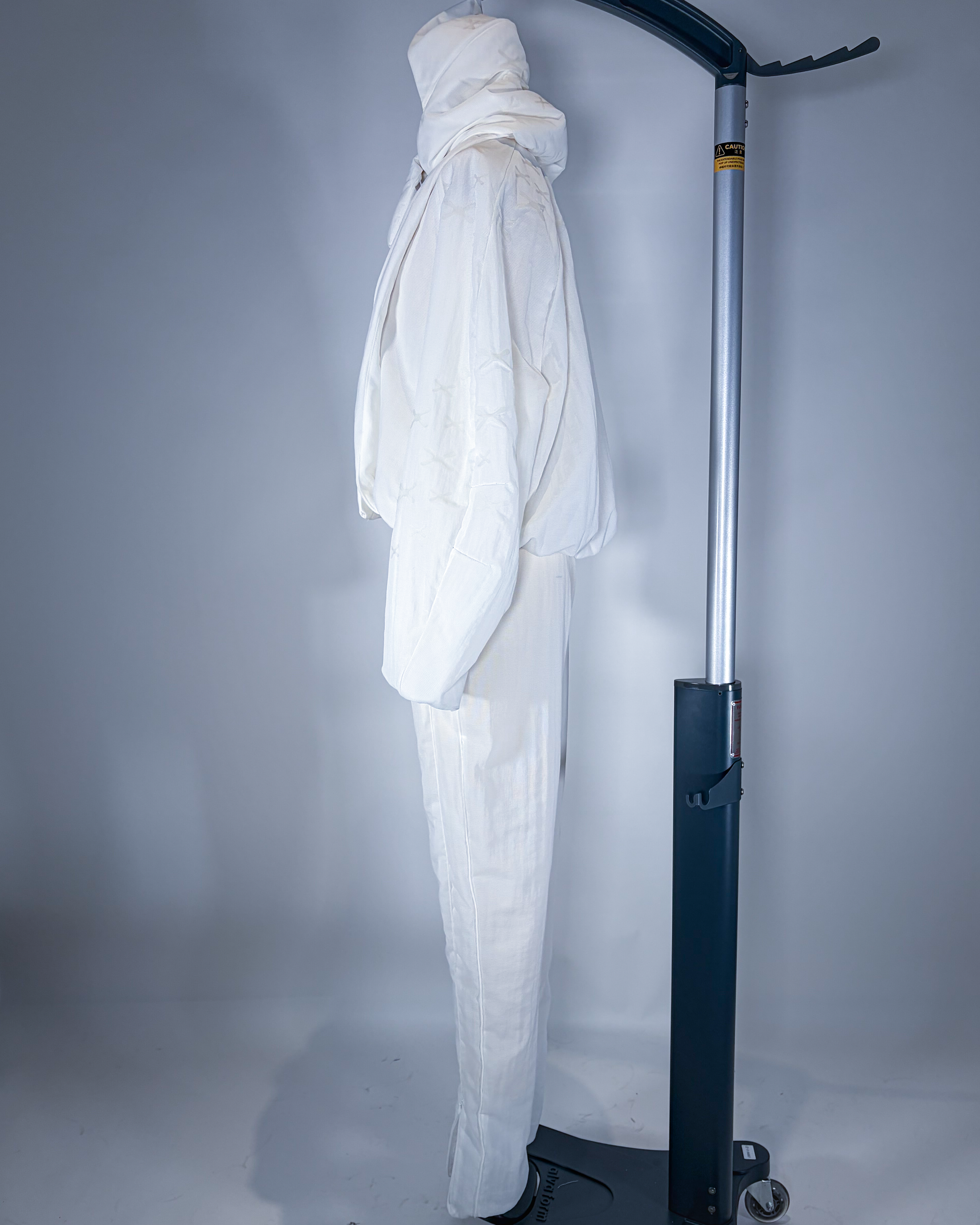
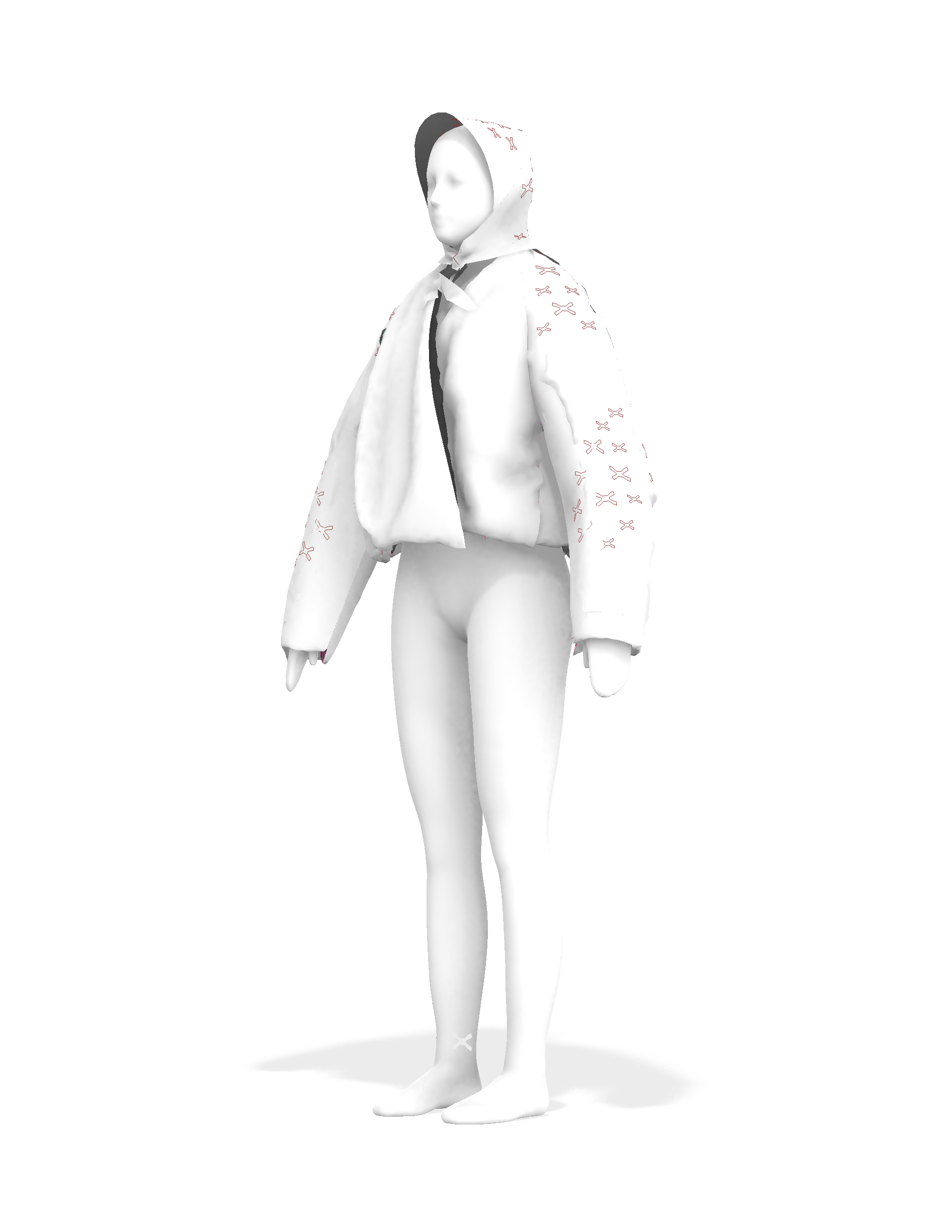
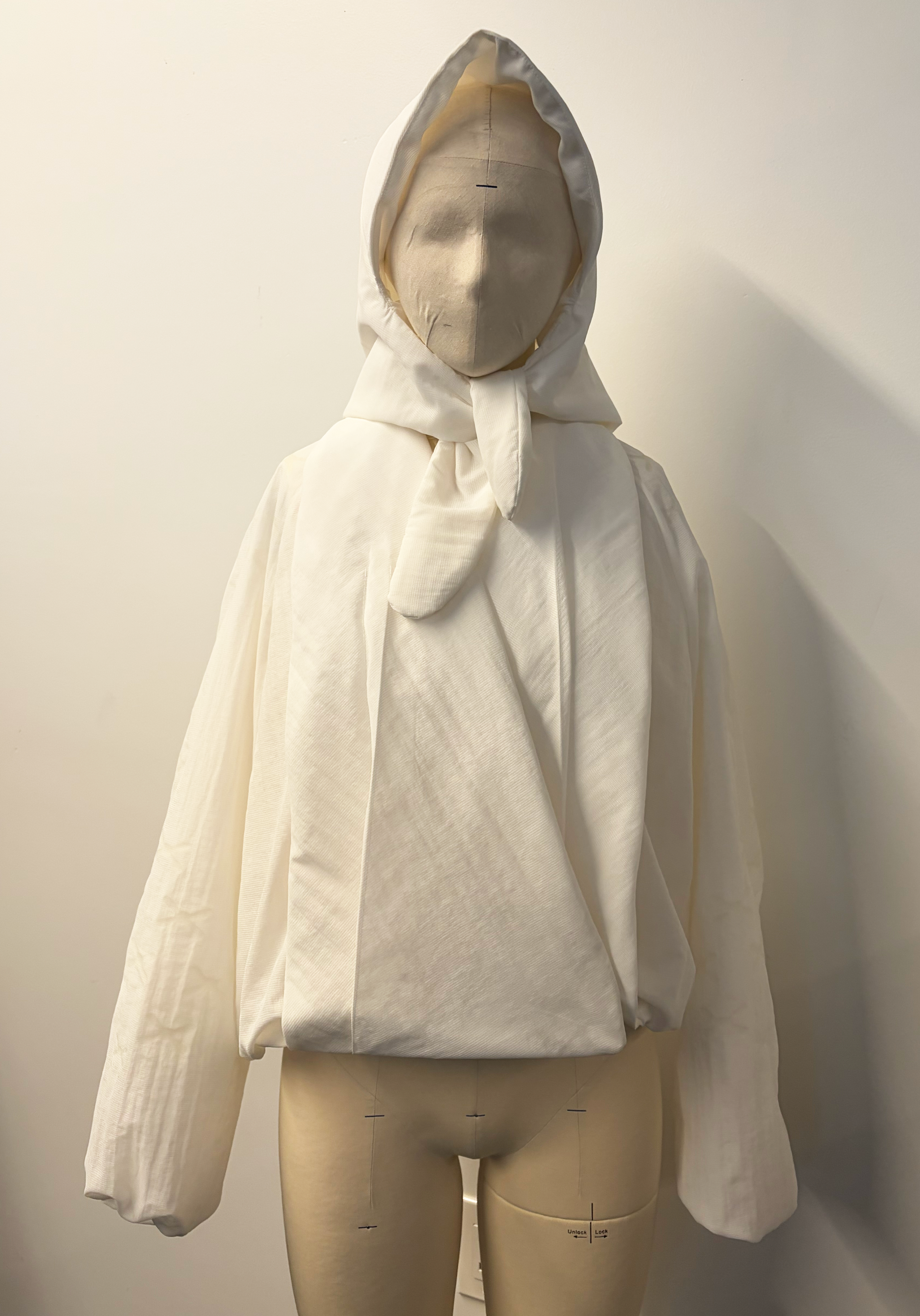
The lightweight, sheer exterior created the visual effect I wanted, but it wasn’t waterproof on its own. To maintain the rainwear concept, I made the underlayer material waterproof beneath the exterior material. This allowed me to preserve the softness and transparency of the outer shell while adding the protection the garment needed. The silhouette became intentionally voluminous, bringing a more expressive, lifestyle sensibility to a piece rooted in weather protection.
04 — Extending Protection Through Accessories
I carried the Aerogami exploration beyond the jacket by creating a hood-scarf-bandana hybrid featuring the same technology. The piece adds another layer of coverage while extending the concept into an accessory that can be styled in different ways. I liked the opportunity to think about protection beyond the garment itself, using the technology to explore how coverage, styling, and function could work together.
05 — Completing the Look
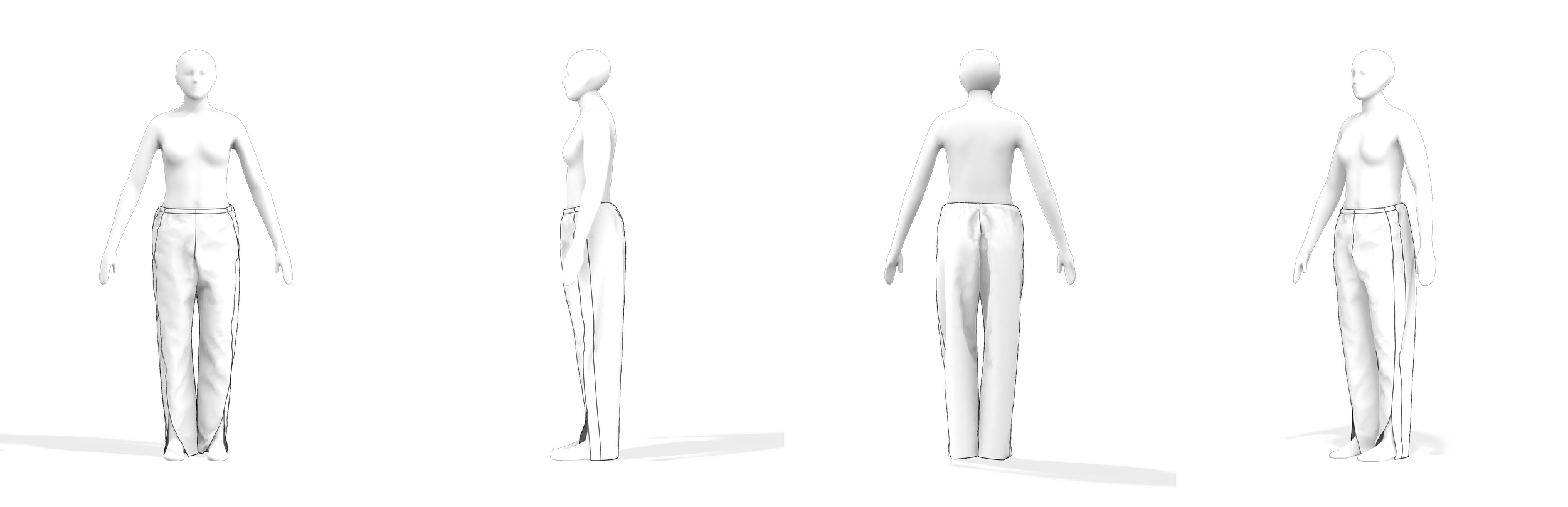
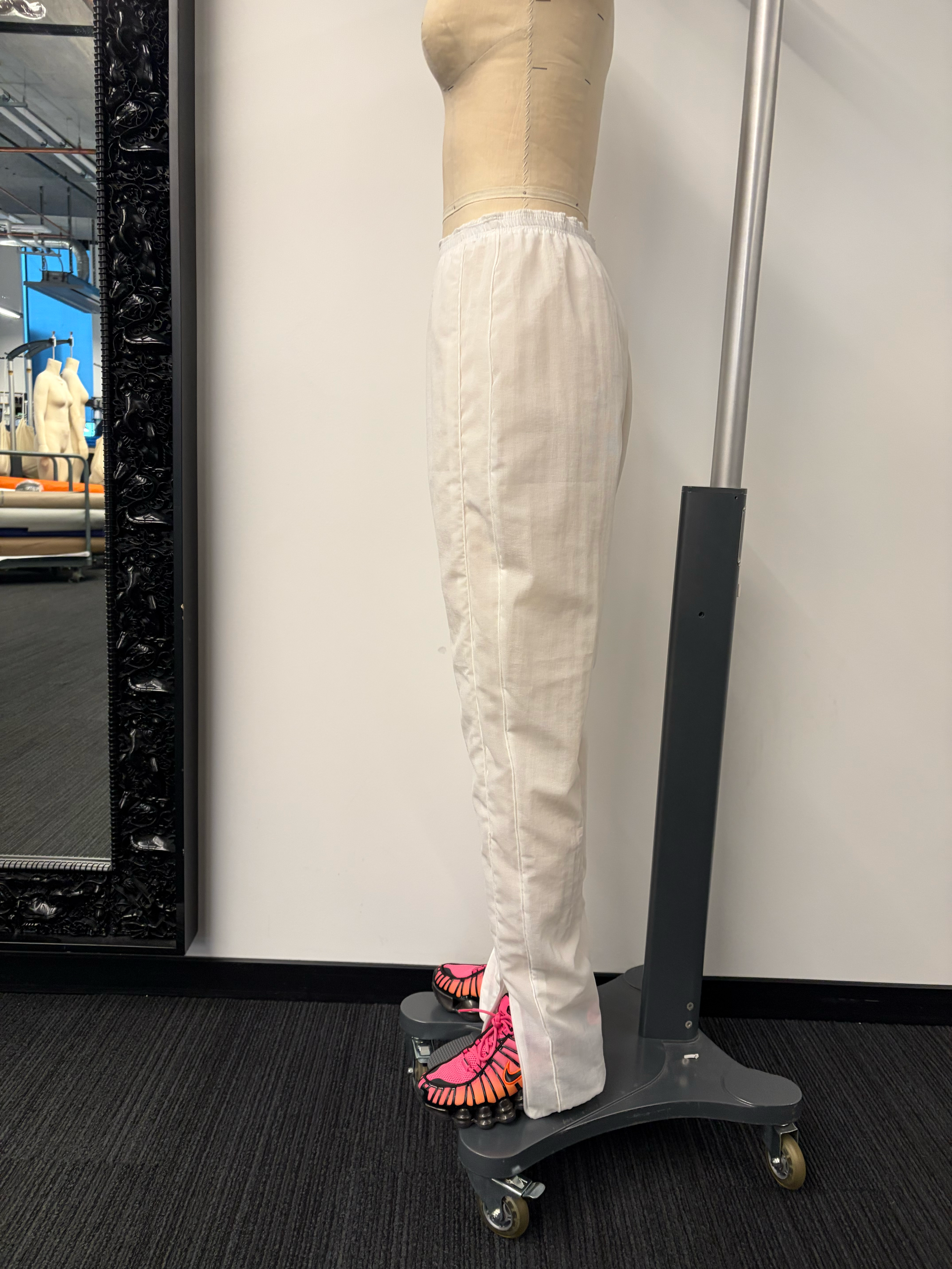
For the pant, I developed a tapered carrot silhouette that balances the volume of the jacket with a more defined shape through the leg. A zipper at the hem allows the wearer to open the leg and reveal the footwear, while a piped track stripe brings a subtle sport reference into the look. The sheer, lightweight material adds a feminine quality, connecting the pant back to the jacket and reinforcing the balance between technical function and lifestyle expression.
JET PRINTING — Pushing Surface & Silhouette
01 — Exploring the Technology
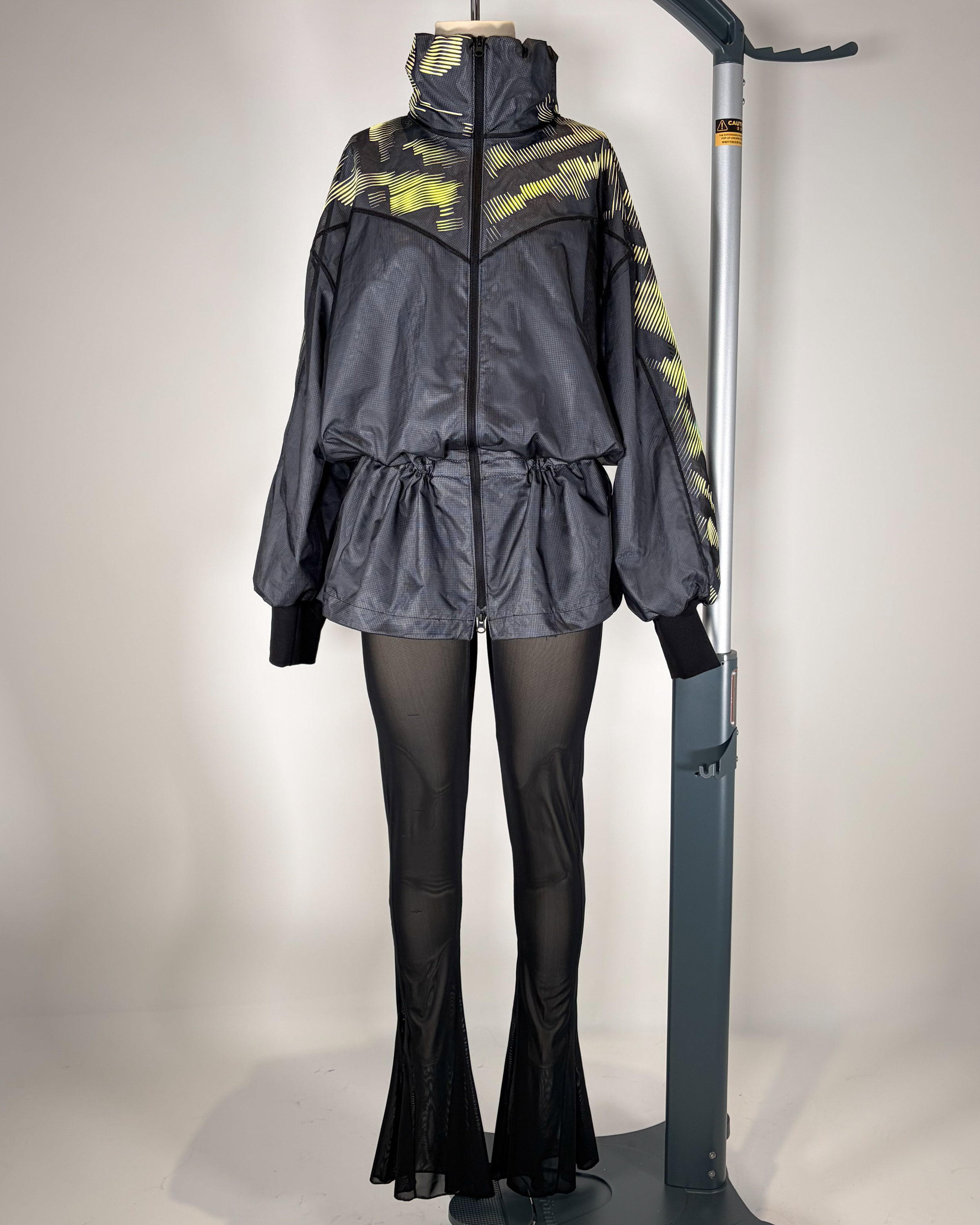
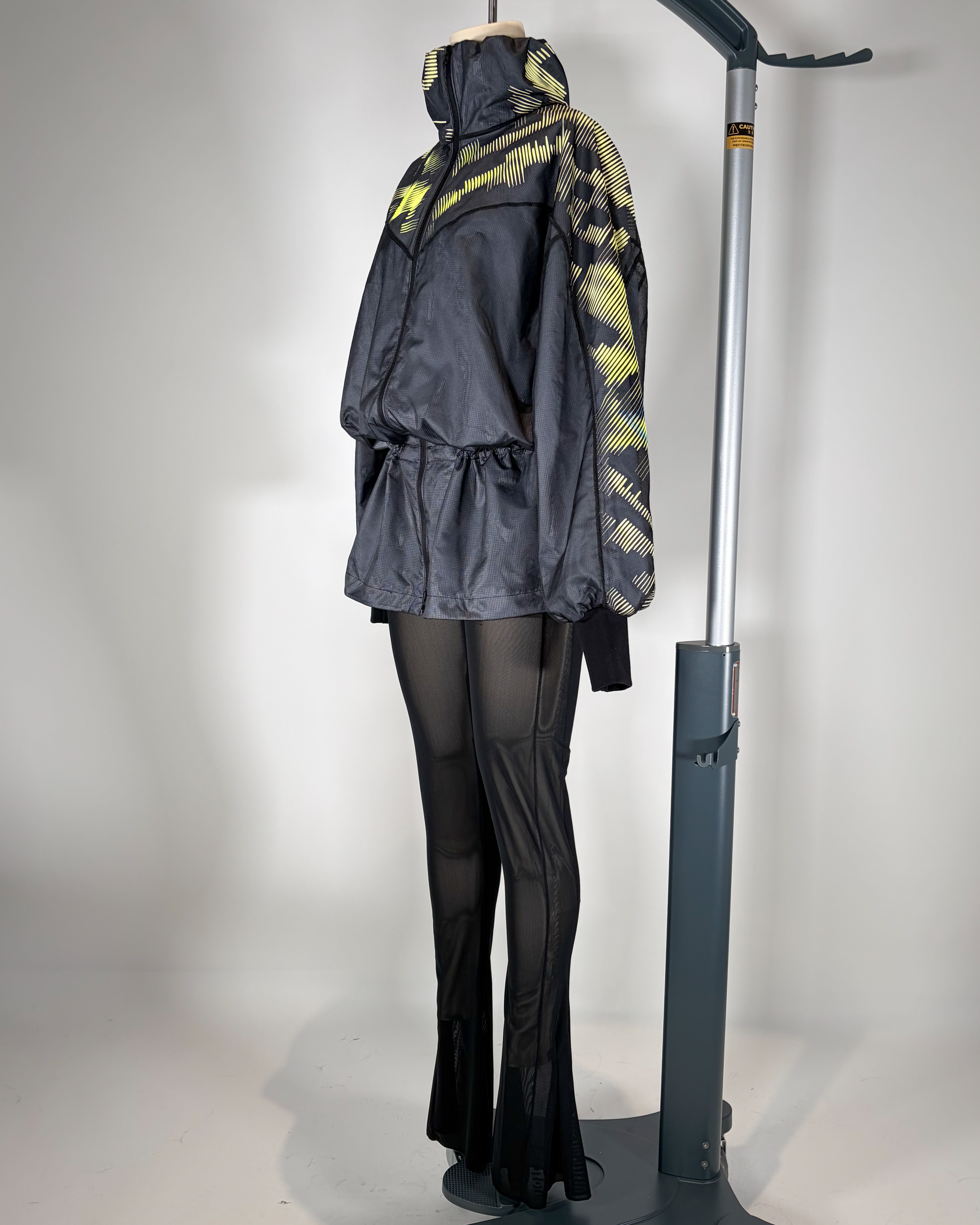
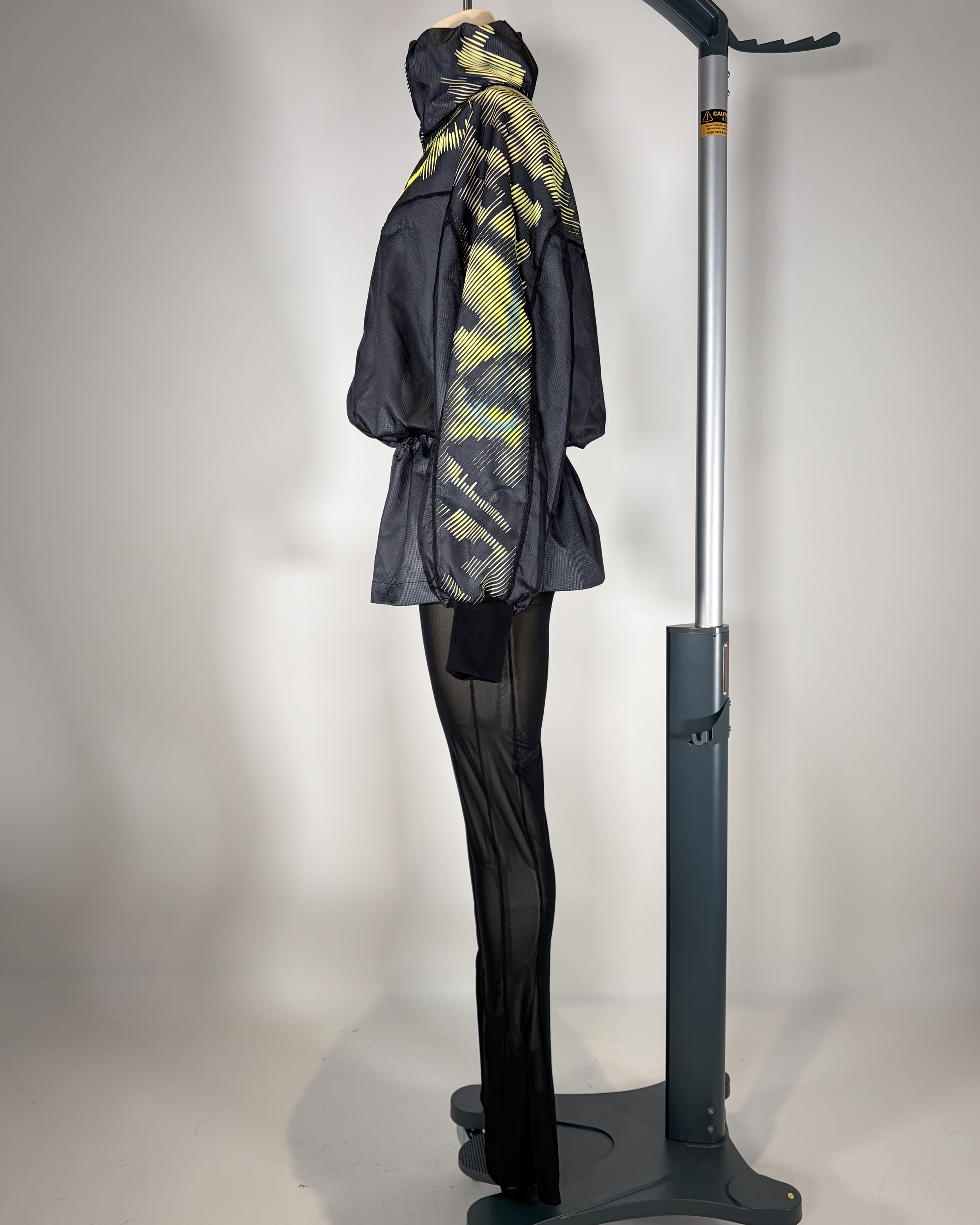
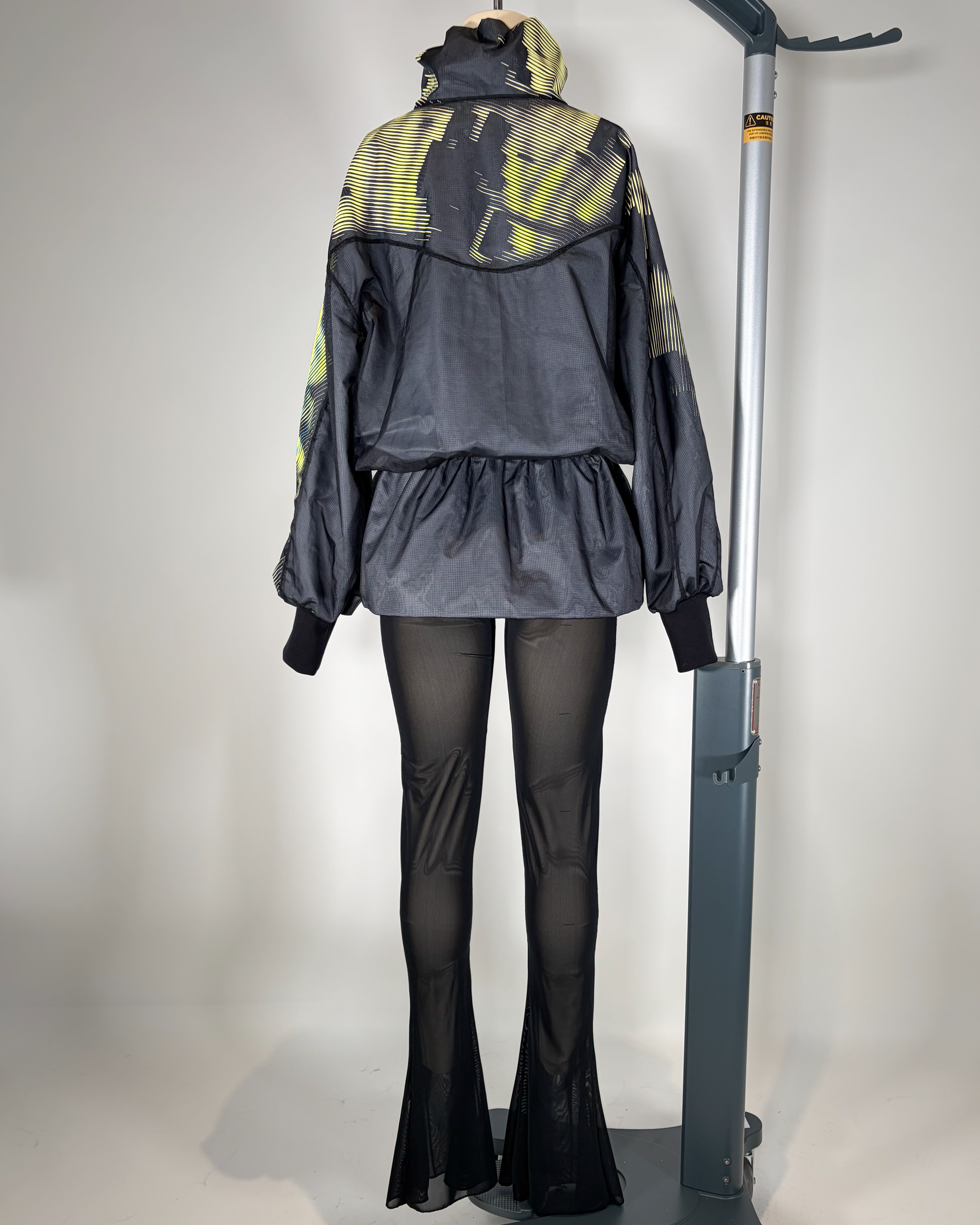
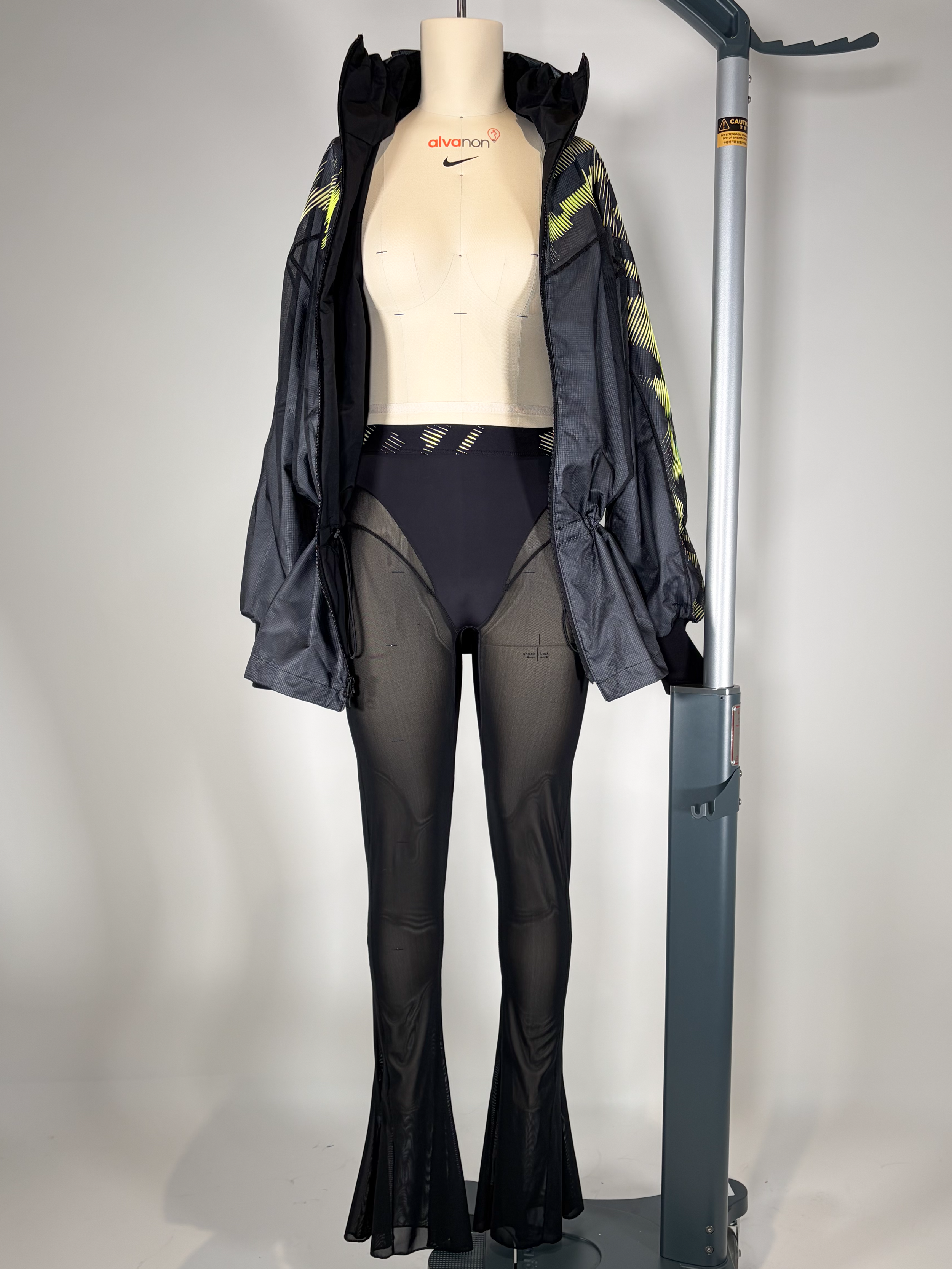
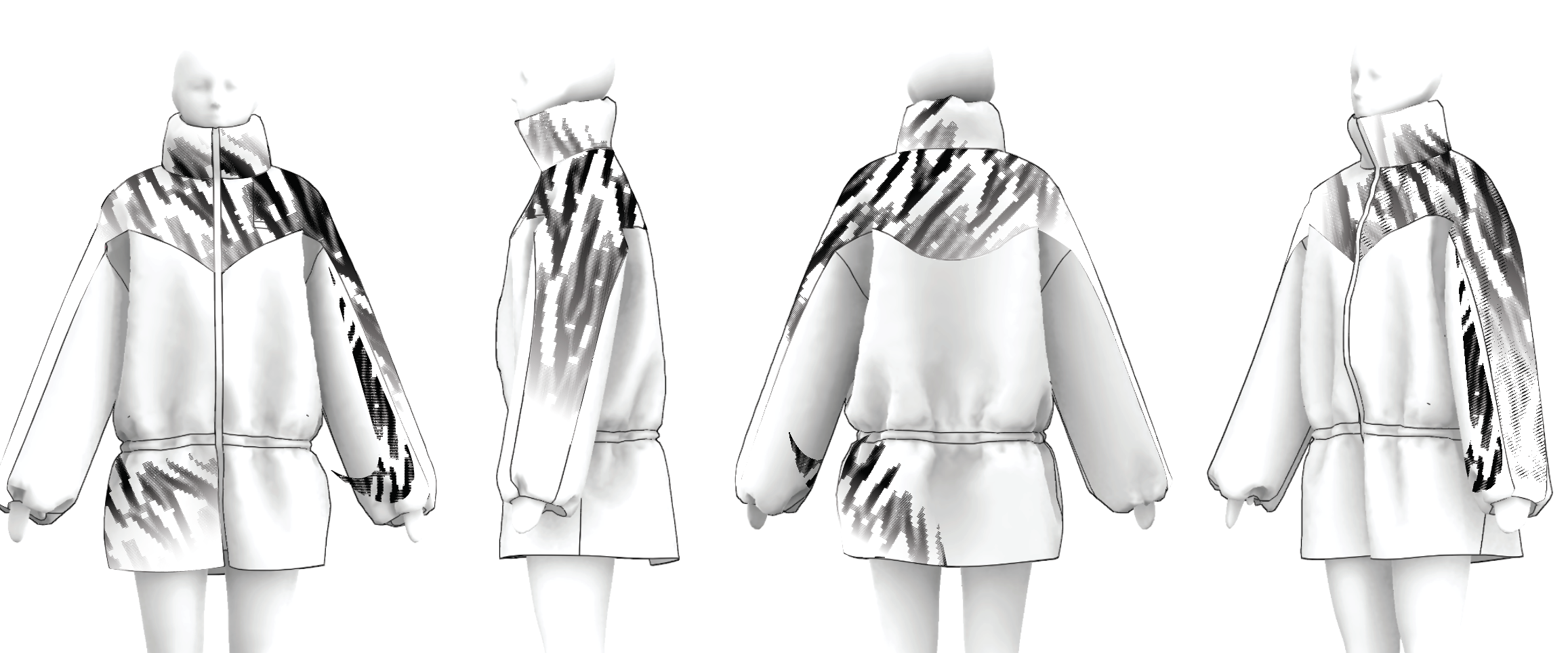
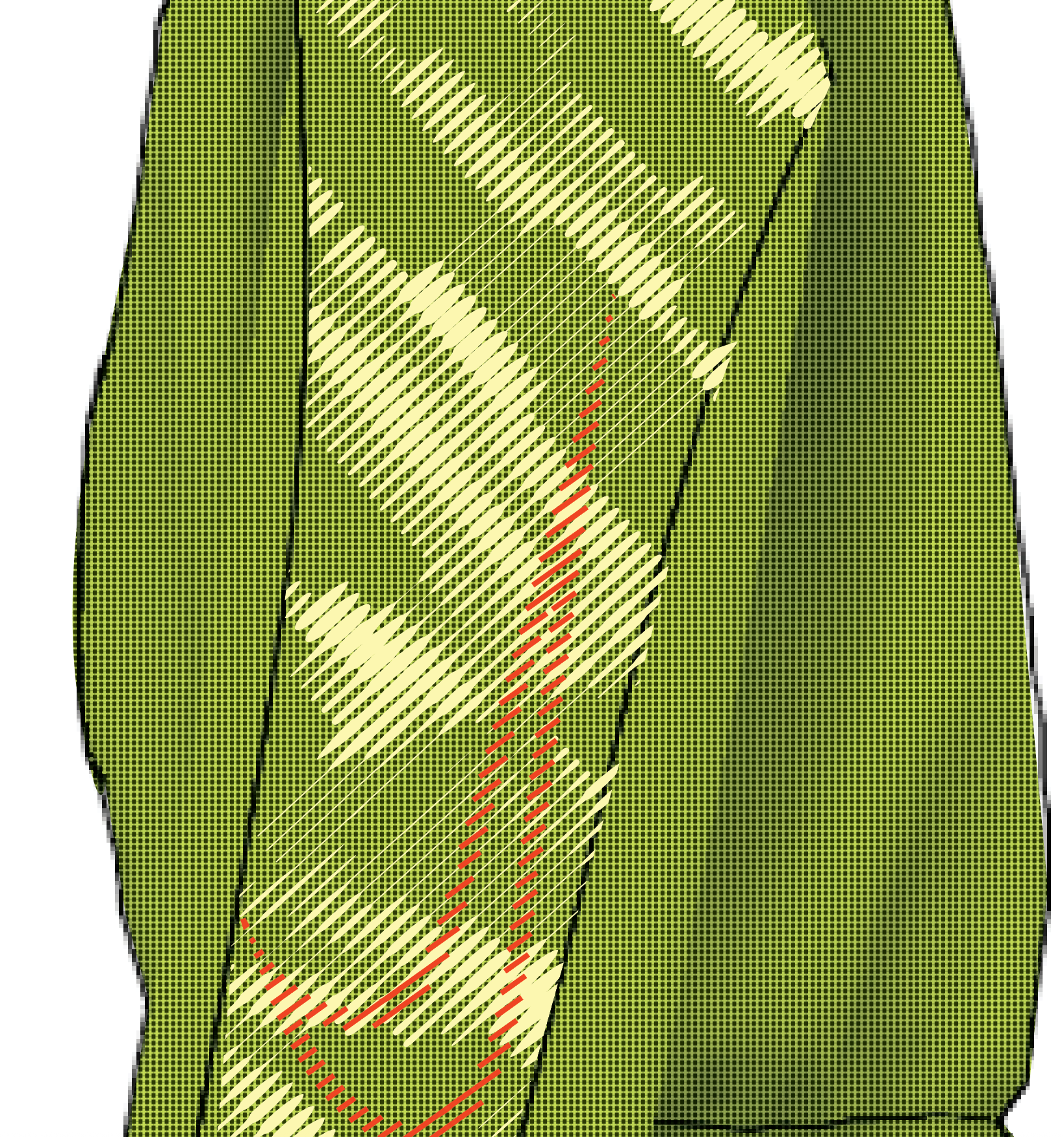
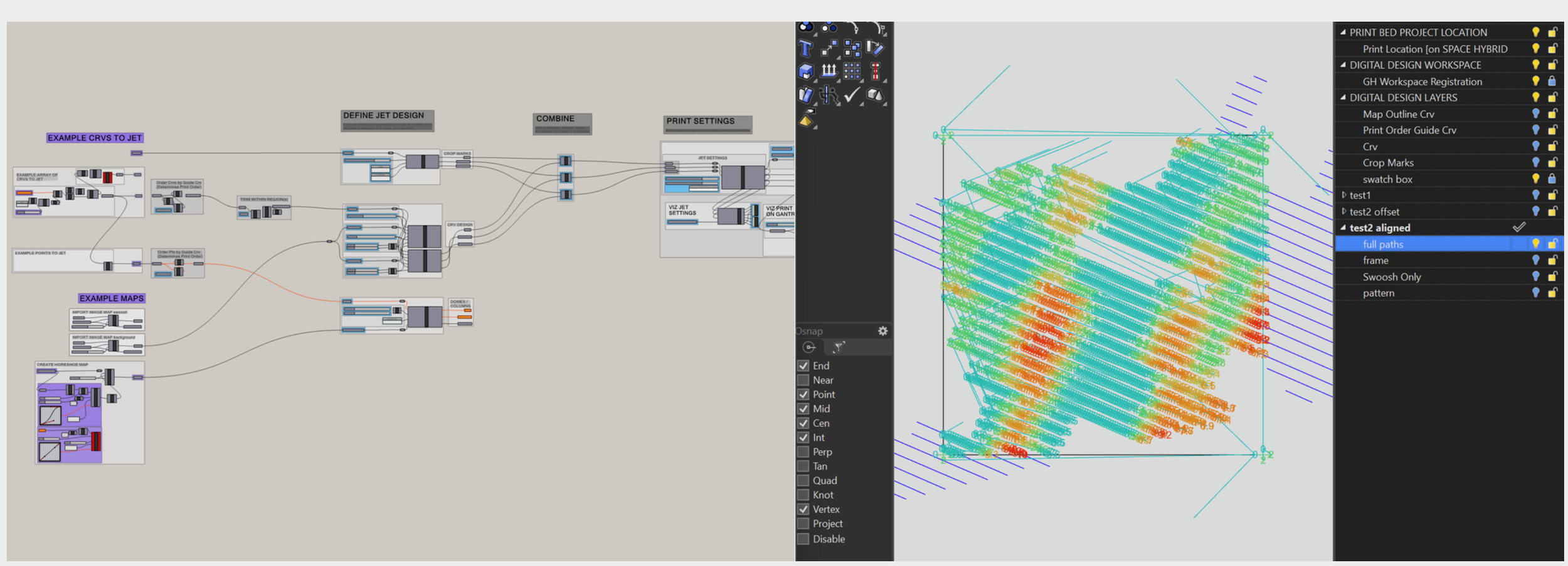
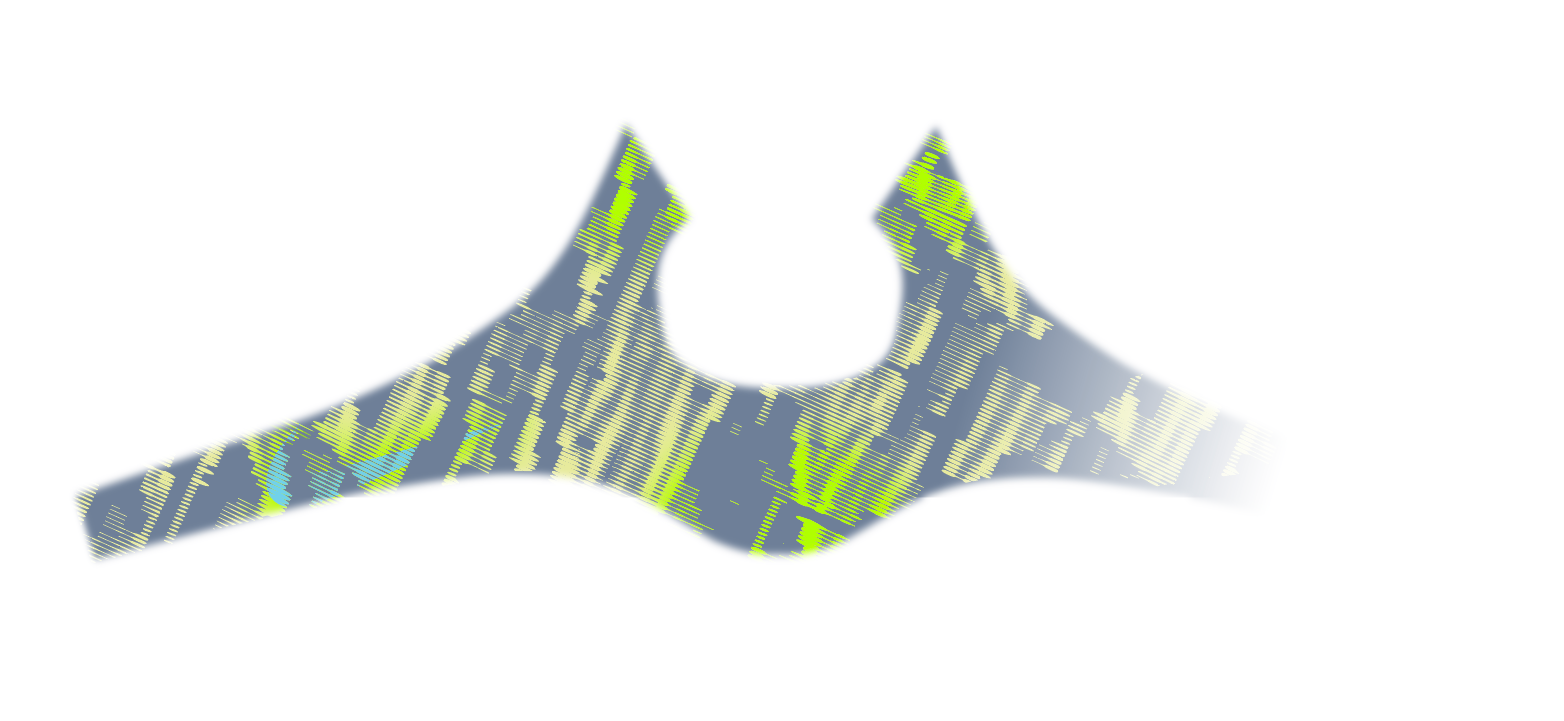
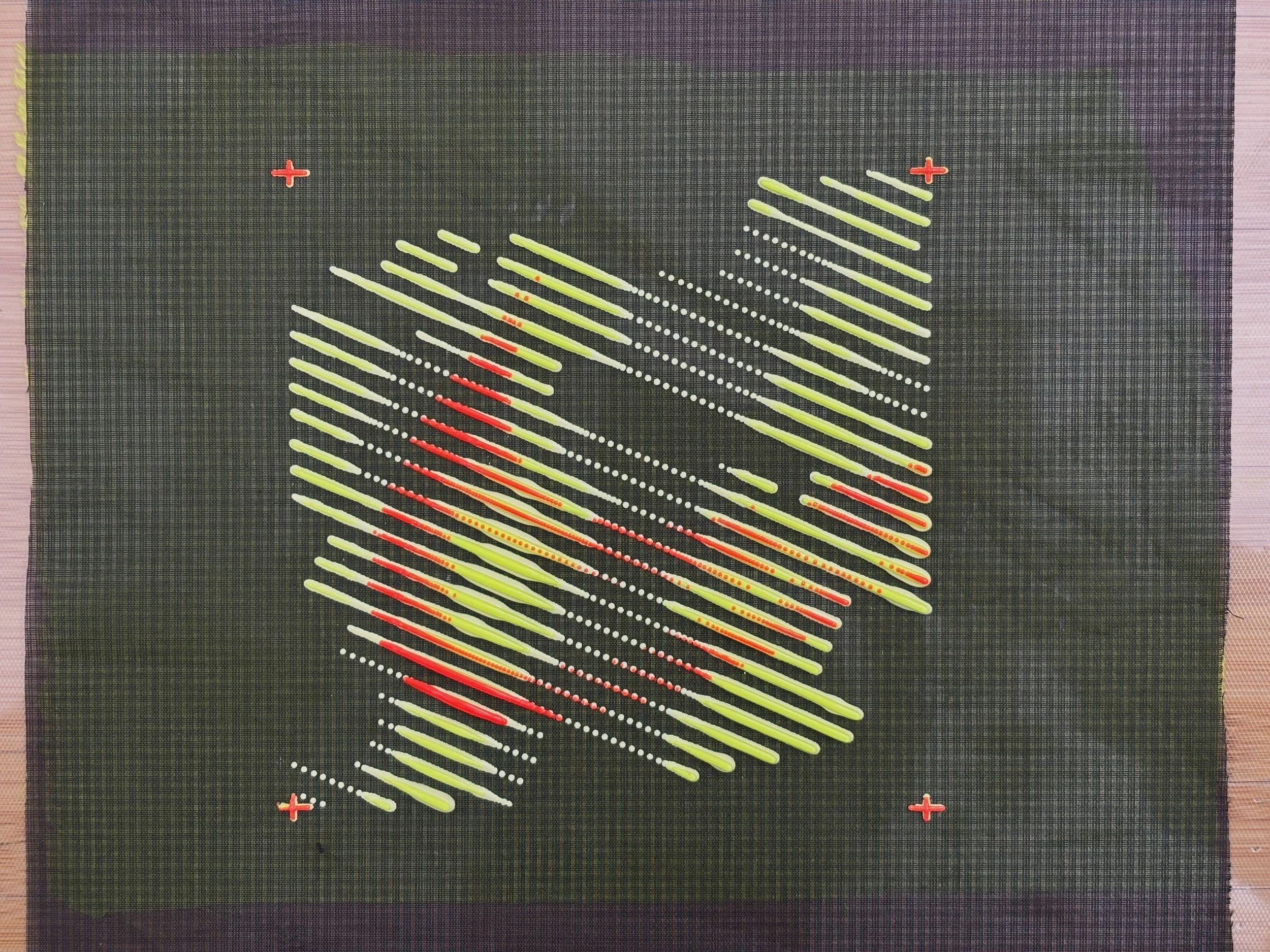
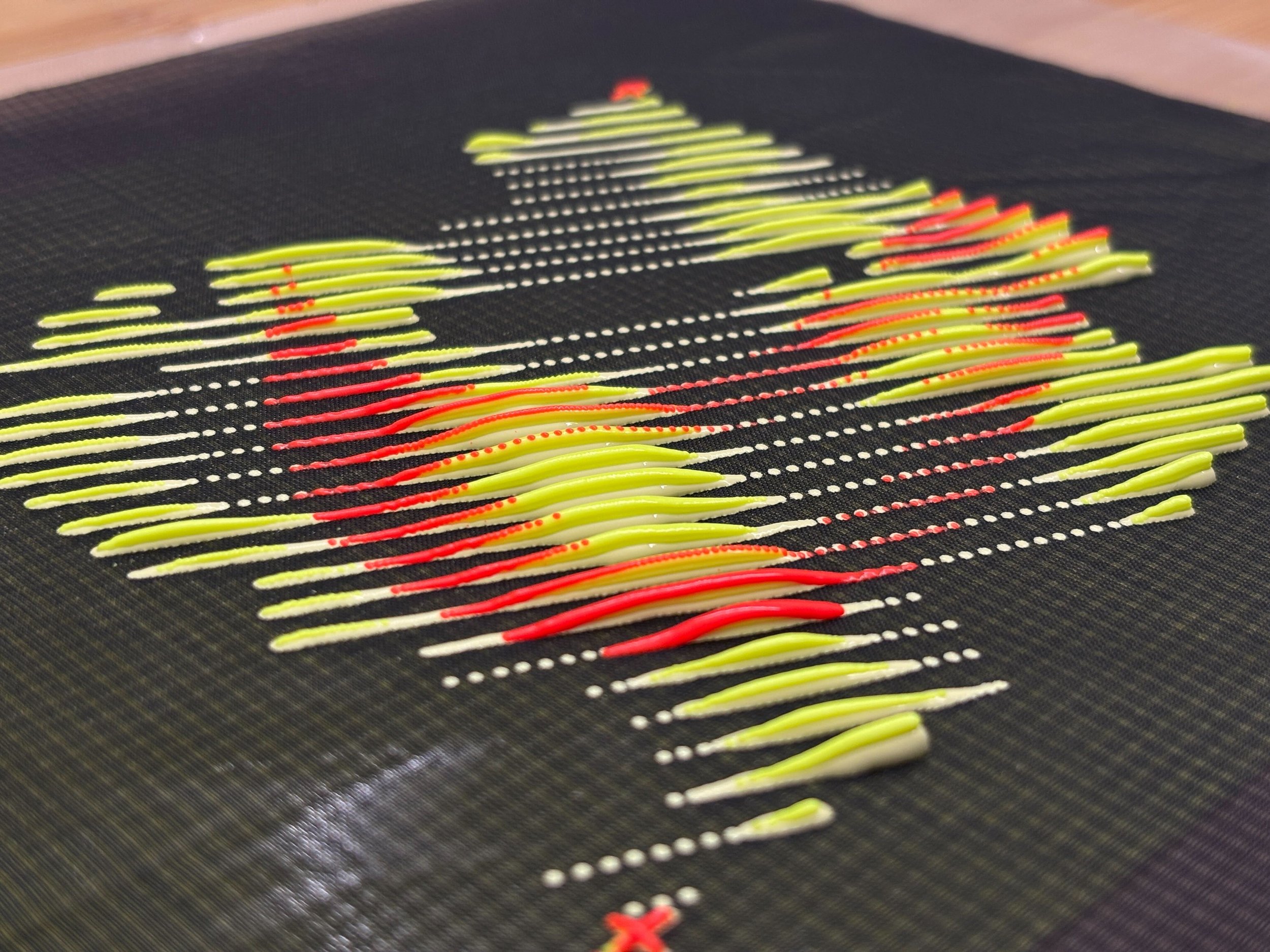
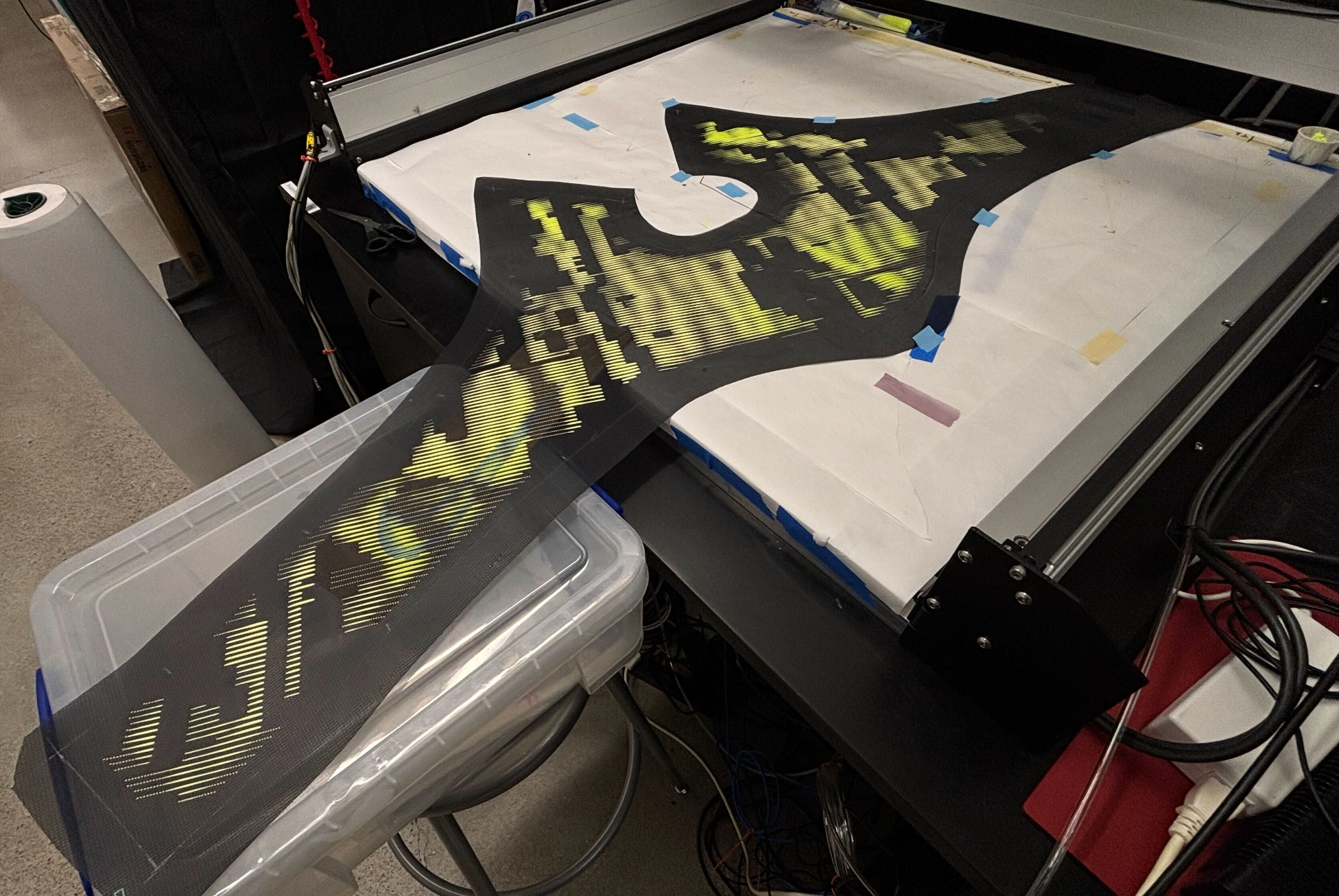
Jet printing is a free-form ink process traditionally used in footwear, and I wanted to explore how it could translate to apparel. Unlike conventional screen printing, the ink can be applied across both flat and raised surfaces, opening up opportunities to create dimension directly on the garment. It can build up to 3 mm in height, taper into the surface, and create intricate shapes, dots, and lenticular-like color effects that are difficult to achieve through traditional printing methods. I was drawn to the opportunity to treat the surface of the garment as something more sculptural—where color, texture, and dimension could become part of the design.
02 — Designing Around the Process
As with any new technology, the material requirements helped shape the direction. Jet printing cannot be applied to fabrics with a water-resistant coating, so material selection became an important part of the exploration. I wanted to understand how the ink could interact with the garment’s surface and use its dimensional qualities to create something that felt integral to the design, rather than simply printed on top. This opened up a new way to think about surface expression, using the technology to bring depth and visual complexity to apparel.
03 — A Runway-Inspired Jacket
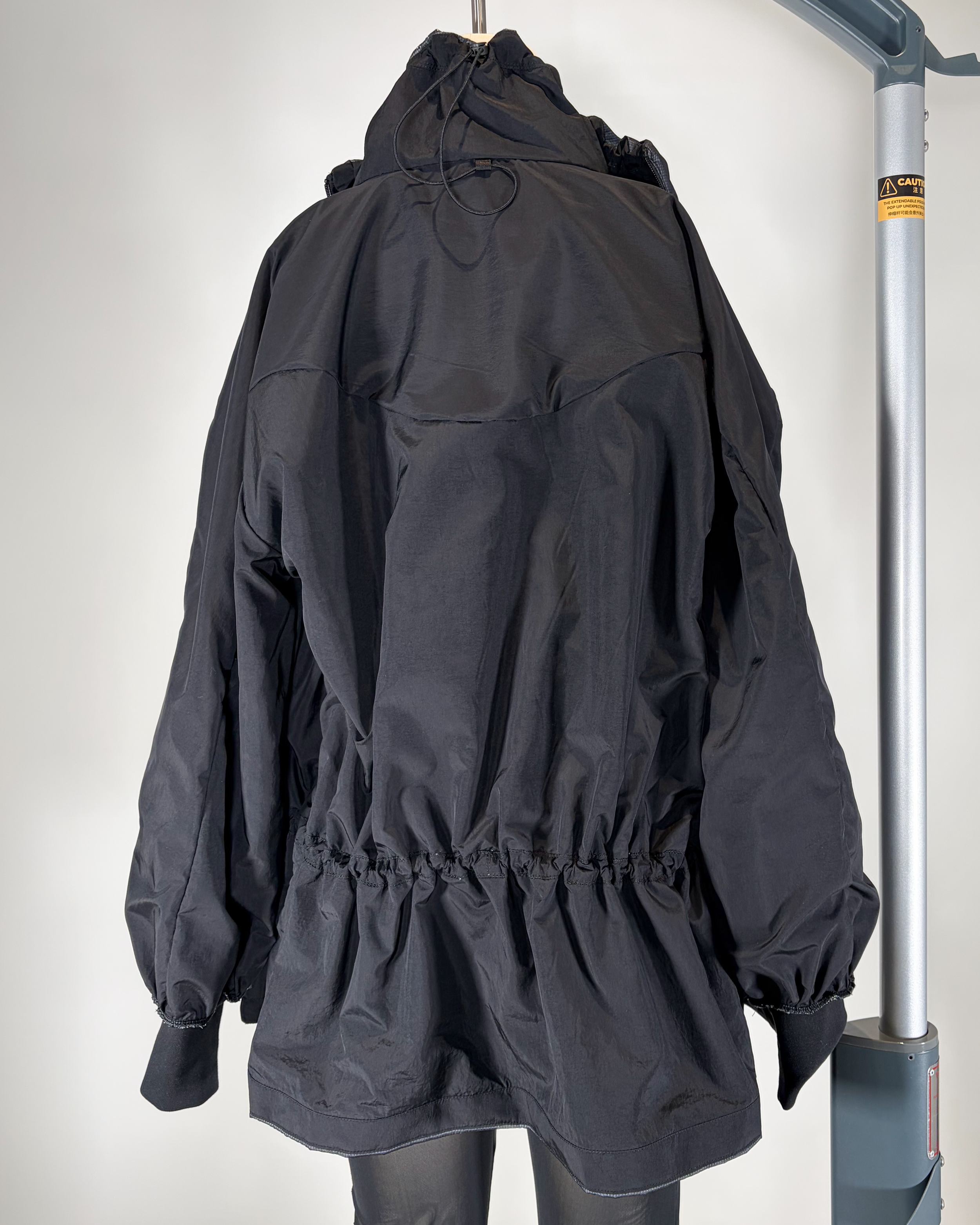
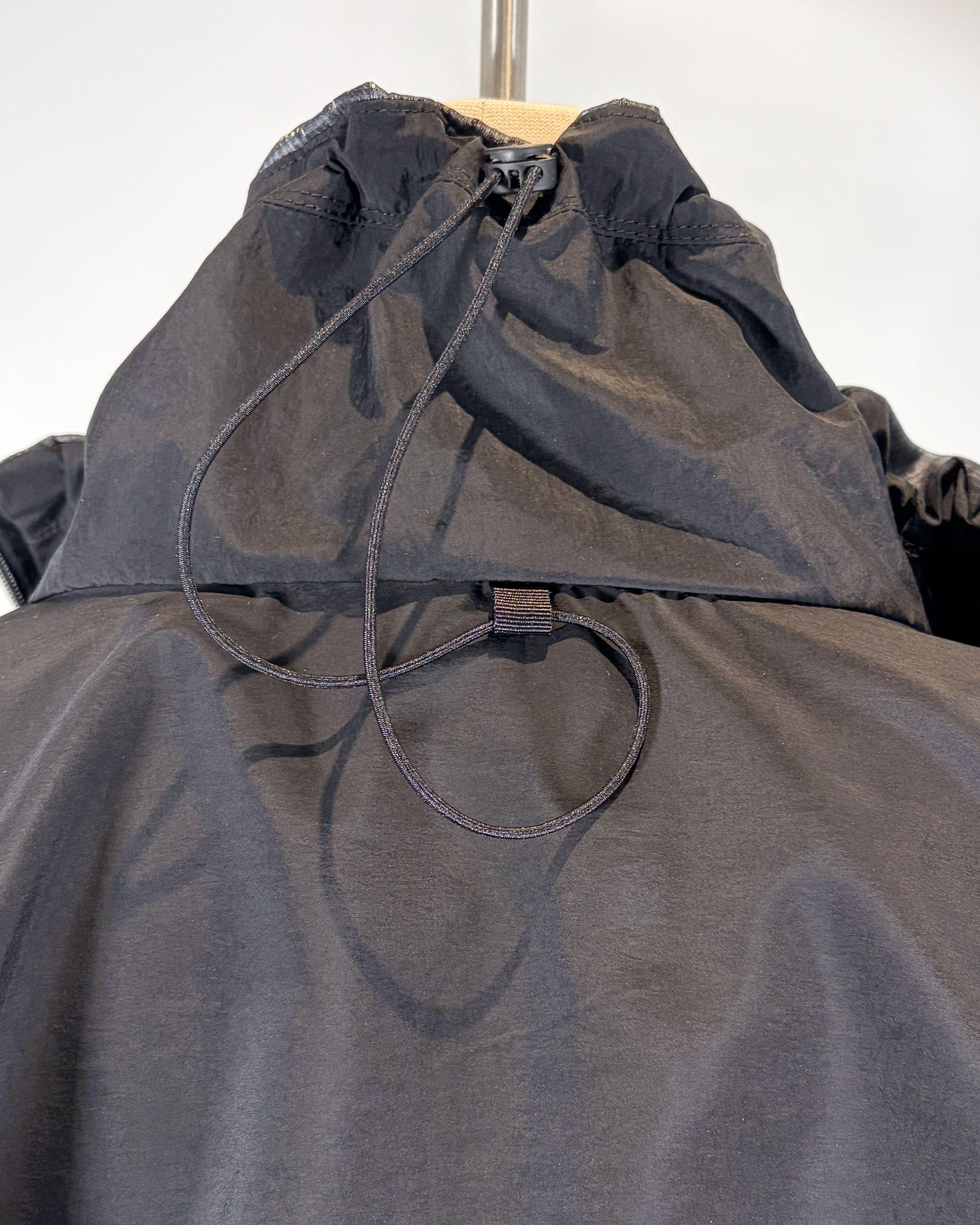
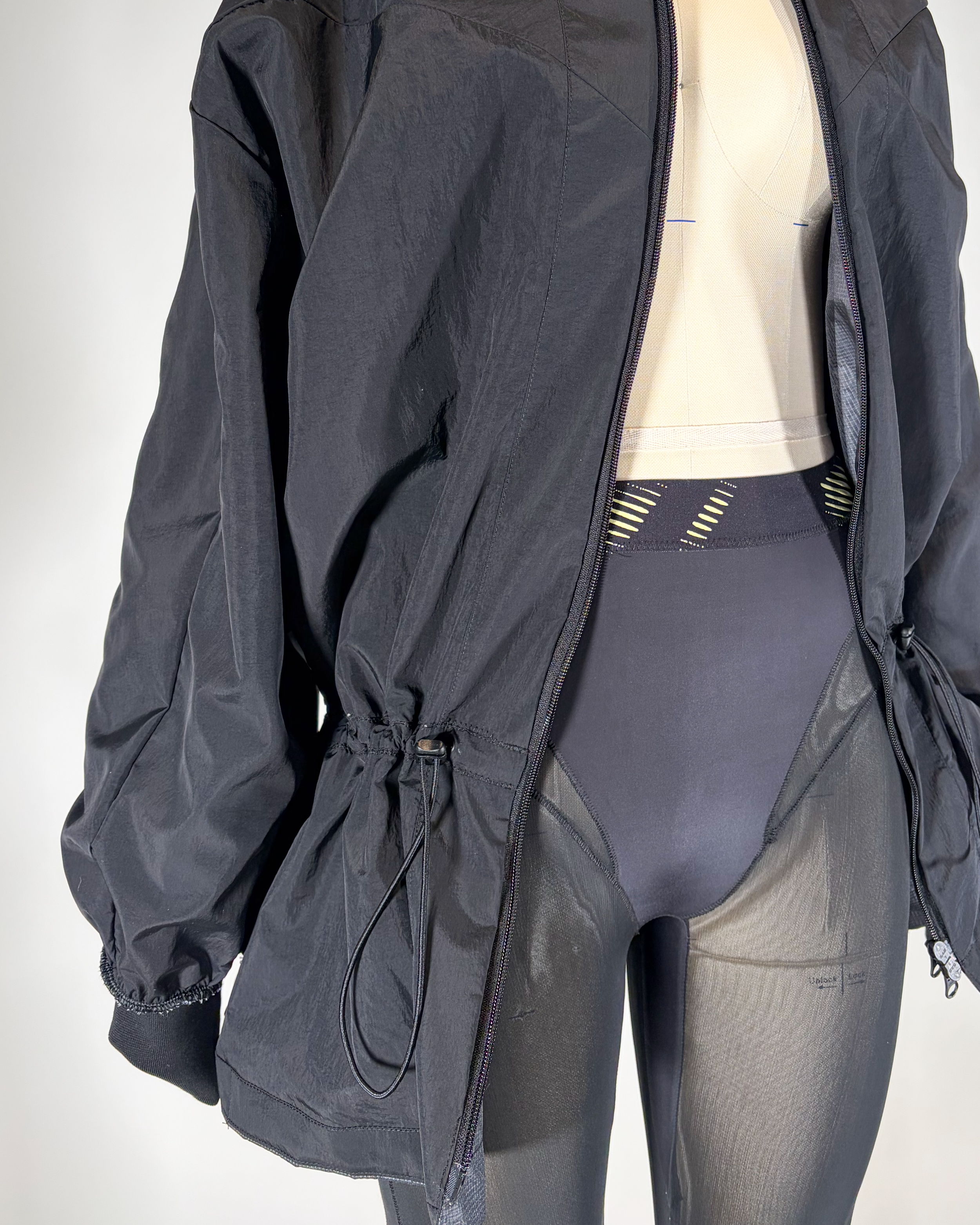
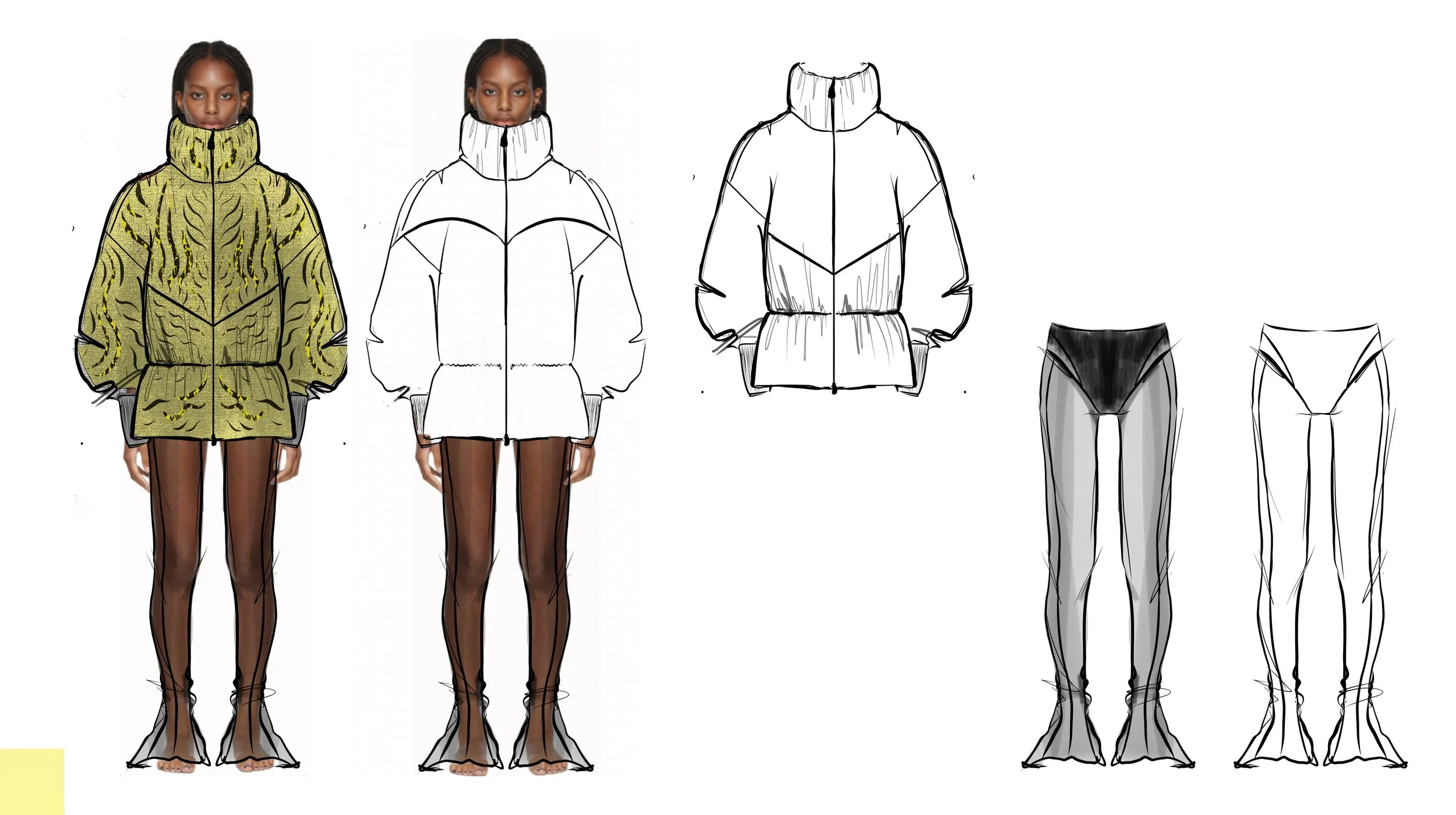
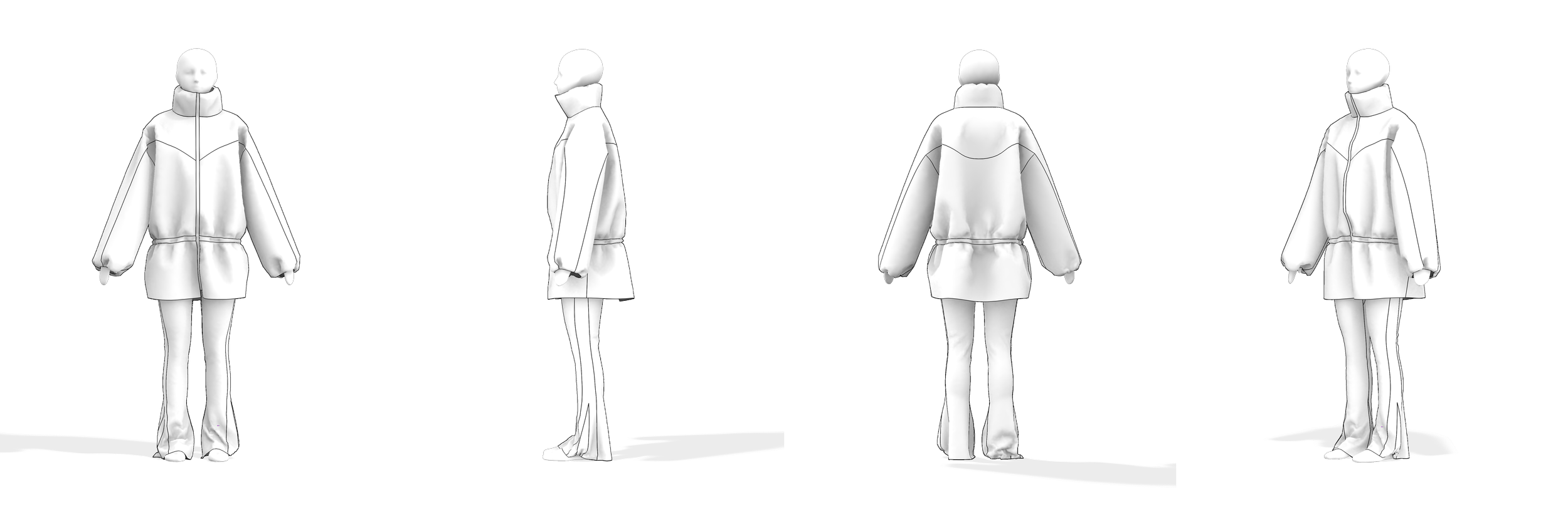
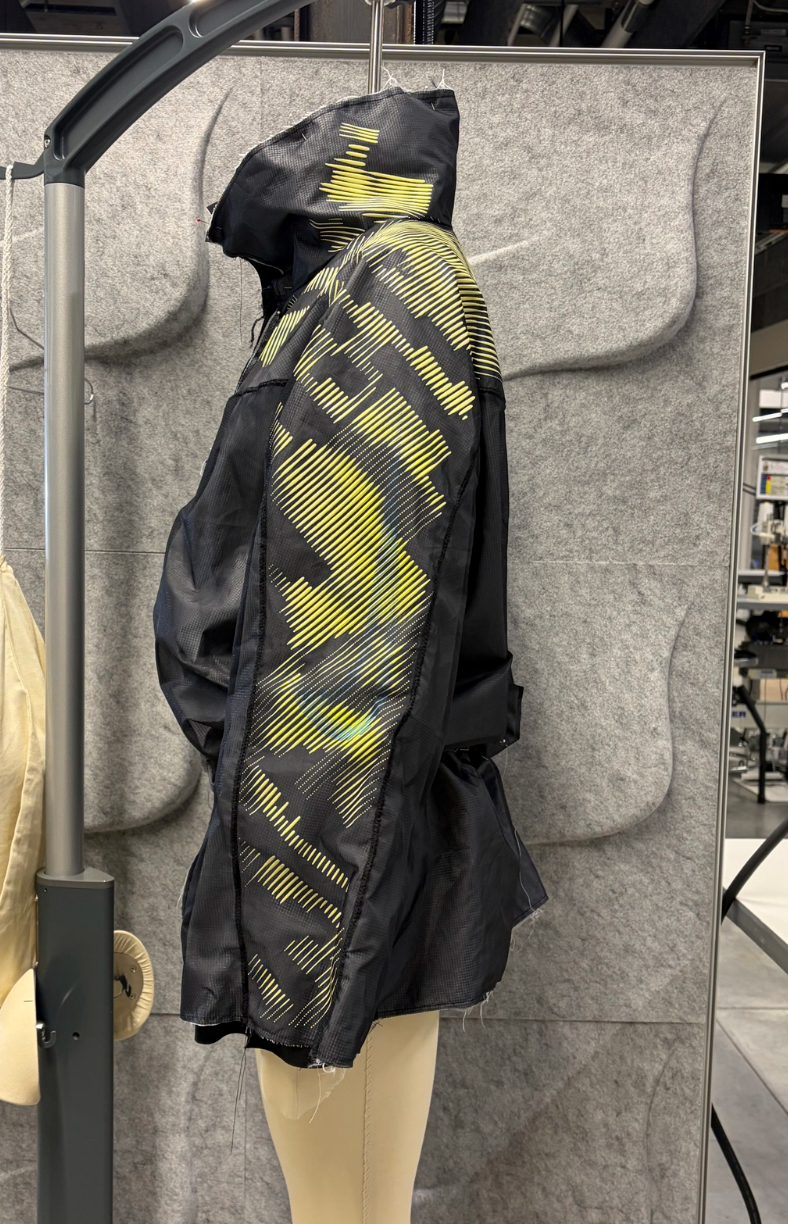
For the jacket, I pushed the silhouette in a more directional, fashion-forward direction. The proportions and construction were intended to feel bold and expressive, giving the technology a runway-like context rather than a conventional performance application. I incorporated seamlines that nod to Nike’s chevron DNA in women’s apparel, connecting the experimental surface treatment back to the brand’s design language. The result explores how a footwear innovation can take on a new identity when applied to apparel, bringing together dimensional surface design, strong silhouette, and recognizable Nike references.
04 — Sheer Power Mesh & a Play on Lingerie
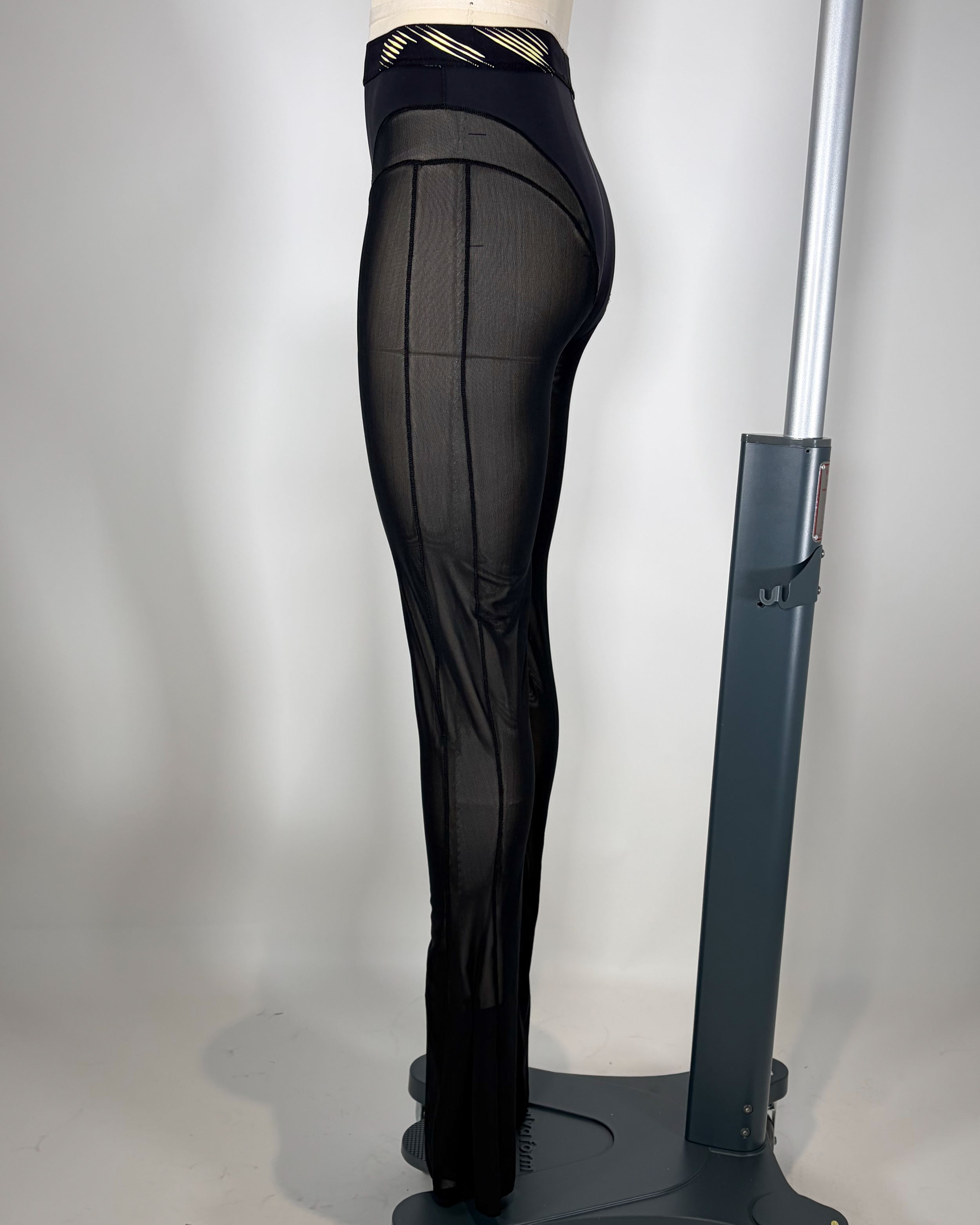
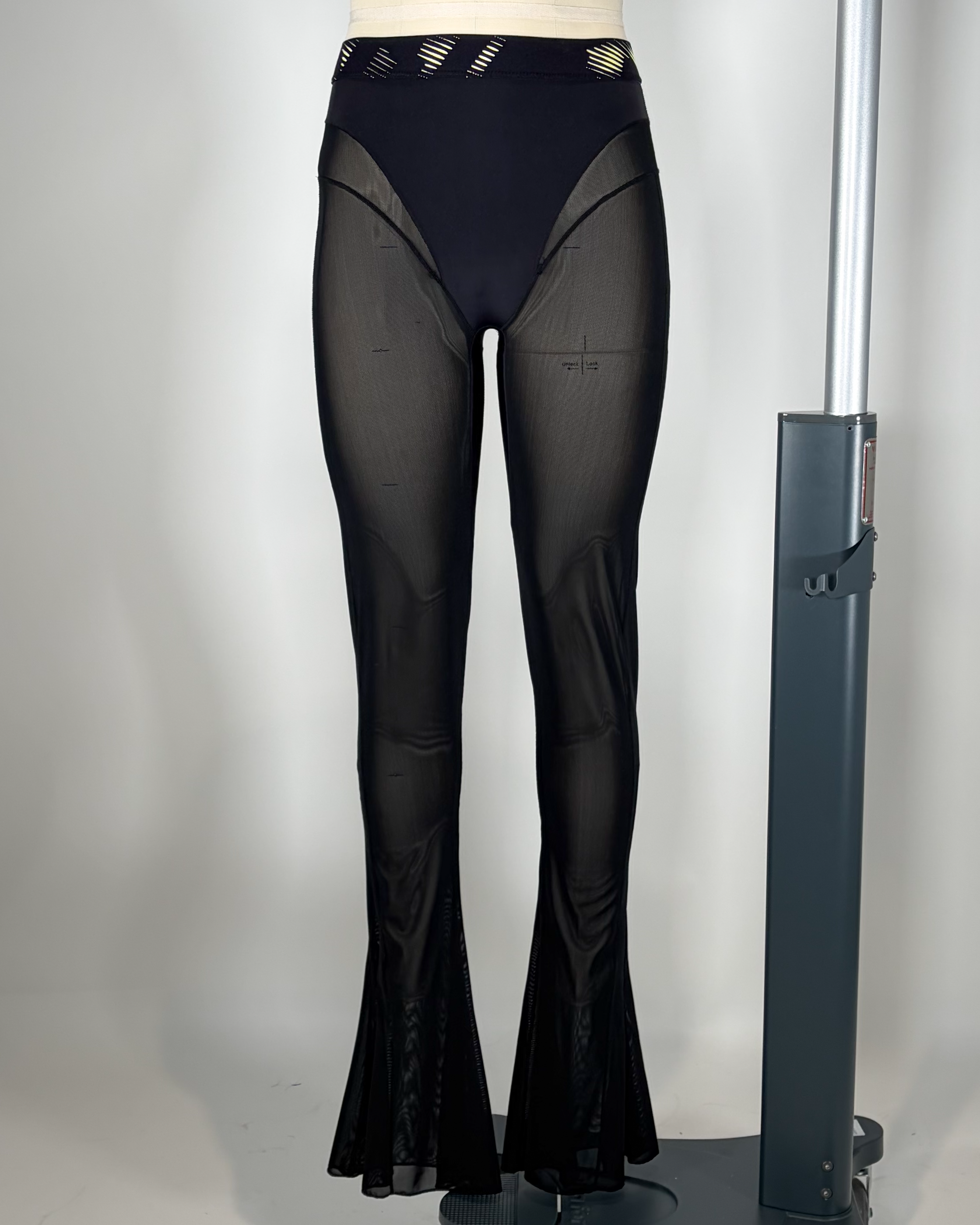
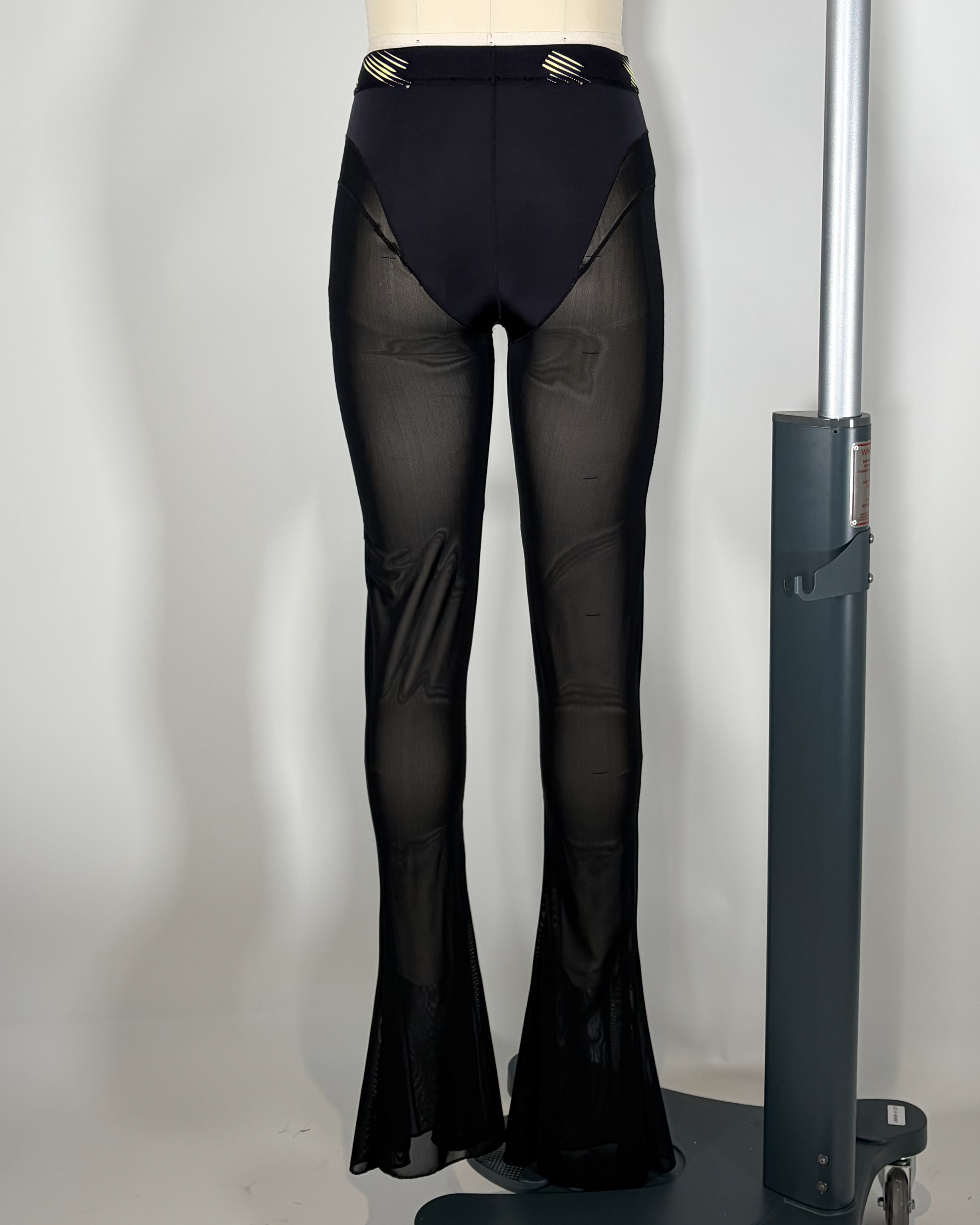
For the pant, I explored a more sensual, fashion-driven approach, using sheer power mesh to create a boot-like silhouette. The transparency became a key part of the design, allowing the construction and the body to become part of the visual story. I developed seamlines that reference the shape of panties, then introduced opaque panels to create a built-in, lingerie-inspired effect. By playing with the contrast between sheer and opaque materials, I wanted to push the idea of sport-inspired apparel into something more provocative and unexpected, while keeping the look connected to the broader collection’s exploration of technology and fashion.
RADICAL AIR — Reinterpreting Basketball Layers
01 — Translating the Knit Structure
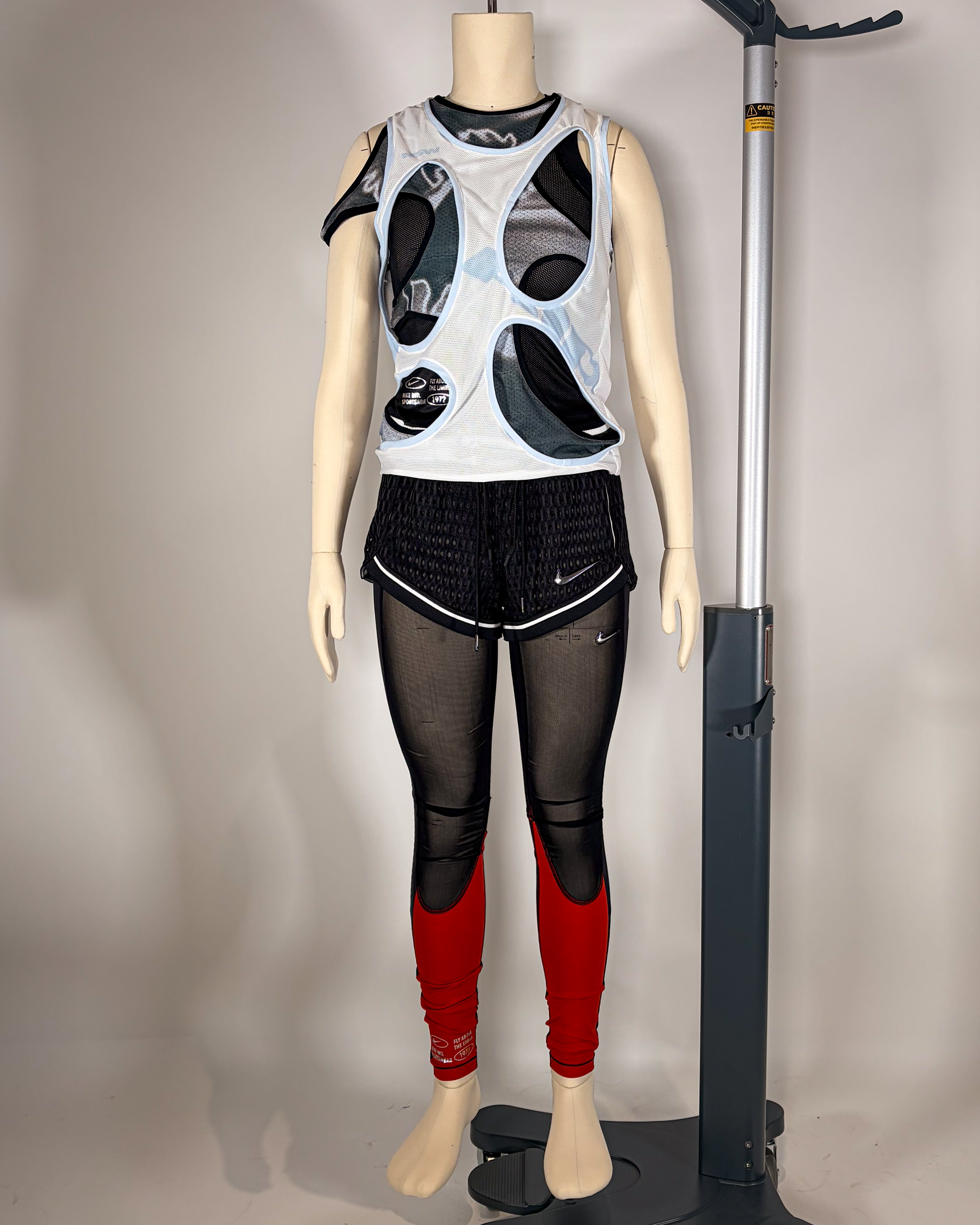
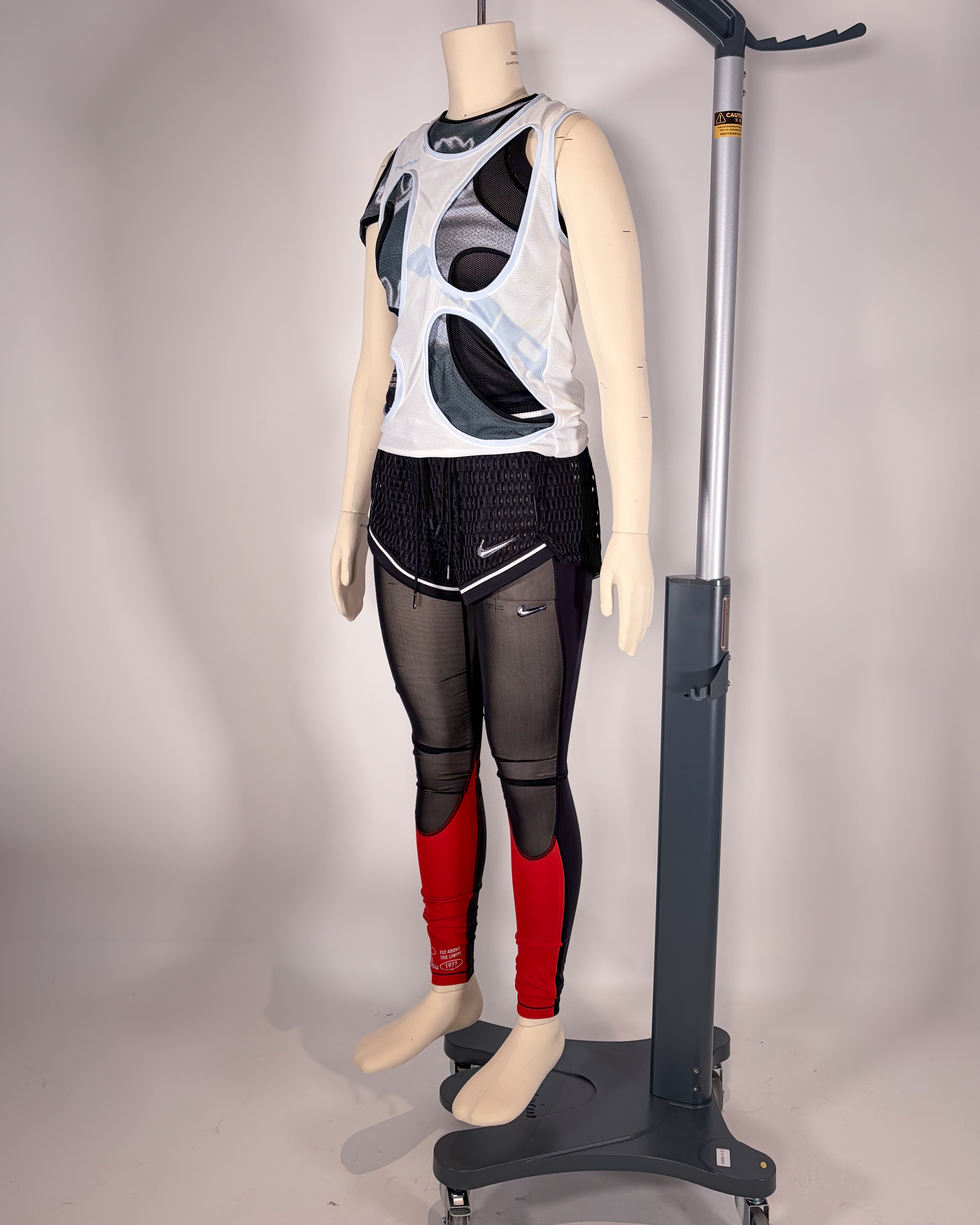
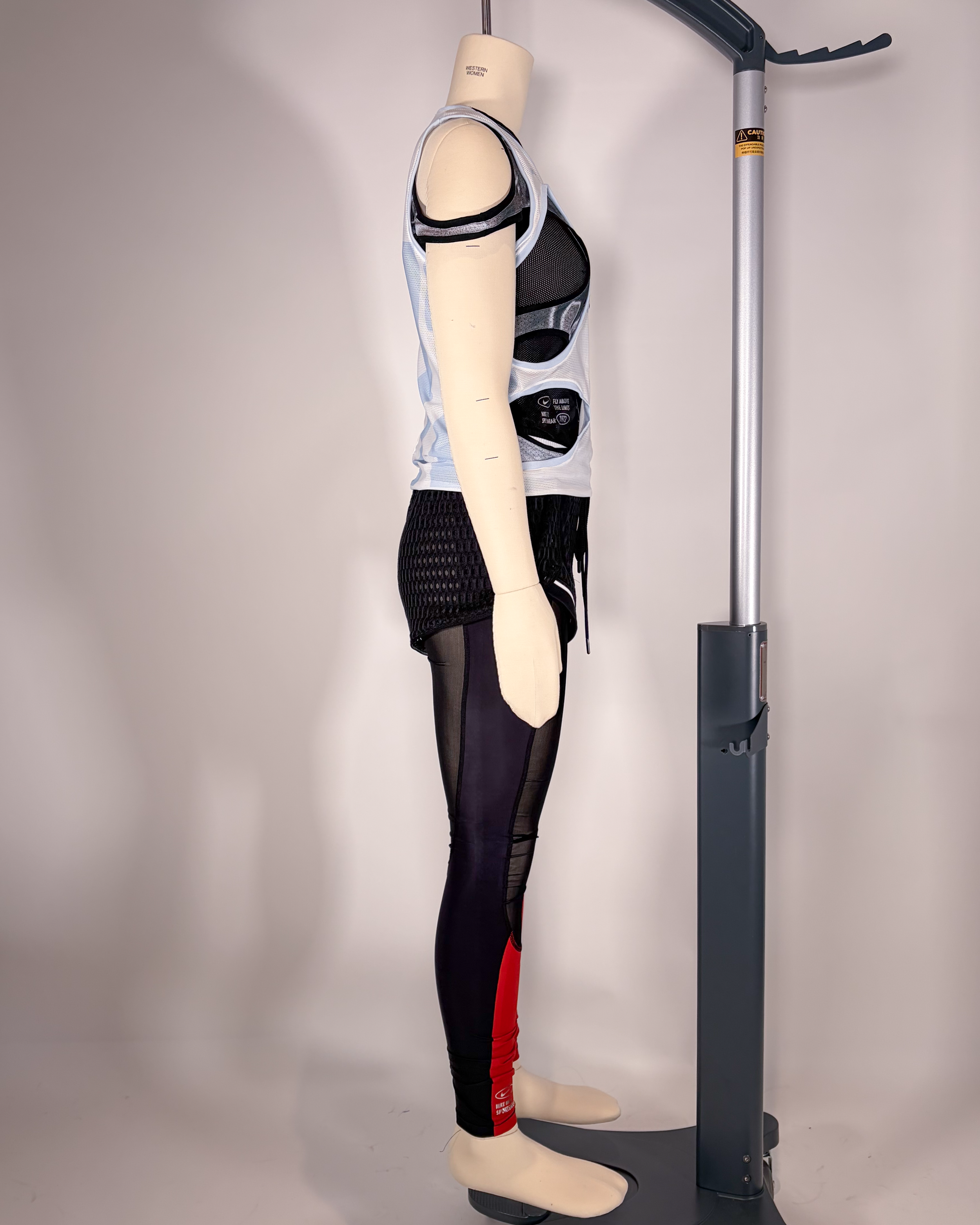
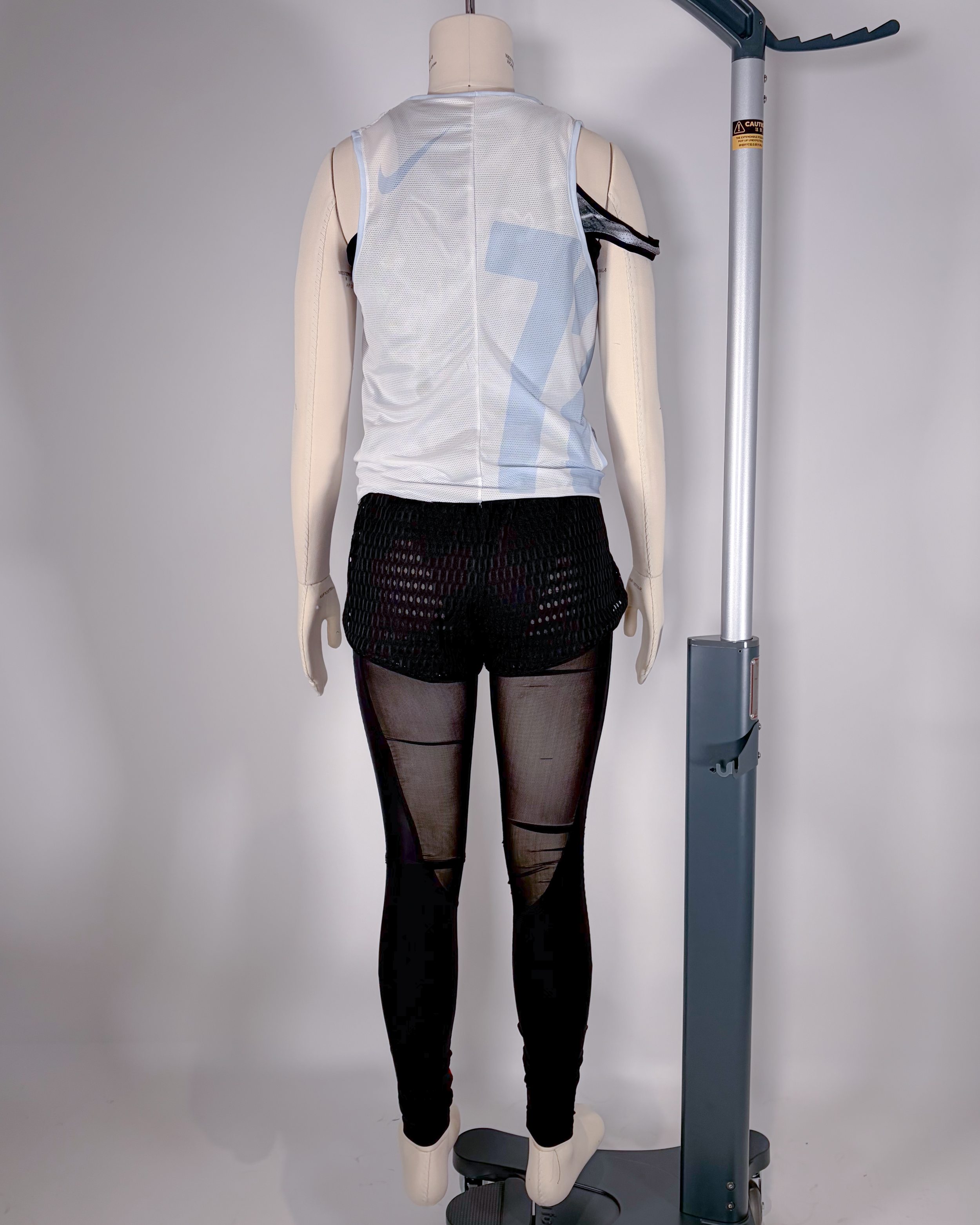
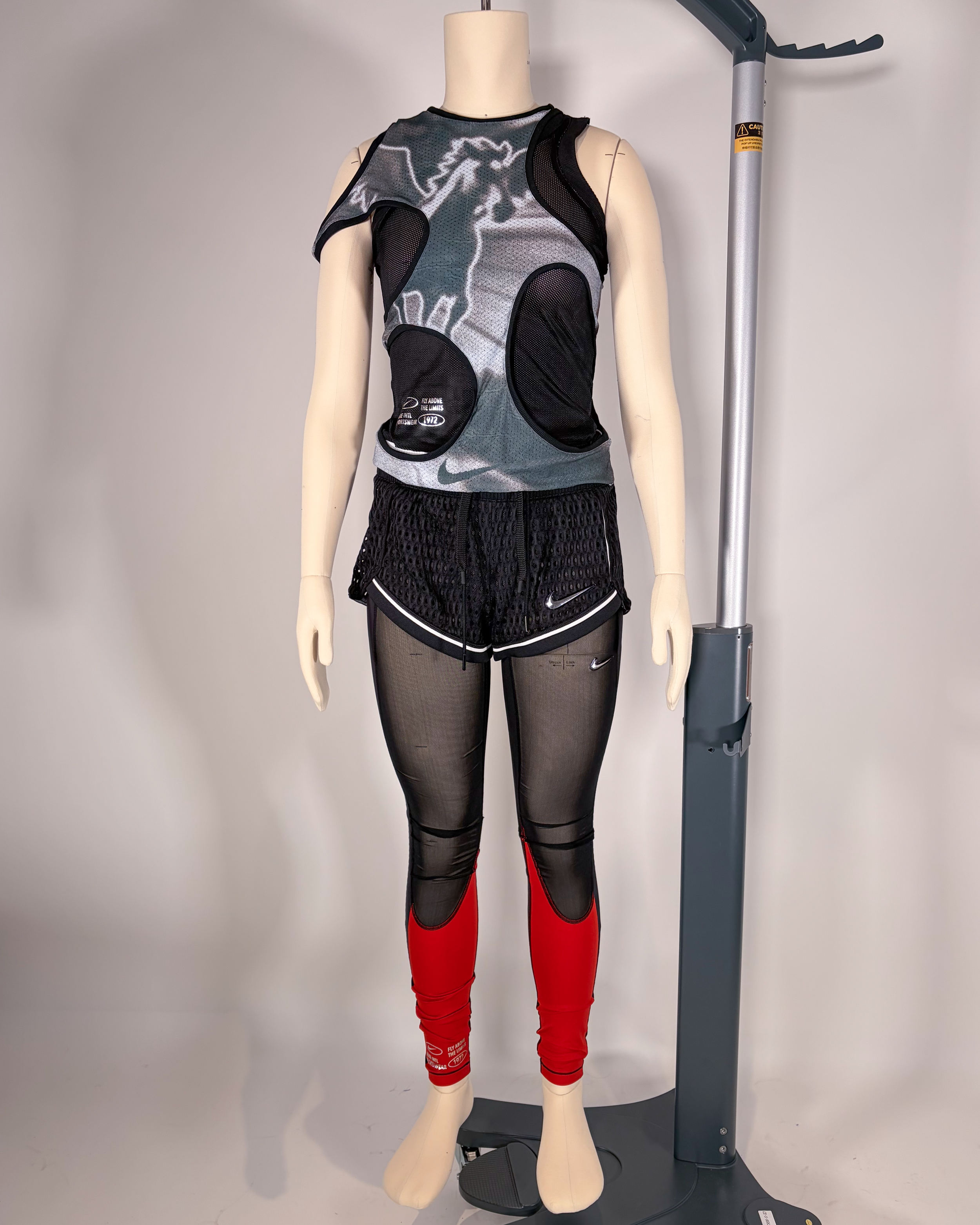
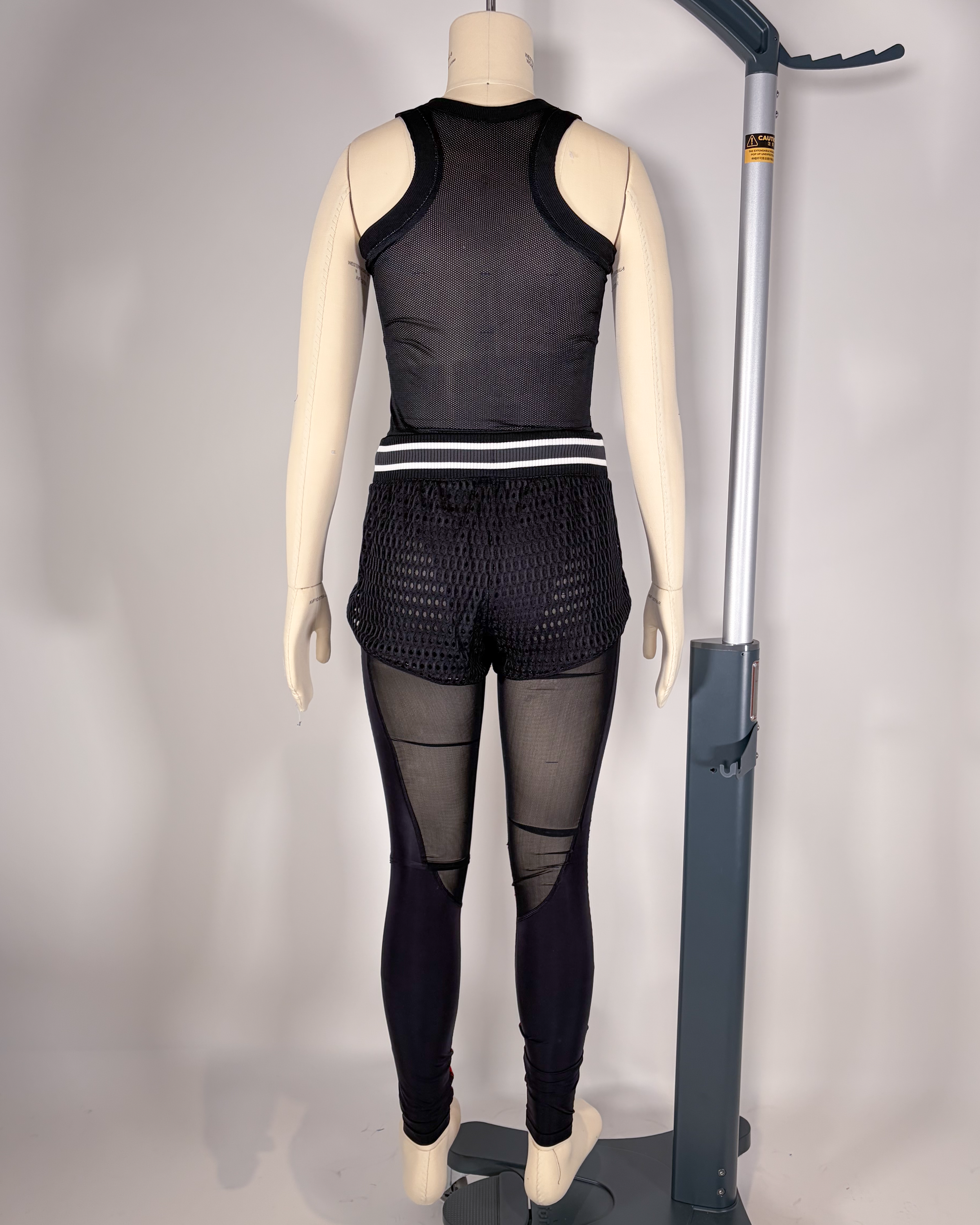
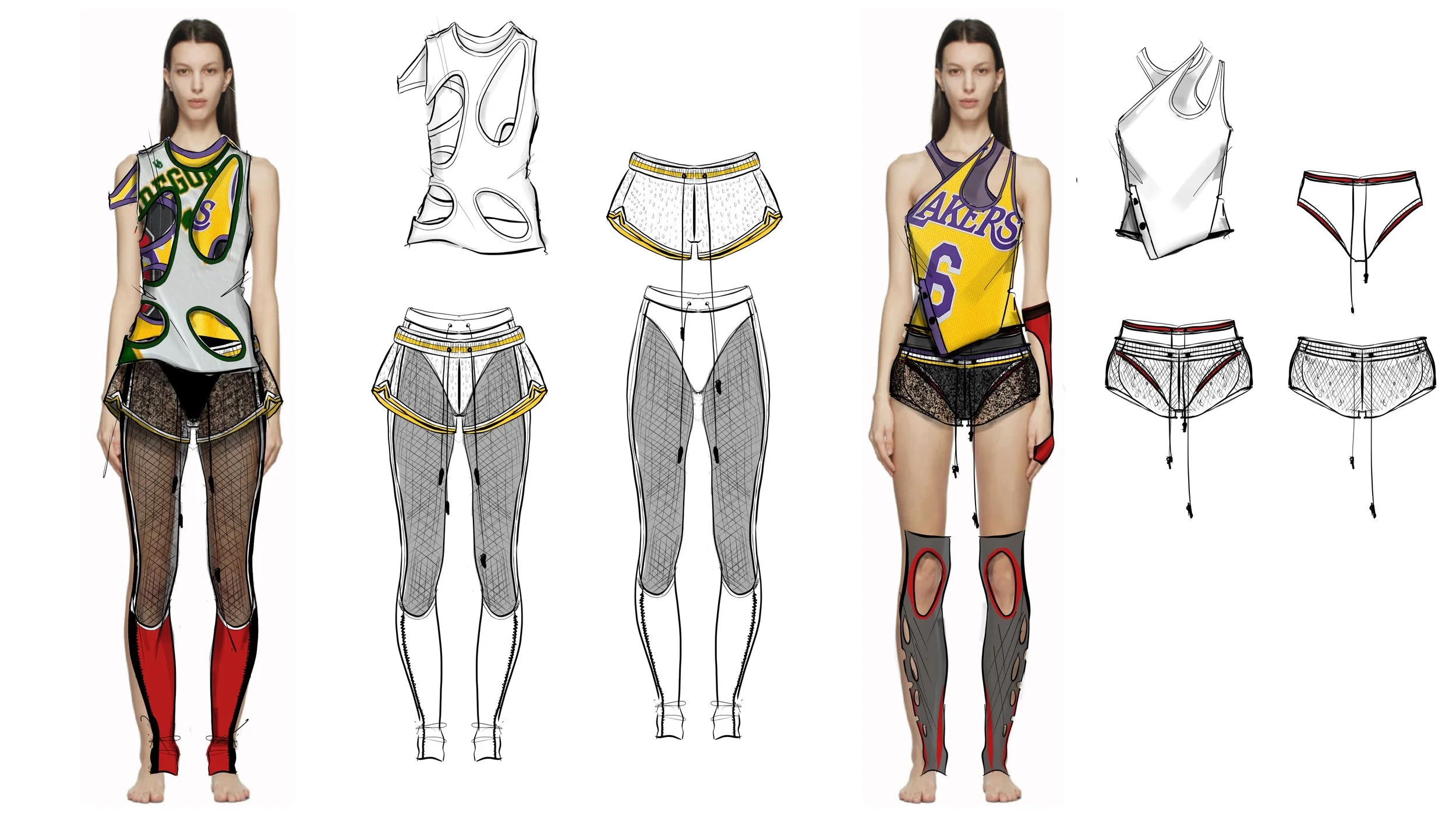
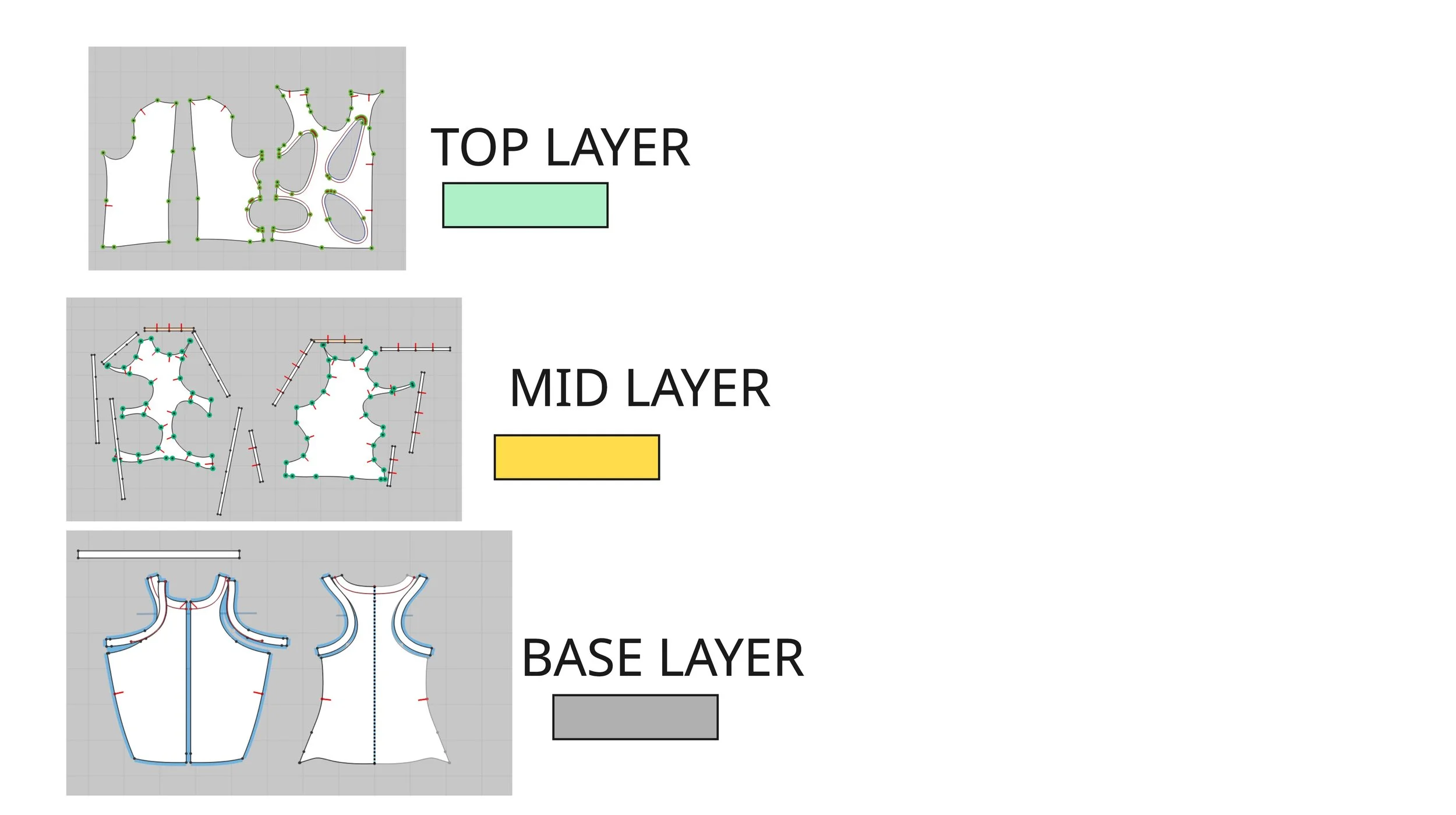
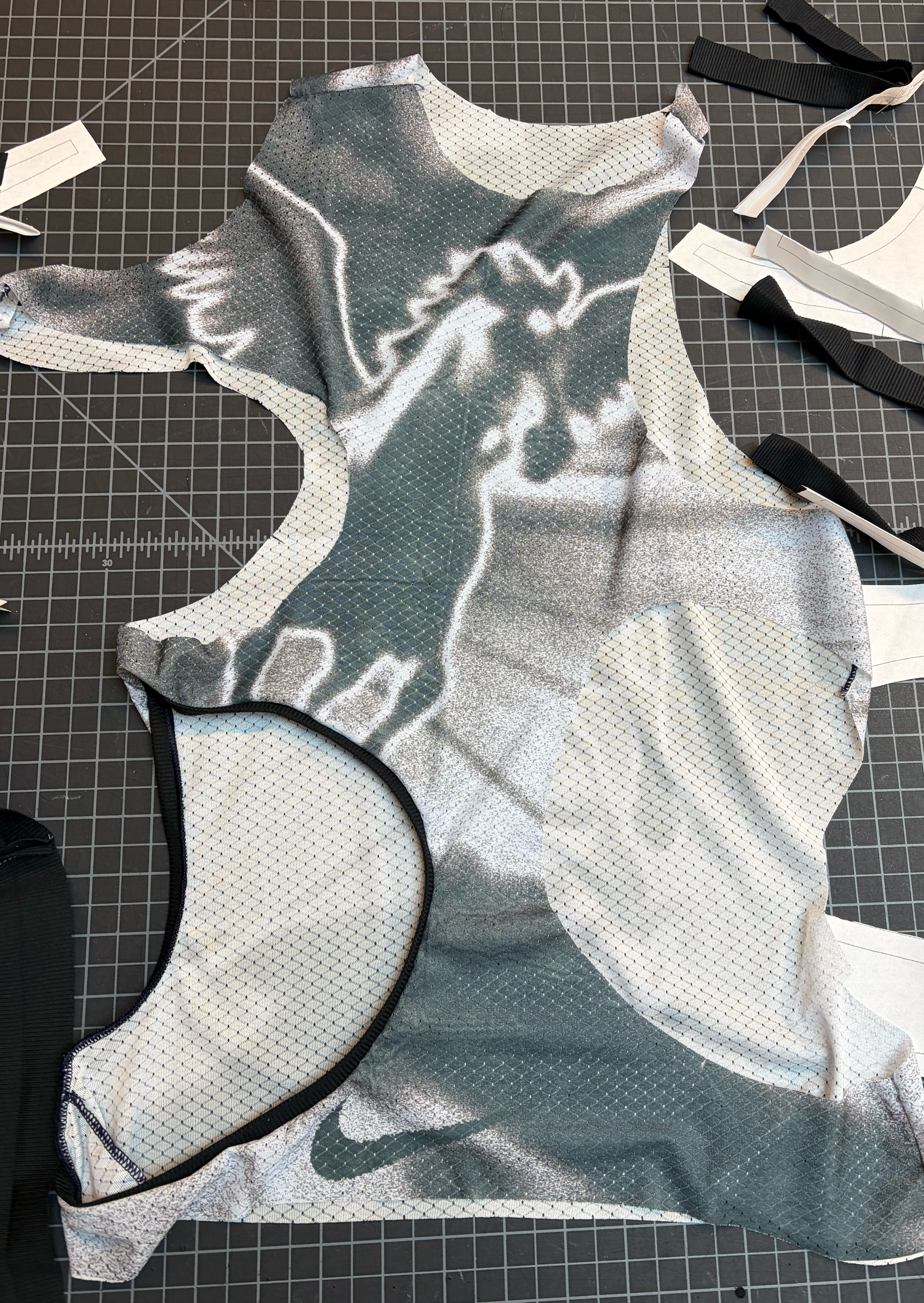
For the third look, I explored Radical Air through a basketball-inspired lens, using the material’s distinctive knit structure as the starting point for the design. Rather than limiting the technology to a single application, I wanted to translate its layered construction into apparel, creating dimension through the garments themselves. This led me to explore layering as both a visual expression of the technology and a reference to the way basketball players dress on and off the court.
02 — Reworking the Basketball Short
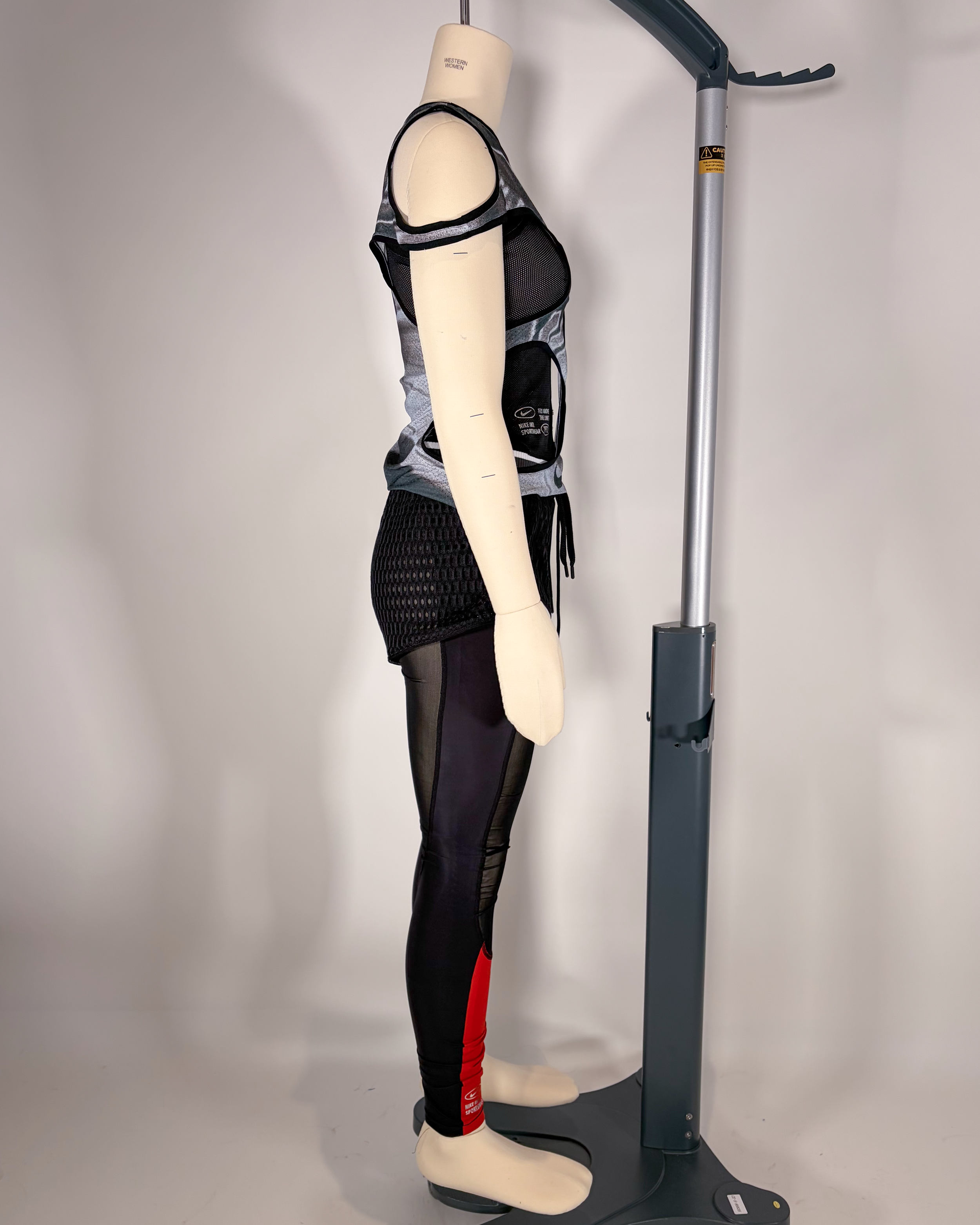
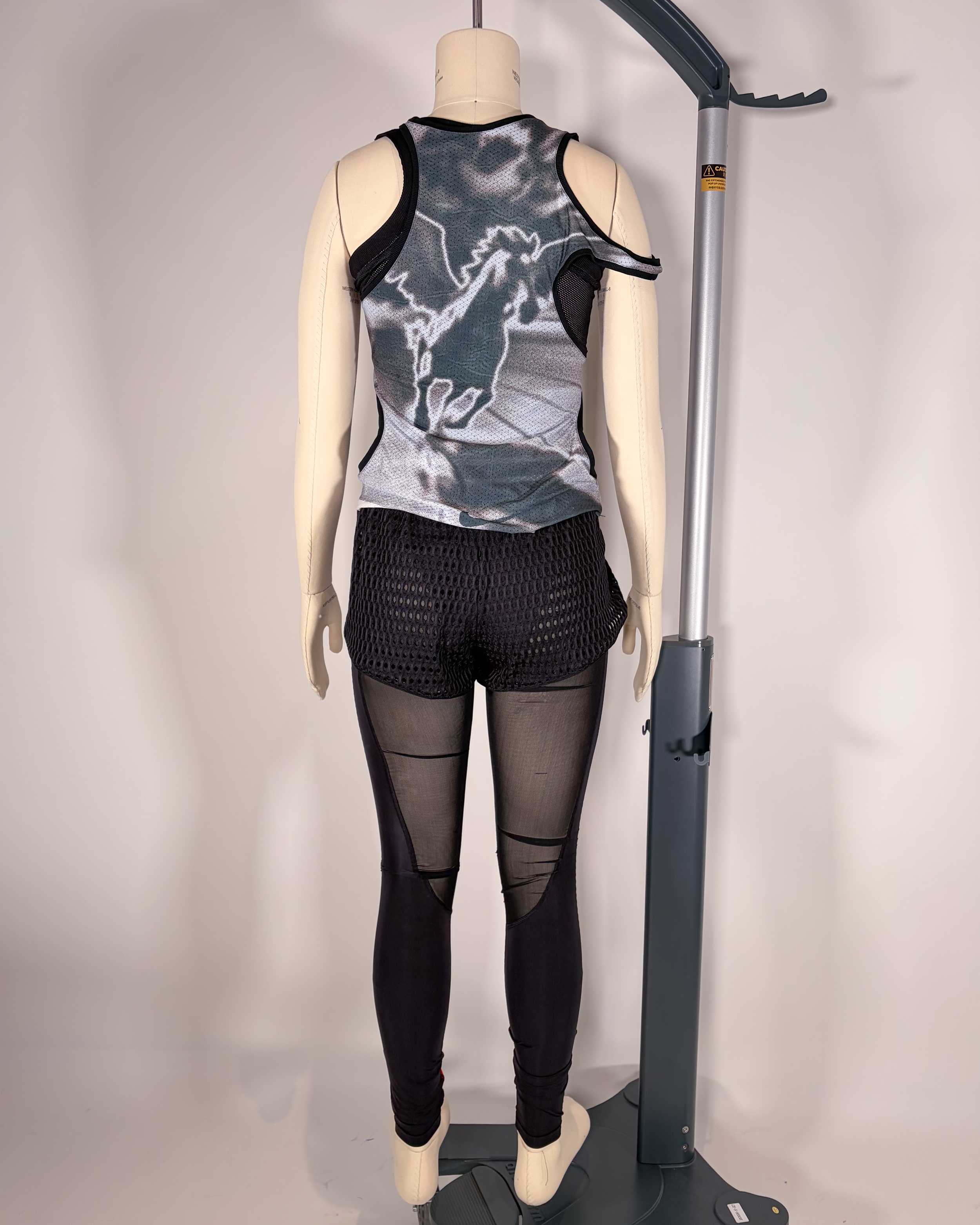
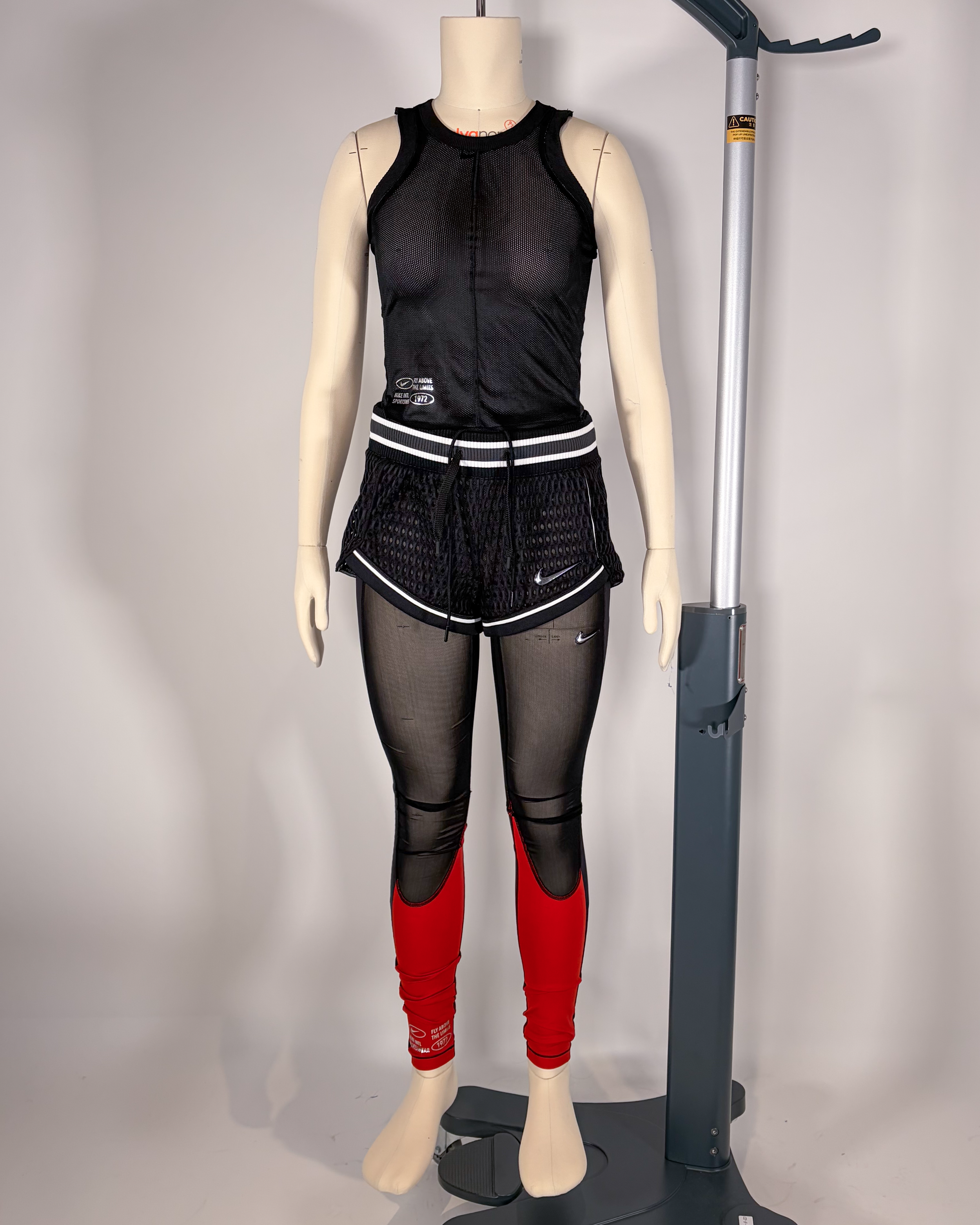
I used Radical Air to create an outer short layered over a fitted power mesh legging. The combination brings together the familiar proportions of basketball apparel with a more fashion-driven approach to layering. On the lower leg, I introduced opaque panels inspired by the compression sleeves basketball players wear, creating a contrast against the sheer mesh and giving the legging a more intentional, sport-specific construction. The result plays with transparency, coverage, and proportion while keeping the look connected to its basketball inspiration.
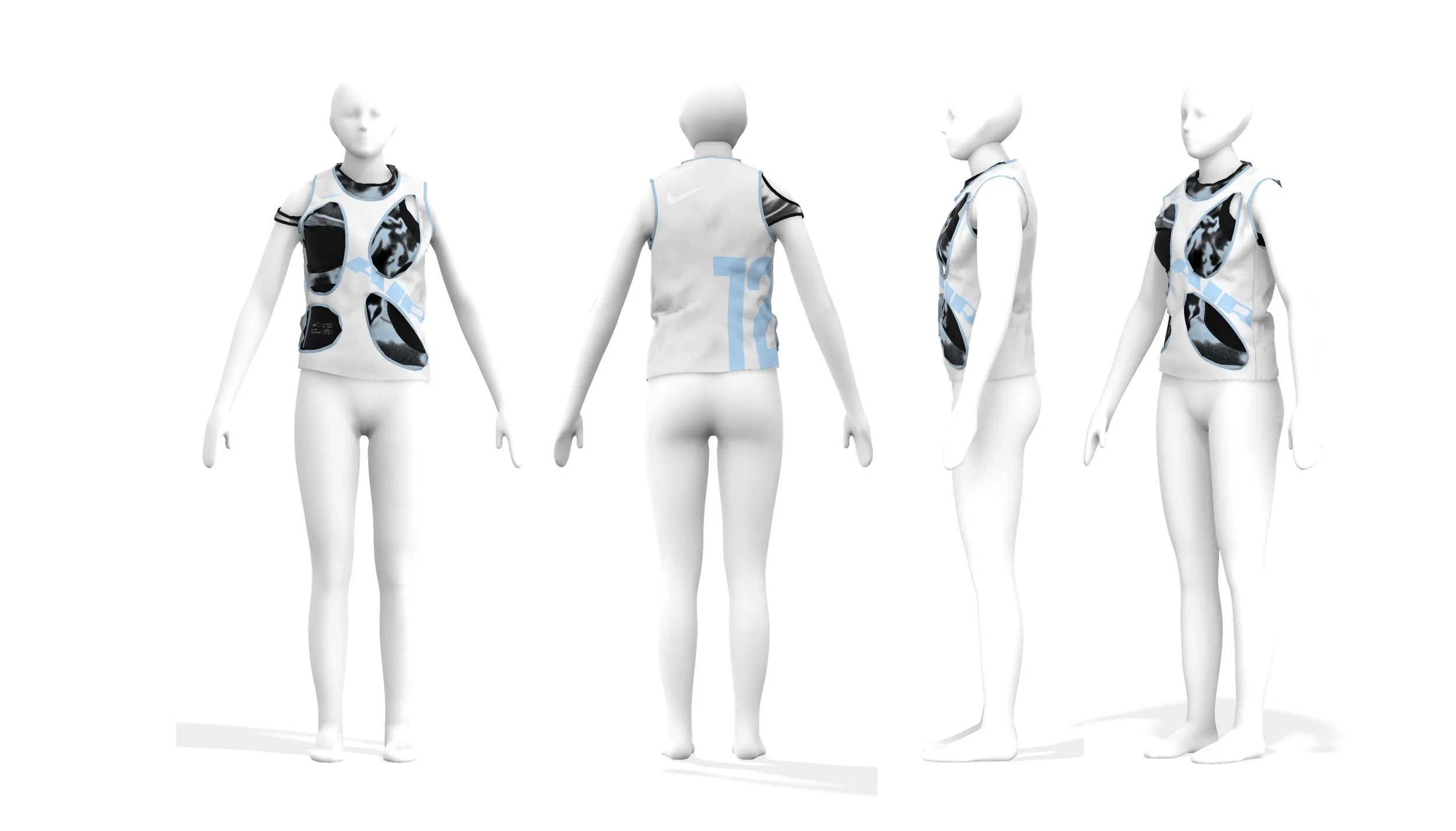
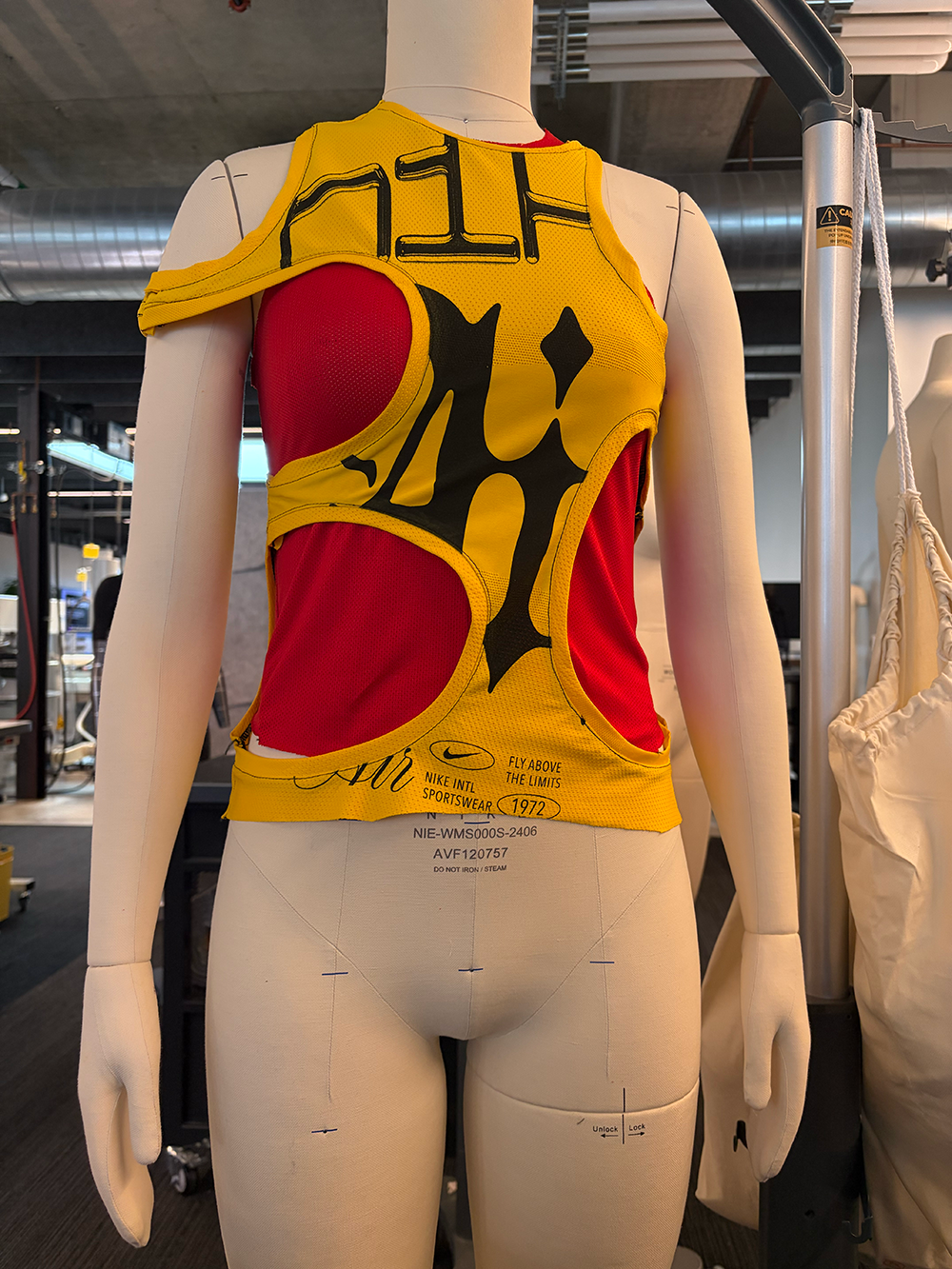
03 — Layering the Jersey
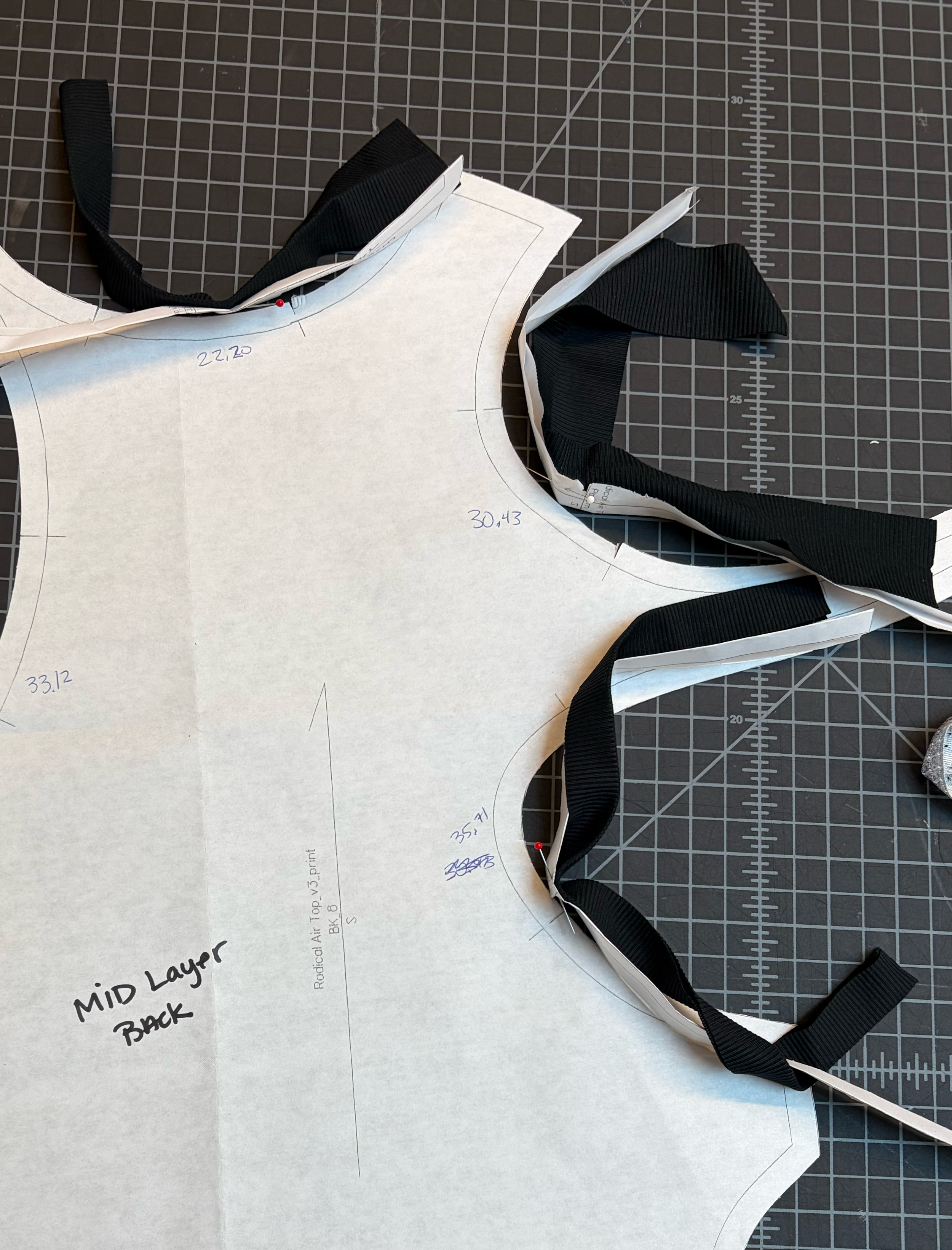
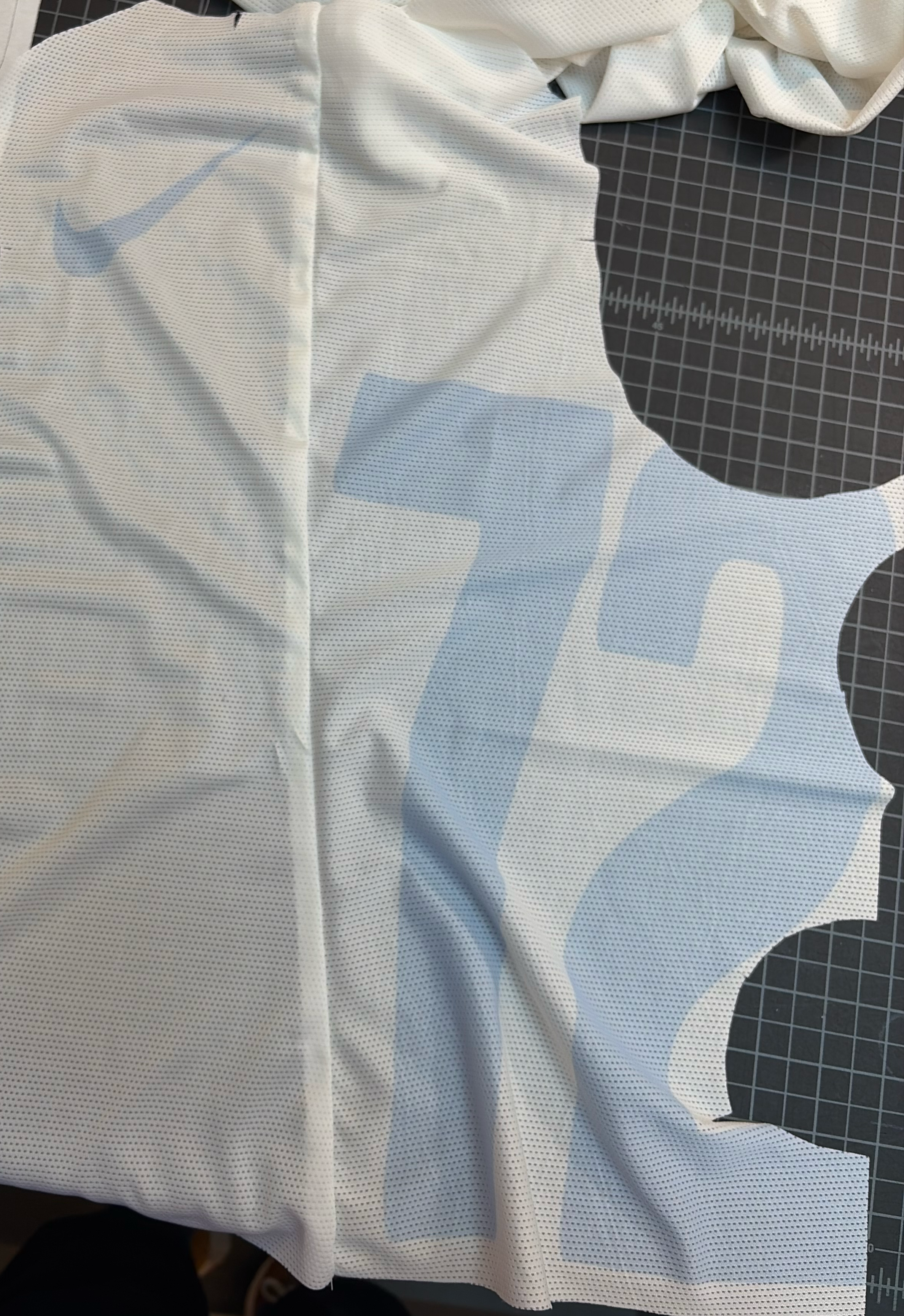
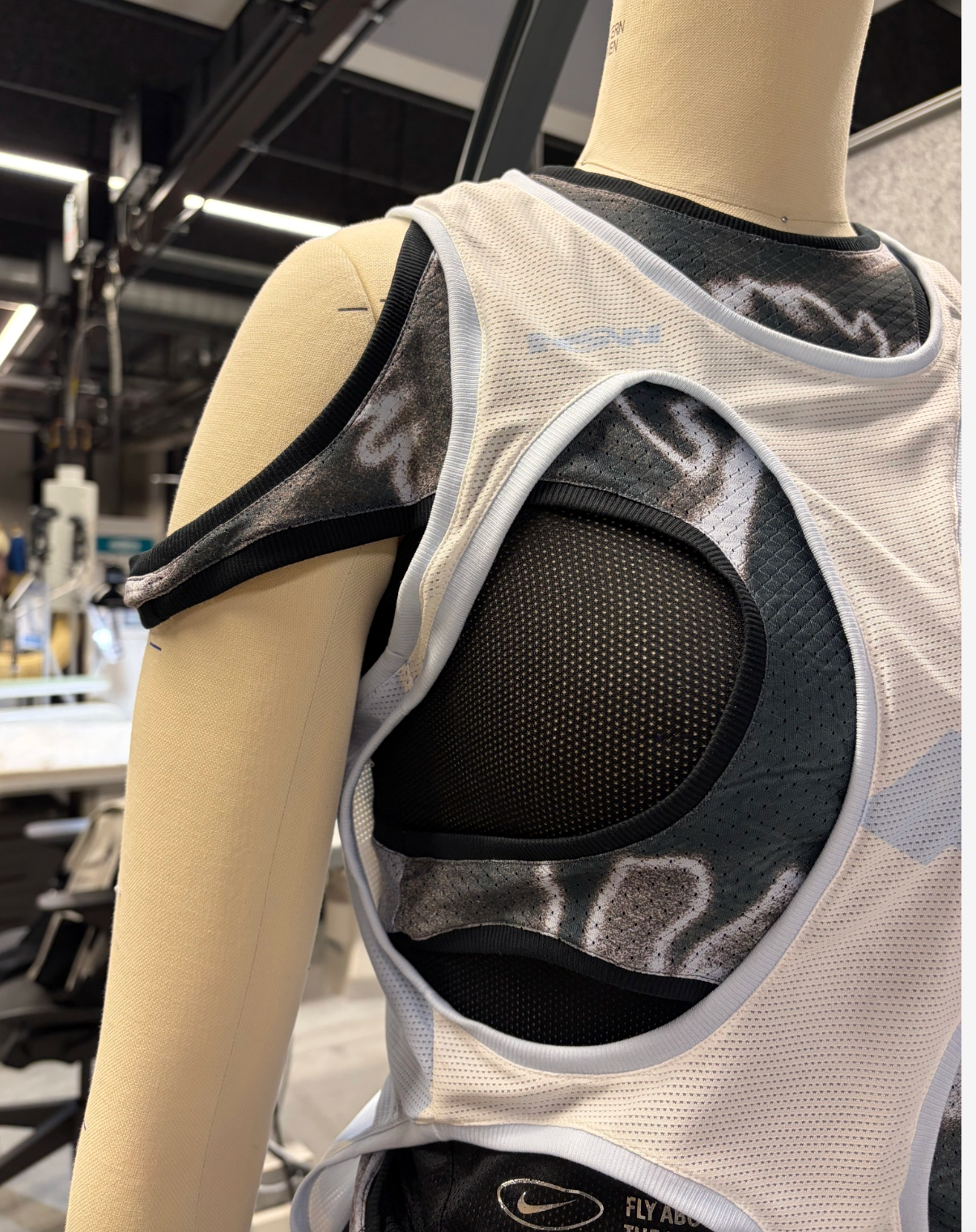
For the top, I took inspiration directly from Radical Air’s layered knit structure and translated it into a series of overlapping basketball jerseys. The multiple layers create depth and volume, echoing the dimensional quality of the material while referencing a recognizable basketball staple. I wanted the construction itself to communicate the idea, using familiar sportswear forms in a new way rather than simply applying the technology to a conventional silhouette.
04 — Bringing the Look Together
Across the look, I explored how basketball references could be pushed beyond traditional on-court uniforms into a more directional lifestyle expression. Layered jerseys, sheer power mesh, and compression-inspired panels work together to create a silhouette that feels rooted in sport but styled for a fashion context. Radical Air became more than a material reference; it informed the way I approached layering, proportion, and the overall visual language of the look.
The Final Garments